Finding the right vacuum can feel overwhelming with dozens of models, features, and brands competing for your attention. You’re not just buying a cleaning tool – you’re investing in your home’s cleanliness and your own time. The wrong choice means frustration, poor cleaning results, and potentially hundreds of dollars wasted.
The vacuum industry has evolved dramatically in recent years. Cordless models now rival corded ones for power, robot vacuums have gotten smarter and more affordable, and specialized options exist for every flooring type and household need. This creates more options but also more confusion.
This guide cuts through the marketing noise to help you find the vacuum that actually works for your specific situation. We’ll cover every major vacuum type, the features that matter most, and how to match your choice to your home’s unique requirements.
Understanding Vacuum Types
Upright Vacuums
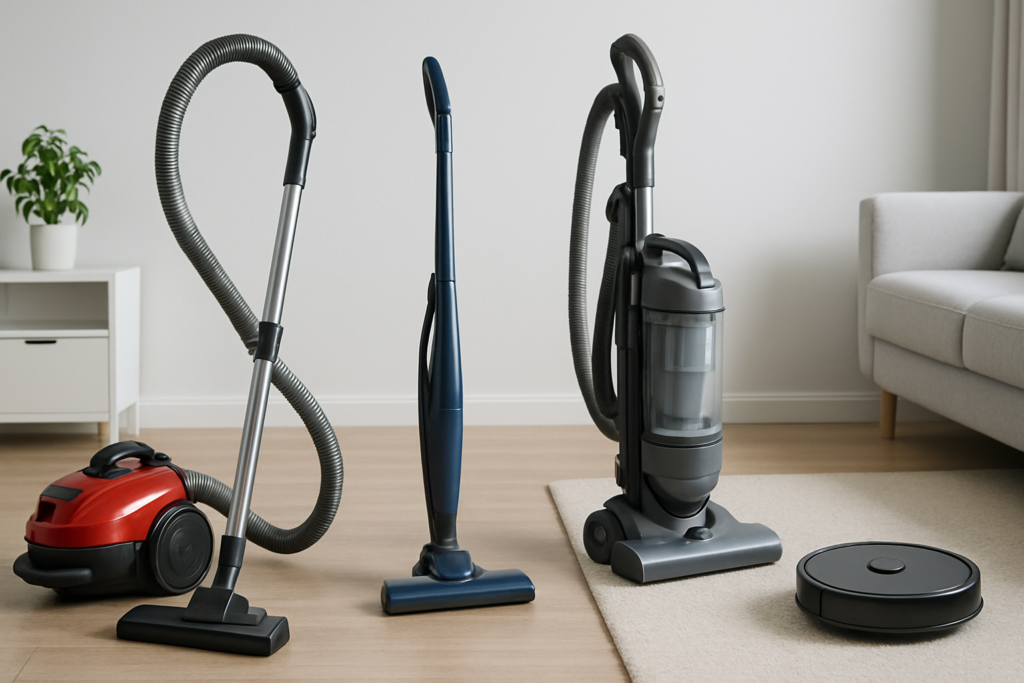
Upright vacuums remain the most popular choice in American homes, and for good reason. They offer excellent carpet cleaning power, large dust bins, and familiar operation. Most feature a rotating brush roll that agitates carpet fibers to lift embedded dirt and pet hair.
The Shark Navigator Lift-Away Professional exemplifies what makes uprights effective. It combines strong suction with a detachable canister for versatility, while maintaining the deep-cleaning power that uprights are known for. Bagged models like the Hoover WindTunnel MAX provide even stronger suction and better dust containment.
Uprights work best in homes with mostly carpeted floors and minimal obstacles. They struggle with tight spaces and can be heavy to carry upstairs. Most weigh between 12-18 pounds when fully loaded.
Canister Vacuums
Canister vacuums separate the motor and dust collection from the cleaning head, connected by a flexible hose. This design creates several advantages: easier maneuverability around furniture, lighter weight for the cleaning head, and often quieter operation.
European brands like Miele and SEBO dominate the high-end canister market. The Miele Complete C3 series offers exceptional build quality and specialized attachments for different floor types. These vacuums typically last 15-20 years with proper maintenance.
Canisters excel on hard floors and area rugs but may require more passes on thick carpets compared to uprights. They’re ideal for homes with stairs, lots of furniture, or mixed flooring types.
Cordless Stick Vacuums
Cordless stick vacuums have transformed from lightweight supplements to legitimate primary vacuums. Modern lithium-ion batteries now provide 30-60 minutes of runtime, while digital motors deliver impressive suction in compact packages.
Dyson pioneered this category with models like the V15 Detect, which features laser dust detection and real-time particle counting. Shark’s Vertex series offers similar performance at lower price points, while Tineco focuses on smart features and app connectivity.
Battery life varies significantly between models and power settings. Most provide 15-20 minutes on maximum power, extending to 45-60 minutes on eco mode. Consider your home’s size carefully – larger homes may need multiple batteries or a corded backup.
Robot Vacuums
Robot vacuums have evolved from novelty items to capable cleaning tools. Modern units map your home, avoid obstacles intelligently, and return to base for charging and emptying automatically.
The Roomba j7+ represents the current state of the art with AI-powered object recognition that can identify and avoid pet waste, socks, and cables. Roborock and Eufy offer similar mapping capabilities at more accessible price points.
Robot vacuums work best as daily maintenance tools rather than deep cleaners. They excel at picking up surface debris, pet hair, and dust but won’t match the deep-cleaning power of traditional vacuums on thick carpets.
Key Features That Matter
Suction Power and Airflow
Manufacturers often emphasize motor power (measured in amps or watts), but airflow matters more for cleaning performance. Look for specifications listing CFM (cubic feet per minute) or air watts, which better indicate real-world cleaning ability.
Sealed systems maintain consistent suction by preventing air leaks. HEPA filtration requires sealed systems to function properly, making this feature essential for allergy sufferers.
Filtration Systems
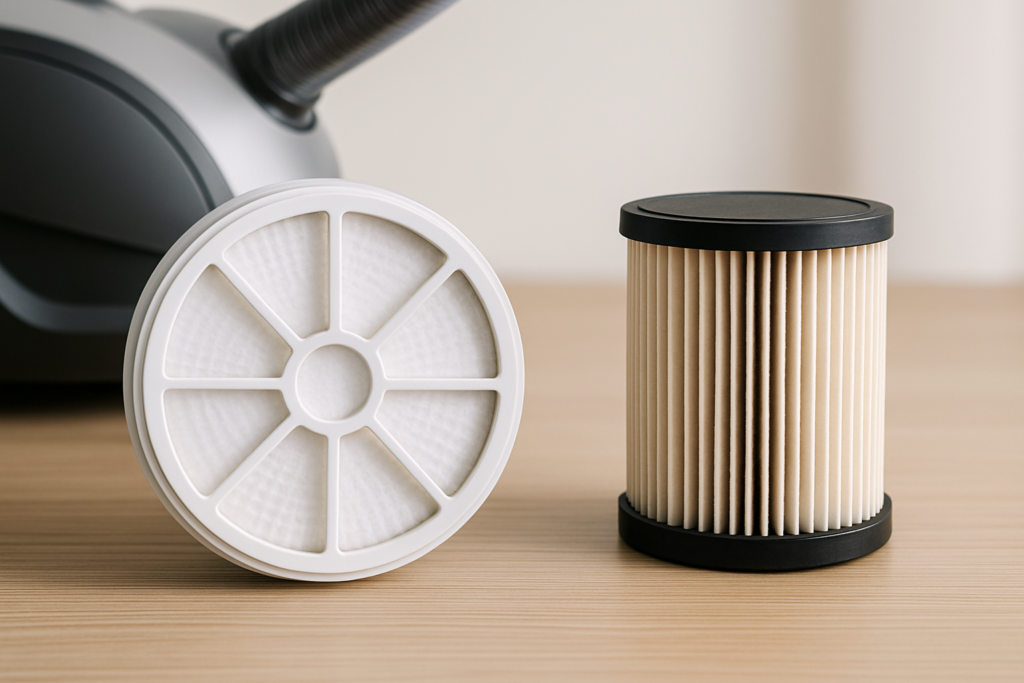
HEPA (High Efficiency Particulate Air) filters capture 99.97% of particles 0.3 microns or larger. True HEPA certification requires independent testing, while “HEPA-type” or “HEPA-style” filters may not meet the same standards.
Multi-stage filtration systems use pre-filters, main filters, and post-motor filters to capture different particle sizes. Pre-filters protect the motor from large debris, while post-motor filters clean exhaust air.
Brush Roll Design
Traditional brush rolls use bristles to agitate carpet fibers but can tangle with hair. Anti-tangle designs like Shark’s self-cleaning brush roll or removable brush rolls make maintenance easier.
Adjustable brush rolls let you optimize performance for different floor types. Some models automatically adjust height, while others require manual settings.
Matching Vacuums to Floor Types
Carpet Cleaning
Deep pile carpets need aggressive brush action and strong suction. Upright vacuums typically perform best, with models like the Shark Navigator and Bissell CrossWave Pro leading independent test results.
Low-pile carpets and area rugs work well with most vacuum types. Canister vacuums with electric brush heads offer good performance while being gentler on delicate fibers.
Hard Floor Performance
Hard floors require different cleaning approaches than carpets. Brush rolls can scatter debris rather than collect it, making suction-only modes essential. Look for models with brush roll shutoff or specialized hard floor attachments.
Canister vacuums traditionally excel on hard floors, but modern cordless sticks like the Dyson V-series perform equally well. Robot vacuums work particularly well on hard surfaces where they can easily navigate and collect debris.
Mixed Flooring Homes
Homes with both carpet and hard floors need versatile vacuums that transition seamlessly between surfaces. Lift-away uprights, convertible stick vacuums, and canister models with multiple heads handle mixed flooring best.
Automatic height adjustment simplifies transitions between floor types. Premium models sense floor type and adjust suction and brush speed accordingly.
Special Household Considerations
Pet Hair Management
Pet hair creates unique challenges that standard vacuums often struggle with. Hair wraps around brush rolls, clogs filters, and embeds deeply in carpet fibers and upholstery.
Shark’s Pet Pro models feature self-cleaning brush rolls that actively remove hair wrapping. Dyson’s tangle-free turbine tools use counter-rotating heads to prevent hair buildup. The Bissell Pet Hair Eraser line specifically targets pet hair with specialized tools and powerful suction.
HEPA filtration becomes crucial in pet homes to capture dander and allergens. Sealed systems prevent these particles from escaping back into your air.
Allergy and Asthma Relief
Vacuum choice significantly impacts indoor air quality for allergy and asthma sufferers. Poor vacuums can actually worsen symptoms by stirring up allergens without capturing them effectively.
Look for Asthma and Allergy Foundation of America (AAFA) certification, which requires independent testing for allergen capture and containment. Miele, SEBO, and select Shark models carry this certification.
Bagged vacuums typically contain allergens better than bagless models, as bag removal creates less dust exposure than emptying canisters.
Large Homes and Multi-Story Houses
Large homes present unique challenges including longer cleaning sessions, multiple floor types, and storage considerations. Corded vacuums provide unlimited runtime but may require outlet changes. Cordless models offer convenience but may need multiple batteries.
Multi-story homes benefit from lightweight models or multiple units. Canister vacuums work well for stairs, while cordless sticks eliminate cord management challenges.
Budget Categories and Value Picks
Budget-Friendly Options
Quality vacuums don’t require premium prices. The Eureka Groove and Bissell CrossWave provide solid performance for basic cleaning needs. These models sacrifice some convenience features but maintain good suction and reliability.
Refurbished models from reputable brands often provide excellent value. Shark and Dyson offer certified refurbished units with warranties at significant discounts.
Mid-Range Sweet Spot
The mid-range category offers the best balance of features, performance, and value. Shark Navigator series, Tineco cordless models, and entry-level Dyson units provide premium features without flagship pricing.
This price range typically includes HEPA filtration, versatile attachments, and good warranty coverage while avoiding luxury features that add cost without meaningful benefit.
Premium Investment
Premium vacuums justify higher costs through superior build quality, advanced features, and longer lifespans. Miele canister vacuums regularly last 15-20 years, making them cost-effective long-term investments.
High-end features like automatic dirt detection, smartphone connectivity, and precision engineering appeal to users who want the latest technology and maximum convenience.
Maintenance and Longevity
Filter Replacement and Care
Regular filter maintenance directly impacts vacuum performance and longevity. HEPA filters typically need replacement every 6-12 months, while pre-filters may need monthly cleaning.
Washable filters save money but require proper drying to prevent mold growth. Always check manufacturer guidelines for specific care instructions.
Brush Roll Maintenance
Hair and debris wrapping around brush rolls reduces cleaning effectiveness and can damage motors. Remove tangled hair regularly using scissors or removal tools included with many vacuums.
Replace brush rolls when bristles become worn or bent. Most manufacturers recommend annual replacement for heavy use homes.
Shopping Tips and Red Flags
Where to Buy
Authorized dealers provide full warranty coverage and proper customer support. Amazon, Best Buy, and manufacturer websites offer reliable purchasing options with return policies.
Avoid unauthorized sellers offering suspiciously low prices, as these may be counterfeit or grey-market units without warranty coverage.
Warranty and Support
Vacuum warranties vary significantly between manufacturers. Premium brands like Miele and SEBO offer longer coverage periods and better customer service experiences.
Register your vacuum immediately after purchase to activate warranty coverage. Keep purchase receipts and documentation for service needs.
Top Recommendations by Category
Best Overall Upright
The Shark Navigator Lift-Away Professional combines excellent cleaning performance, versatility, and value. Its lift-away canister provides portable cleaning while maintaining upright power for carpets.
Best Cordless
Dyson V15 Detect leads cordless performance with laser dust detection, LCD screen feedback, and strong suction across all floor types. Battery life and attachment variety make it suitable as a primary vacuum.
Best for Pet Owners
Shark Vertex Pro with self-cleaning brush roll eliminates hair wrapping while providing strong suction for embedded pet hair. HEPA filtration captures allergens effectively.
Best Budget Choice
Bissell CrossWave provides good cleaning performance and reliability at entry-level pricing. Simple design reduces maintenance needs while delivering consistent results.
Frequently Asked Questions
How often should I replace vacuum filters?
HEPA filters typically need replacement every 6-12 months depending on usage and home conditions. Pre-filters may need monthly cleaning or replacement every 3-6 months. Homes with pets, high dust, or multiple occupants may need more frequent replacement. Always check your specific model’s recommendations, as requirements vary between manufacturers.
Are bagless vacuums better than bagged models?
Both designs have advantages. Bagless vacuums eliminate ongoing bag costs and let you see collected debris, but emptying canisters can expose you to dust and allergens. Bagged vacuums contain debris better and often provide stronger suction as bags fill, but require ongoing purchase costs. For allergy sufferers, bagged models typically perform better for dust containment.
Can cordless vacuums replace corded models completely?
Modern cordless vacuums can serve as primary cleaning tools for many homes, particularly those under 2,000 square feet with mostly hard floors and low-pile carpets. Battery technology has improved significantly, with top models providing 45-60 minutes of runtime. However, homes with extensive thick carpeting or very large floor plans may still benefit from corded backup options.
What’s the difference between HEPA and HEPA-type filters?
True HEPA filters meet strict standards requiring 99.97% capture efficiency for particles 0.3 microns and larger, verified through independent testing. HEPA-type or HEPA-style filters may provide good filtration but haven’t undergone the same rigorous testing and certification process. For serious allergy concerns, look for true HEPA certification from recognized testing organizations.