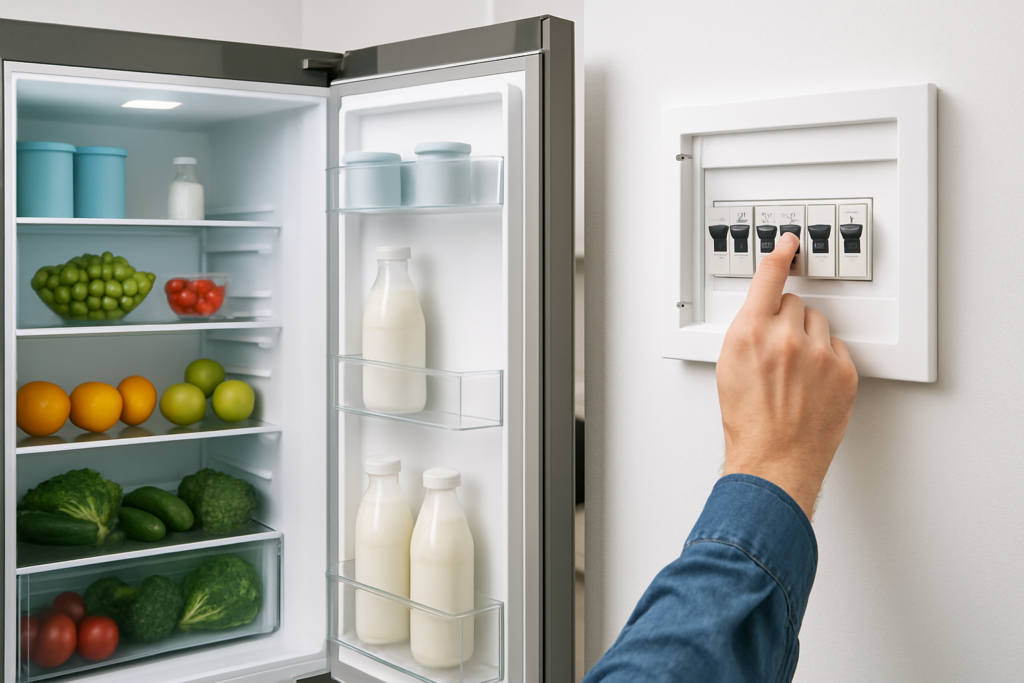
You open your fridge for a midnight snack and notice something odd. That familiar hum isn’t cycling off like it usually does. Your refrigerator has been running nonstop for hours, maybe even days. Beyond being annoying, this constant operation is burning through electricity and potentially shortening your appliance’s lifespan.
A refrigerator should run in cycles, turning on to cool down and then shutting off once it reaches the right temperature. When it runs constantly, something’s preventing it from reaching or maintaining that target temperature. Let’s break down the most common culprits and how you can fix them yourself.
The Thermostat Isn’t Sensing Temperature Correctly
Your refrigerator’s thermostat is the brain of the cooling operation. It monitors the internal temperature and tells the compressor when to kick on or shut off. When this component fails, your fridge loses its ability to recognize when it’s cold enough inside.
You can test this yourself by turning the thermostat dial from the coldest setting to the warmest. Listen for a click. If you hear it, the thermostat is probably working. If there’s no click, or if your fridge continues running even after you’ve turned the dial, you’re likely dealing with a faulty thermostat.
Replacing a thermostat is fairly manageable for most people. You’ll need to unplug the fridge, locate the thermostat housing (usually behind the temperature control dial inside the fridge), disconnect the wires, and install the new one. Check your owner’s manual for the exact model number you need.

Refrigerator Thermostat Replacement Kit
Universal kits work with most major brands and are easier to install than you’d think
Condenser Coils Are Caked With Dust
The condenser coils release heat from inside your refrigerator to the outside air. When these coils get covered in dust, pet hair, and grime, they can’t dissipate heat efficiently. Your fridge has to work overtime trying to compensate for this reduced efficiency.
You’ll find these coils either on the back of the unit or underneath behind a grille. Pull your fridge away from the wall and take a look. If you see a thick layer of dust and debris, that’s your problem.
Cleaning condenser coils should be part of your regular maintenance routine twice a year. Unplug your refrigerator first, then use a condenser coil brush to gently remove the buildup. Follow up with a vacuum using the brush attachment to suck up all the loose debris.
The Evaporator Fan Has Failed
Inside your freezer compartment, hidden behind a panel, sits the evaporator fan. This fan circulates cold air throughout both the freezer and refrigerator sections. When it stops working, cold air can’t move properly, and your compressor runs constantly trying to maintain the right temperature.
Open your freezer and listen carefully. You should hear the fan running. If it’s silent, or if you hear grinding or squealing noises, the fan motor might be failing. Another telltale sign is frost buildup on the back wall of your freezer.
You can access the evaporator fan by removing the panel inside your freezer (usually held in place by a few screws). Check if anything is blocking the fan blades. If the motor itself has failed, you’ll need to replace it with the correct part for your refrigerator model.

Refrigerator Evaporator Fan Motor
Make sure to match the exact model number for your fridge brand
Door Seals Are Letting Cold Air Escape
Those rubber gaskets around your refrigerator doors do more work than you might think. When they crack, tear, or lose their magnetic seal, warm air constantly seeps in. Your fridge responds by running nonstop to combat this steady influx of heat.
Test your door seals with the dollar bill trick. Close a dollar bill in the door so half is inside and half is outside. Try to pull it out. You should feel resistance. Do this all the way around both doors. If the bill slides out easily anywhere, that seal is compromised.
Before buying new seals, try cleaning them thoroughly with warm soapy water. Sometimes food residue prevents them from sealing properly. If they’re actually damaged, you can order replacement gaskets specific to your refrigerator model. Installation involves loosening screws around the door and sliding the new seal into place.
Temperature Settings Are Too Aggressive
Sometimes the fix is simpler than you’d expect. Your refrigerator’s temperature might be set too low, forcing it to run constantly trying to reach an unnecessarily cold target. The ideal fridge temperature is between 37°F and 40°F, with the freezer at 0°F.
Use a refrigerator thermometer to check your actual internal temperatures. Place one in the fridge and one in the freezer, wait a few hours, then check the readings. Adjust your temperature controls accordingly and give the fridge 24 hours to stabilize.
Air Flow Is Blocked
Your refrigerator needs proper ventilation both inside and outside. Overpacking your fridge blocks air circulation, making the compressor work harder. Similarly, pushing the unit too close to the wall restricts airflow around the condenser coils.
Keep at least 3-4 inches of clearance on all sides of your refrigerator. Inside, avoid cramming food against the back wall where cold air enters from the freezer. Leave some breathing room around items so air can circulate freely.
Check your freezer vents for ice buildup too. These small openings allow cold air to flow from the freezer to the fridge. When they freeze over, airflow stops, and your compressor runs continuously trying to cool the refrigerator section.
Frequently Asked Questions
How much does it cost to run a refrigerator that never shuts off?
A constantly running refrigerator can add 30-50% to your normal electricity costs for that appliance. For most households, this translates to an extra competitively priced-20 per month. Beyond the immediate utility bill impact, continuous operation puts excessive wear on your compressor, which could lead to a complete failure requiring expensive repairs or replacement.
Can a refrigerator compressor burn out from running too much?
Yes, absolutely. Compressors are designed to cycle on and off throughout the day. When they run continuously without breaks, they overheat and wear out much faster than normal. A compressor replacement typically costs between competitively priced-450 for parts and labor, often making it more economical to replace an older refrigerator entirely.
How long should a refrigerator run between cycles?
A properly functioning refrigerator should run for about 4-8 minutes, then shut off for anywhere from 10-30 minutes before cycling back on. The exact timing depends on factors like room temperature, how full the fridge is, and how often you open the doors. On hot summer days or after grocery shopping, longer run times are normal. But if your fridge never turns off for hours at a time, something needs attention.
This article contains affiliate links. We may earn a small commission at no extra cost to you.