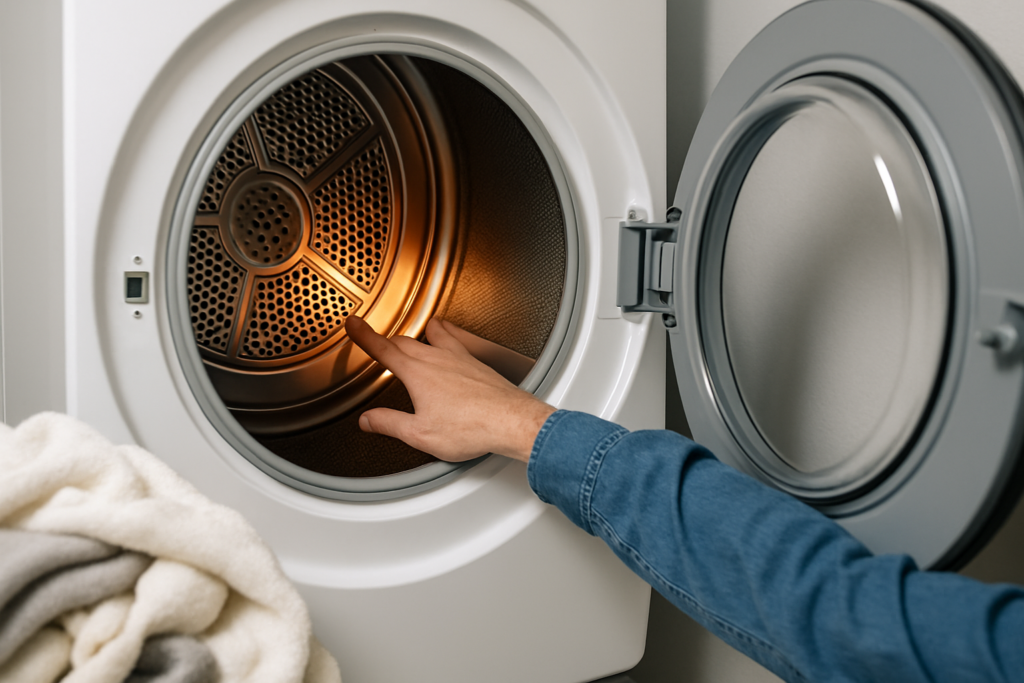
There’s nothing quite as frustrating as pulling a load of laundry out of the dryer only to find it’s still soaking wet. If your dryer is running but not producing heat, you’re dealing with one of the most common appliance problems homeowners face. The good news is that most dryer heating issues have identifiable causes, and many of them you can fix yourself without calling a repair technician.
Understanding how your dryer generates heat and what can go wrong will help you diagnose the problem quickly and get your laundry routine back on track. Let’s break down the most common culprits and what you can do about them.
How Dryer Heating Elements Work
Electric dryers use a heating element to warm the air that circulates through your clothes. This element is essentially a coiled wire that heats up when electrical current passes through it, much like the coils on an electric stove. When the element fails, your dryer will tumble but won’t produce any heat at all.
Most heating elements last 8-18 years depending on usage, but they can burn out sooner if your dryer overheats regularly or if there’s a voltage issue. You’ll know the element is bad if you inspect it and see visible breaks in the coil. Electric continuity testing with a multimeter can confirm whether the element is functioning properly.
Replacing a heating element is one of the more common DIY dryer repairs. You’ll need to access the back or front panel of your dryer depending on the model, disconnect the old element, and install a new one. A replacement heating element specific to your dryer’s make and model is essential for proper function.
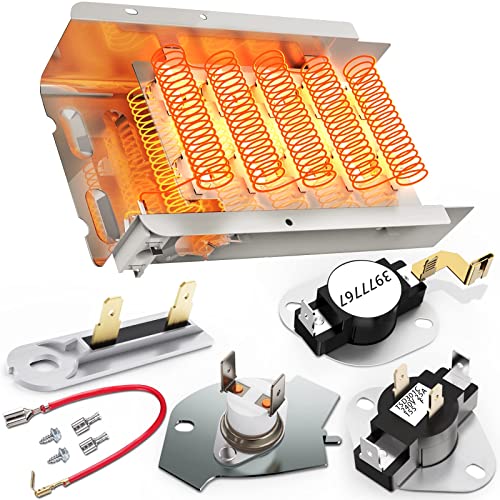
Dryer Heating Element Kit
Most kits include the element and necessary hardware for installation
The Role of Thermostats and Thermal Fuses
Your dryer has multiple safety devices designed to prevent overheating and fires. The thermal fuse is a one-time-use safety device that blows if your dryer gets too hot, cutting power to the heating element. Once it blows, it needs to be replaced before your dryer will heat again.
Cycling thermostats and high-limit thermostats regulate temperature by turning the heating element on and off. When these fail, they typically stay in the “off” position, preventing your dryer from heating. Unlike thermal fuses, thermostats can sometimes fail intermittently, causing inconsistent heating rather than no heat at all.
You can test these components with a multimeter set to the ohms setting. A functioning thermal fuse or thermostat should show continuity (a reading near zero ohms). No continuity means the part has failed and needs replacement. These components are usually located on or near the blower housing or heating element assembly.
When replacing thermal fuses, you should also address what caused them to blow in the first place. Excessive lint buildup is the most common culprit, which brings us to our next critical issue.
Airflow Problems That Prevent Heating
Restricted airflow is both a cause and a symptom of dryer heating problems. When lint accumulates in your dryer vent system, it restricts air circulation, causing the dryer to overheat and trigger safety devices like the thermal fuse. Even if your heating element is working perfectly, poor airflow can make your dryer feel like it’s not heating because clothes take forever to dry.
Check your outdoor vent hood while the dryer is running. You should feel strong airflow. If it’s weak or nonexistent, you’ve got a blockage somewhere in the system. Disconnect the vent hose from the back of your dryer and inspect it for lint buildup. You’d be surprised how much lint can accumulate even if you clean your lint trap after every load.
The vent duct running through your walls can also become clogged over time. A dryer vent cleaning kit with flexible rods can help you clear out these passages. For particularly long or complex vent runs, consider hiring a professional vent cleaning service.

Dryer Vent Cleaning Kit
Essential for removing built-up lint from vent ducts and preventing future heating issues
Gas Dryer Specific Issues
Gas dryers have their own set of heating problems distinct from electric models. Instead of a heating element, gas dryers use burners that ignite gas to create heat. If you hear your dryer running but it’s not heating, the issue likely involves the igniter, gas valve coils, or the flame sensor.
The igniter is the most common failure point in gas dryers. It glows white-hot to ignite the gas, and over time it weakens and can’t reach the temperature needed for ignition. You can often see the igniter glowing orange or yellow instead of bright white, indicating it needs replacement.
Gas valve coils open to allow gas flow to the burner. When they fail, gas can’t reach the burner even if the igniter is working perfectly. These coils rarely fail, but when they do, both typically need replacement. Always ensure your gas supply valve is fully open before assuming component failure.
Safety first when working on gas appliances. If you smell gas at any point, shut off the gas supply immediately and call a professional. While many gas dryer repairs are DIY-friendly, don’t take chances if you’re uncomfortable working around gas lines.
Testing and Troubleshooting Steps
Start your diagnosis by checking the simplest things first. Make sure your dryer is actually getting power and that the circuit breaker hasn’t tripped. Electric dryers use 240-volt circuits with two breakers, and if only one trips, the dryer will run but won’t heat.
Clean your lint trap and check for airflow restrictions. This takes five minutes and solves heating problems more often than you’d think. Run your dryer on high heat for a few minutes, then carefully feel the exhaust air from the outside vent. It should be hot and flowing freely.
A digital multimeter is invaluable for testing electrical components. Test the heating element, thermal fuse, and thermostats for continuity. Most dryer repair guides include resistance values for these components specific to your model.

Digital Multimeter
Required for testing electrical continuity in heating elements and safety devices
Document your findings as you test each component. Taking photos before you disassemble anything helps tremendously during reassembly. Your dryer’s model number, usually found inside the door or on the back panel, is critical for ordering the correct replacement parts.
Frequently Asked Questions
How long should a dryer heating element last?
A typical dryer heating element should last between 8 and 18 years with normal use. However, factors like frequent use, overloading, poor ventilation, and voltage fluctuations can shorten this lifespan significantly. If your heating element fails prematurely, investigate what might be causing excess strain on the component before installing a replacement.
Can I run my dryer if it’s not heating to at least fluff clothes?
Yes, you can safely run your dryer on the air fluff or no-heat setting even when the heating element is broken. This won’t damage your dryer further and can be useful for refreshing clothes or removing wrinkles. However, you shouldn’t run heated cycles if you know the thermal safety devices have failed, as this creates a fire risk.
Why does my dryer heat sometimes but not others?
Intermittent heating usually indicates a cycling thermostat that’s beginning to fail or a loose electrical connection. It can also signal that your thermal fuse is on the verge of blowing due to restricted airflow. Check all wire connections to the heating element and thermostats, and thoroughly clean your vent system before the problem gets worse.
This article contains affiliate links. We may earn a small commission at no extra cost to you.