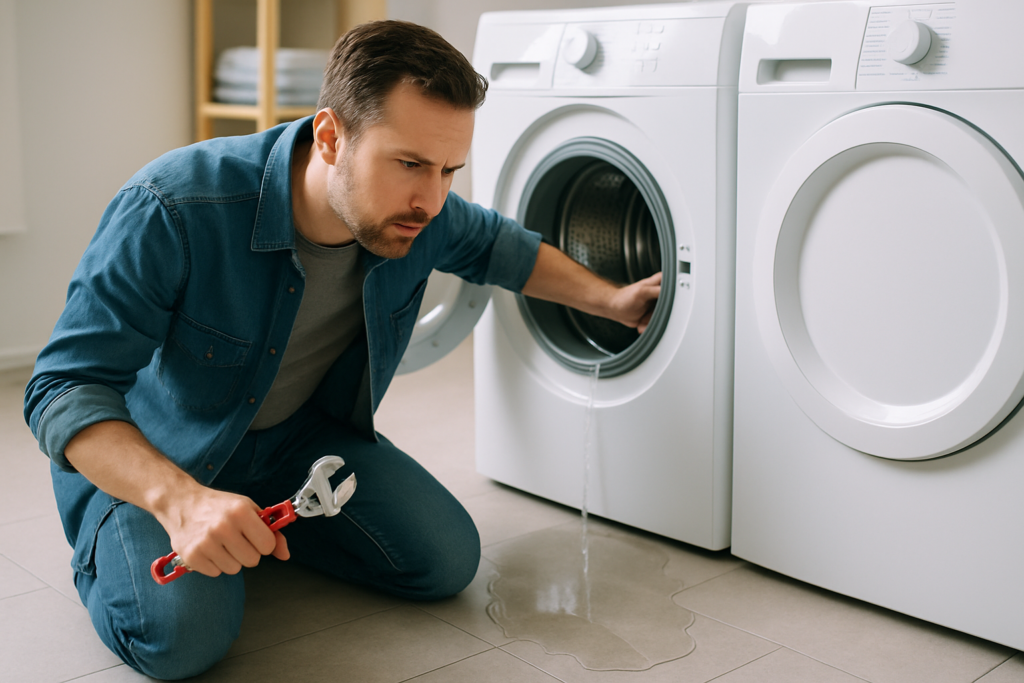
You’ve just finished washing a load of clothes, moved everything to the dryer, and hit start. An hour later, you open the door expecting warm, dry clothes, only to find them soaking wet. Before you panic and call a repair technician, you should know that dryer drainage issues are surprisingly common and often easy to fix yourself.
Wait, dryers don’t actually drain water like washing machines do. If your dryer isn’t drying properly and clothes are still wet, the issue is usually with heat generation, airflow, or moisture removal. Let’s walk through the most common causes and how to fix them without spending hundreds on repairs.
Understanding How Dryers Remove Moisture
Dryers work by heating air and circulating it through your clothes. The heated air absorbs moisture, which then exits through the exhaust vent. Unlike washing machines, dryers don’t have drain pumps or water lines (except for steam models, which we’ll address separately).
When your clothes stay wet, it’s because this moisture removal process has broken down somewhere. The dryer might not be generating enough heat, the moist air isn’t escaping properly, or you’re dealing with a mechanical issue that prevents proper tumbling.
Check Your Venting System First
The most common culprit is a clogged or restricted vent system. When lint builds up in your exhaust vent, moist air can’t escape. Instead, it recirculates through the drum, making it impossible for clothes to dry.
Pull your dryer away from the wall and disconnect the vent hose. You’ll probably find it’s full of lint, especially if you haven’t cleaned it in over a year. Check both the hose itself and the exterior vent opening where air exits your home. Birds’ nests, lint buildup, and crushed hoses are all frequent problems.
Invest in a quality dryer vent cleaning kit with flexible rods that can reach through long vent runs. Clean your vents at least once a year, more often if you do multiple loads daily.

Dryer Vent Cleaning Kit
Essential tool for maintaining proper airflow and preventing fire hazards in your dryer system
Inspect the Heating Element
If your vent system is clear but clothes still aren’t drying, you’ve got a heating problem. Electric dryers use a heating element (similar to the coils in a toaster), while gas dryers use burners and igniters.
For electric dryers, the heating element can burn out partially or completely. You can test this by running the dryer and checking if any heat comes out. Some heat means a partially failed element. No heat at all could be the element, thermal fuse, or thermostat.
Replacing a heating element isn’t terribly difficult if you’re moderately handy. Unplug the dryer, remove the back panel (or front panel on some models), and locate the element housing. Most elements are specific to your dryer model, so you’ll need your model number when ordering.
Test the Thermal Fuse and Thermostats
Your dryer has multiple safety devices that cut power to the heating element if temperatures get too high. The thermal fuse is a one-time safety device that blows permanently if your dryer overheats. Once it blows, your dryer won’t produce any heat until you replace it.
Thermal fuses blow most often when vents are clogged, which causes heat to build up inside the dryer cabinet. This is why cleaning vents is so critical. You can test the fuse with a multimeter set to continuity mode. No continuity means the fuse is blown and needs replacement.
High-limit thermostats work similarly but are resettable. They’re less commonly the problem, but worth checking if you’ve ruled out the thermal fuse and heating element.

Dryer Thermal Fuse Kit
Usually includes both thermal fuse and high-limit thermostat for common dryer models
For Steam Dryers: Check the Water System
If you own a steam dryer, it does have a water connection and reservoir. These models spray a fine mist during certain cycles to reduce wrinkles. Problems here won’t prevent regular drying cycles from working, but they can cause error codes or prevent steam cycles from completing.
Check that the water supply line is connected and turned on. Look for kinks in the line or a clogged filter screen where the line connects to the dryer. Some steam dryers have a reservoir you fill manually instead of a water line. Make sure it’s properly seated and filled.
Other Mechanical Issues to Consider
Sometimes the problem isn’t heat or airflow but a mechanical failure. A worn drum belt can cause the drum to stop rotating, leaving clothes in a wet pile. You’ll usually hear squealing or notice the drum doesn’t turn when you start the cycle.
Drum rollers and glides can also wear out, causing the drum to bind and not tumble properly. Listen for thumping or grinding noises. These parts require some disassembly to replace, but they’re not expensive.
Finally, check your lint filter. A clogged filter restricts airflow just like a clogged vent. Some people think running the dryer without a filter is okay, but this actually makes things worse. Lint bypasses the filter area and clogs internal components instead.
Frequently Asked Questions
How long should a dryer take to dry a full load?
A properly functioning dryer should dry a normal load of laundry in 30 to 45 minutes on medium to high heat. Heavy items like towels and jeans might take up to an hour. If your dryer consistently takes longer than this, you have an airflow or heating problem that needs attention.
Can I replace dryer parts myself or should I call a technician?
Many dryer repairs are manageable DIY projects if you’re comfortable working with basic tools and following instructions. Replacing thermal fuses, heating elements, belts, and cleaning vents are all doable. However, gas dryer repairs involving the burner assembly should be left to professionals due to safety concerns. Always unplug the dryer (or turn off the breaker) before attempting any repairs.
How often should I clean my dryer vent system?
Clean your dryer vent at least once per year. If you have a large family and run the dryer daily, clean it every six months. Also clean it immediately if you notice your dryer is taking longer than usual to dry clothes, the exterior of the dryer is very hot, or you smell a burning odor. Clogged vents are a leading cause of house fires and cause your dryer to work harder, shortening its lifespan.
This article contains affiliate links. We may earn a small commission at no extra cost to you.