You open your dishwasher expecting clean, fresh-smelling dishes, and instead you’re hit with a wave of musty, rotting odor. It’s one of those household problems that seems to come out of nowhere and makes you question whether your dishes are actually getting clean. The truth is, dishwashers can develop some seriously unpleasant smells, but the good news is that most of the time, it’s completely fixable with some basic maintenance.
Understanding where these odors come from and how to eliminate them will save you from rewashing dishes by hand and help extend the life of your appliance. Let’s break down exactly what’s causing that smell and how to get rid of it for good.
The Most Common Culprits Behind Dishwasher Odors
Before you can fix the problem, you need to identify where the smell is actually coming from. Dishwasher odors don’t just appear randomly. They’re almost always the result of trapped food particles, standing water, or bacterial growth.
The filter is usually suspect number one. Most modern dishwashers have a cylindrical filter at the bottom of the tub that catches food debris. When this filter gets clogged with bits of food, grease, and gunk, it creates the perfect environment for bacteria to thrive. That bacteria produces the foul smell you’re noticing.
Standing water is another major issue. If your dishwasher isn’t draining completely after each cycle, that stagnant water sits in the bottom and starts to smell. This can happen because of a clogged drain, a kinked drain hose, or a failing drain pump.
Don’t overlook the door gasket and spray arms either. The rubber seal around your dishwasher door traps moisture and food particles in its folds. The spray arms can also collect mineral deposits and debris in their small holes, creating pockets where bacteria can grow.
How to Deep Clean Your Dishwasher Filter
Cleaning your dishwasher filter should be at the top of your maintenance list. You’ll want to do this at least once a month, or more often if you run your dishwasher daily or don’t pre-rinse your dishes.
Start by locating the filter. It’s typically at the bottom of the dishwasher, beneath the lower spray arm. You’ll need to twist and lift it out (check your owner’s manual for your specific model). Once you’ve removed it, you’ll probably be shocked at what you find. Hair, food particles, grease, and other debris accumulate here quickly.
Rinse the filter under hot running water to remove loose debris. Then soak it in hot, soapy water for about 10-15 minutes. Use an old toothbrush or a small cleaning brush to scrub away any stubborn gunk stuck in the mesh. Pay special attention to the fine screen portion, as this is where the smallest particles get trapped.

Dishwasher Cleaning Tablets
These make monthly deep cleaning incredibly easy and effective at removing buildup.
While the filter is out, take a look at the sump area (the hole where the filter sits). You’ll often find more debris here. Wipe it clean with a damp cloth or paper towel. Getting this area clean makes a huge difference in eliminating odors.
Addressing Drainage Problems
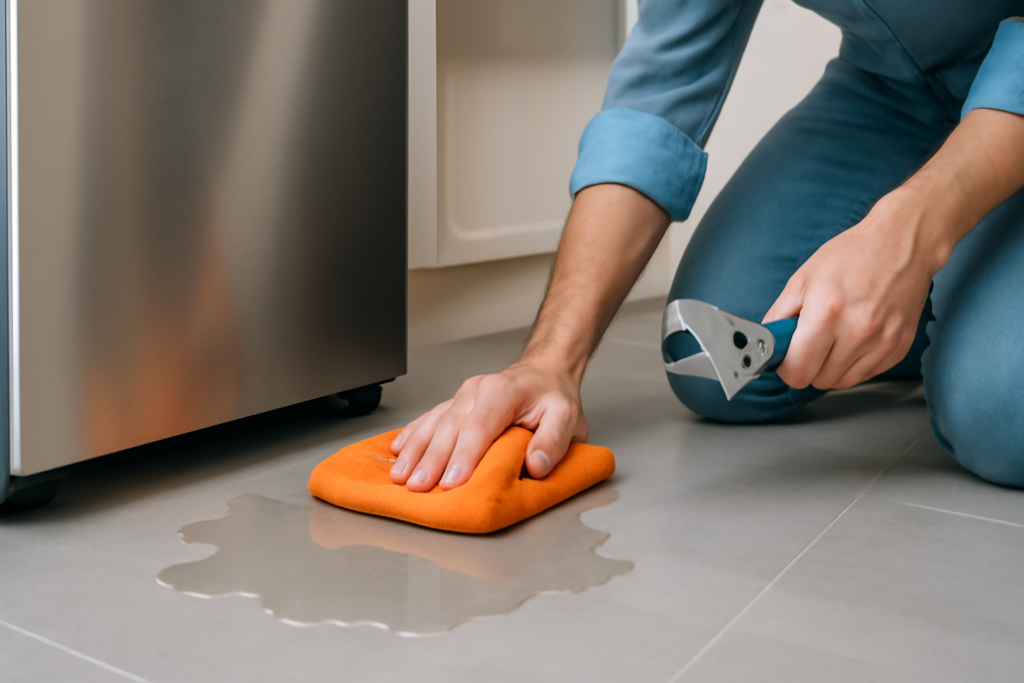
If you notice water pooling at the bottom of your dishwasher after a cycle, you’ve got a drainage issue that needs attention. This standing water quickly becomes a breeding ground for smell-causing bacteria.
Check your drain hose first. It should have a high loop or be connected to an air gap to prevent backflow. If the hose is kinked or positioned too low, water won’t drain properly. You can usually access the drain hose by opening the cabinet under your sink.
The garbage disposal connection is another common problem spot. If your dishwasher drains into your garbage disposal, make sure the knockout plug was removed during installation. Many people don’t realize that new garbage disposals come with this plug in place, and if it wasn’t removed, water can’t drain from the dishwasher.
Run your garbage disposal before starting the dishwasher. A clogged disposal will prevent your dishwasher from draining properly. Make it a habit to clear the disposal before each dishwasher cycle.
Cleaning the Door Gasket and Interior
The rubber seal around your dishwasher door is a magnet for mold, mildew, and trapped food particles. This area stays damp and doesn’t get much airflow, creating ideal conditions for bacterial growth.
Grab a damp cloth or sponge and wipe down the entire gasket, pulling back the folds to clean inside them. You’ll likely find slimy residue and trapped particles. For stubborn mold or mildew, make a paste with baking soda and water and scrub gently with an old toothbrush.
Don’t forget to clean the door edges and the inside of the door itself. The top edge of the door catches splatter and debris during wash cycles. Wipe it down thoroughly, including any vents or detergent dispenser areas.
For the dishwasher interior, remove the racks and spray arms. Check the spray arm holes for clogs and run water through them to clear any blockages. Wipe down the walls, ceiling, and floor of the dishwasher tub with a cloth dampened with white vinegar.
Natural Cleaning Methods That Actually Work
You don’t need expensive specialty cleaners to freshen up your dishwasher. Two simple household items work incredibly well: white vinegar and baking soda.
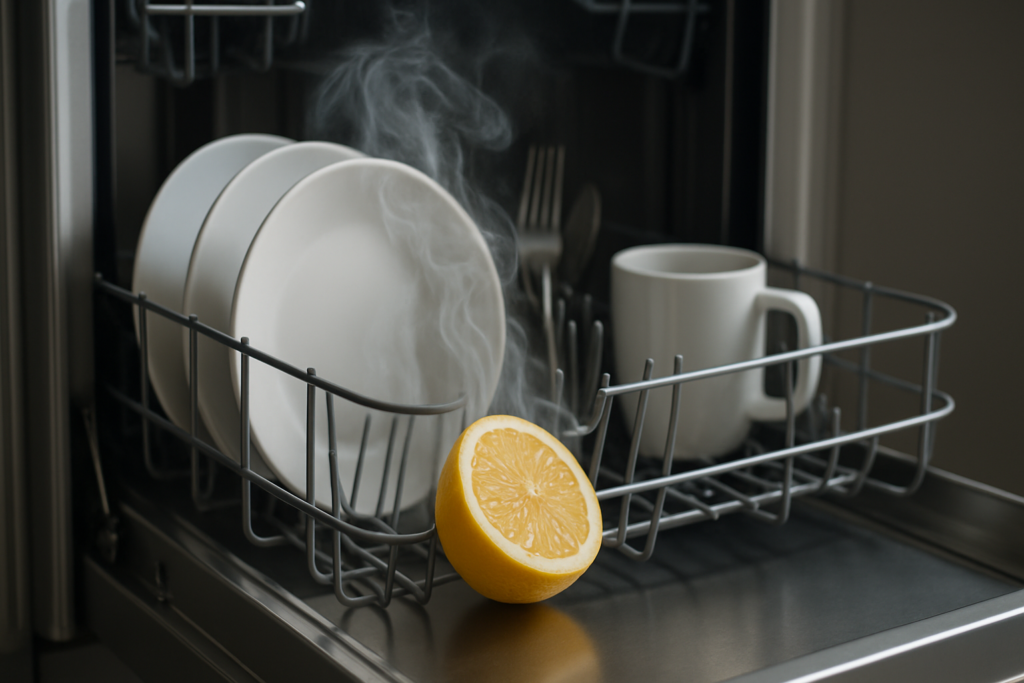
For a vinegar clean, place a dishwasher-safe cup filled with white vinegar on the top rack of your empty dishwasher. Run a hot water cycle. The vinegar will help dissolve grease, remove mineral deposits, and eliminate odor-causing bacteria. The acidity cuts through buildup that regular detergent leaves behind.
After the vinegar cycle, sprinkle a cup of baking soda across the bottom of the dishwasher. Run a short hot water cycle. The baking soda helps deodorize and removes any remaining stains. This one-two punch of vinegar followed by baking soda is remarkably effective.
Affresh Dishwasher Cleaner
A reliable commercial option when you need extra cleaning power for tough buildup.
Do this deep clean monthly to prevent odors from developing in the first place. If your dishwasher already smells bad, you might need to repeat the process a couple of times to completely eliminate the odor.
Prevention Tips to Keep Your Dishwasher Fresh
Once you’ve eliminated the smell, you’ll want to keep it from coming back. A few simple habits will keep your dishwasher smelling fresh between deep cleans.
Scrape your dishes before loading them. You don’t need to pre-rinse completely, but removing large food particles prevents them from accumulating in the filter and drain. Bones, fruit pits, and large chunks of food should never go in the dishwasher.
Run hot water at your sink before starting the dishwasher. This ensures the dishwasher starts with hot water right away, which cleans more effectively and helps prevent bacterial growth. Cold water doesn’t dissolve grease and detergent as well.
Leave the door slightly ajar between uses. This allows air circulation and helps the interior dry out completely. Moisture is the enemy when it comes to preventing odors and mold growth. Just crack the door open an inch or two after unloading.
Use the right amount of detergent. Too much detergent leaves residue that can contribute to odors. Too little won’t clean effectively. Follow the manufacturer’s recommendations and adjust based on your water hardness.
When to Call a Professional
Most dishwasher odor problems can be solved with cleaning and basic maintenance. But sometimes the issue points to a mechanical problem that requires professional help.
If you’ve cleaned everything thoroughly and still have persistent standing water, the drain pump might be failing. This typically costs a few hundred dollars to replace, but it’s usually worth it compared to buying a new dishwasher.
Strange sewage-like smells that don’t improve with cleaning might indicate a problem with your home’s plumbing venting system. This requires a plumber, not just dishwasher maintenance.
Burning smells or electrical odors are serious and require immediate attention. Unplug the dishwasher and call a repair technician. These smells can indicate wiring problems or a failing motor.
Frequently Asked Questions
How often should I clean my dishwasher filter?
You should clean your dishwasher filter at least once a month under normal use. If you run multiple loads daily or regularly wash heavily soiled dishes, clean it every two weeks. Some people find that weekly cleaning works best for their household. You’ll know it needs cleaning when you notice reduced cleaning performance or water pooling at the bottom of the tub.
Can I use bleach to clean my dishwasher?
Avoid using bleach in dishwashers with stainless steel interiors, as it can damage and discolor the metal. For dishwashers with plastic tubs, you can occasionally use a cup of bleach on the bottom rack during an empty hot cycle to kill bacteria and remove stains. Never mix bleach with vinegar or use them in consecutive cycles without running clear water in between.
Why does my dishwasher smell worse after running a cycle?
This usually means you have a drainage problem or extremely dirty filter. Food particles that get stirred up during the wash cycle but don’t drain away will smell worse when they’re wet and warm. Check your drain hose for kinks, clean the filter thoroughly, and make sure your garbage disposal isn’t clogged. Running a cleaning cycle with vinegar should help once the mechanical issues are addressed.
Is it normal for a dishwasher to smell a little musty?
A slight musty smell when you first open your dishwasher isn’t unusual, especially if it’s been sitting closed for a day or two. But this smell should dissipate quickly and shouldn’t be strong or unpleasant. If the musty smell is noticeable or lingers, it indicates moisture and bacterial growth that needs to be addressed with proper cleaning and better ventilation between uses.
This article contains affiliate links. We may earn a small commission at no extra cost to you.