You load the dishwasher, start the cycle, and come back hours later expecting clean dishes. Instead, you find the machine still humming away with no end in sight. A dishwasher that won’t stop running isn’t just annoying. It wastes water, drives up your energy bill, and often leaves you wondering if it’s time to call a repair technician or start shopping for a replacement.
The good news is that most continuous-run problems stem from just a few culpable parts, and many of them you can diagnose and fix yourself. Let’s walk through the most common causes and what you can do about each one.
Understanding Your Dishwasher’s Cycle Control System
Modern dishwashers rely on a network of sensors, timers, and thermostats to move through each cycle stage. When everything works correctly, your machine washes, rinses, drains, and dries on a predictable schedule. But when one component fails to send the right signal, the dishwasher may never receive the instruction to stop.
The control board acts as the brain, receiving input from various sensors and telling the machine when to advance to the next phase. If a sensor gets stuck reporting that a condition hasn’t been met yet (like water temperature or cleanliness), the dishwasher will keep running indefinitely trying to satisfy that requirement.
Faulty Thermostat or Heating Element
Your dishwasher includes a heating element that warms water to optimal cleaning temperatures, typically between 120-160°F. A thermostat monitors this temperature and signals the control board when the water is hot enough to proceed. When the thermostat fails, it may never register that the target temperature has been reached.
This creates a loop where the dishwasher endlessly tries to heat water to the required temperature. You might notice the heating element stays on constantly, or the water feels lukewarm even after the machine has been running for an extended period.
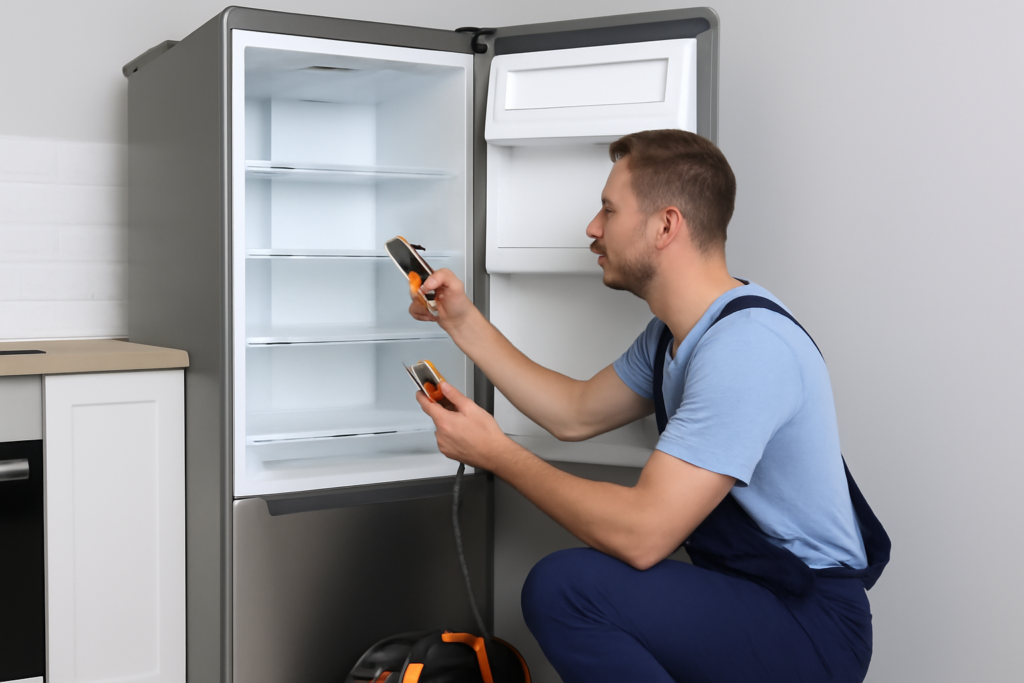
Testing the thermostat requires a multimeter to check for continuity. You’ll need to access the dishwasher’s lower panel (consult your manual for specific instructions). The thermostat is typically attached to the heating element or mounted nearby on the tub bottom. At room temperature, it should show continuity. When heated, it should open the circuit at its rated temperature.

Digital Multimeter
Essential tool for testing electrical components in appliances and diagnosing sensor failures
Replacing a faulty thermostat usually costs less than calling a repair service. Most thermostats for common brands like Whirlpool, Bosch, or KitchenAid are readily available online. Just make sure you match the part number from your model’s documentation.
Malfunctioning Door Latch or Switch
The door latch does more than keep the door closed during operation. It contains a switch that tells the control board the door is properly secured. Some dishwashers won’t start or complete their cycles if this switch doesn’t register correctly.
A worn latch mechanism or damaged switch can cause intermittent signals. The dishwasher might think the door opened mid-cycle and pause indefinitely, or it could fail to recognize that a cycle should end because it never properly registered that the door stayed closed throughout.
You can test this by listening for a definitive click when you close the door. The latch should engage firmly without excessive wiggling. If you need to slam the door or jiggle the handle to get the machine to start, your latch assembly probably needs replacement.
Replacing a dishwasher door latch assembly involves removing the inner door panel screws. It’s one of the more manageable DIY repairs, though you’ll want to take photos of the wire connections before disconnecting anything.
Clogged or Defective Water Inlet Valve
The water inlet valve controls water flow into your dishwasher. When it malfunctions or gets clogged with sediment, it may not allow enough water to enter. This triggers the machine’s water level sensor to keep calling for more water, potentially causing the dishwasher to run indefinitely as it tries to reach the proper fill level.
You can check the inlet valve by turning off the water supply, disconnecting the fill hose, and looking for debris in the valve screen. Mineral buildup from hard water is a common culprit. Sometimes a good cleaning solves the problem, but if the valve’s solenoid has failed electrically, you’ll need to replace the entire unit.
Testing the valve electrically requires checking for continuity across the solenoid terminals with a multimeter. Most inlet valves should read between 500-1500 ohms. Readings outside this range indicate a failed valve.
Problematic Float Switch or Sensor
The float assembly in your dishwasher’s tub monitors water level. This small dome-shaped component rises with the water, eventually triggering a switch that tells the control board enough water has entered. When the float gets stuck in the down position due to debris or mechanical failure, the dishwasher thinks it needs more water and won’t advance to the wash cycle.
Locate the float (usually in the front bottom of the tub) and try moving it up and down. It should move freely without resistance. Clean around the base of the float, removing any food particles or mineral deposits that might prevent smooth movement.

Dishwasher Cleaning Tablets
Regular cleaning prevents buildup that can interfere with float switches and sensors
The float switch itself, located underneath the tub, can also fail electrically. Testing it requires accessing the dishwasher’s base and checking for continuity when the float is manually lifted and lowered.
Turbidity Sensor Issues
Many newer dishwashers include a turbidity sensor that measures water cloudiness to determine how dirty your dishes are. This sensor helps the machine decide how long to wash and when dishes are clean enough to move to the rinse cycle. When the sensor fails or gets coated with mineral deposits, it may continuously report that the water is still dirty.
The turbidity sensor is typically located near the filter assembly at the tub bottom. It looks like a small clear or black dome. Cleaning it with white vinegar can restore function if mineral buildup is the issue. Use a soft cloth to gently wipe the sensor surface.
If cleaning doesn’t help, the sensor may have failed internally. Replacement requires accessing the underside of the tub, but the part itself isn’t particularly expensive for most brands. Bosch dishwashers are especially known for turbidity sensor issues after a few years of use.
Control Board Malfunction
When all the sensors and switches test fine but your dishwasher still won’t stop running, the electronic control board itself may have failed. This is less common than sensor problems but definitely possible, especially in machines that have experienced power surges or water damage.
Control board issues can manifest in various ways beyond just running continuously. You might see error codes flashing, buttons that don’t respond correctly, or cycles that jump around randomly. Water damage on the board often creates corrosion that causes intermittent faults.
Replacing a control board is straightforward mechanically but can be expensive. The board for a mid-range dishwasher often costs as much as a repair service call. Take clear photos of all wire connections before removing the old board. Most modern boards use plug connectors rather than individual wire terminals, making replacement easier than it was years ago.
Before replacing the board, check for blown fuses or obviously burnt components. Sometimes just replacing a fuse solves the problem. You can also try resetting the dishwasher by flipping its circuit breaker off for 5 minutes, which occasionally clears temporary control board glitches.
Drainage Problems That Affect Cycle Completion
A dishwasher that can’t properly drain may run continuously trying to remove water before advancing to the next cycle phase. Check for a clogged drain filter first. This removable screen at the tub bottom catches food particles and needs regular cleaning. Most people forget it exists until it causes problems.
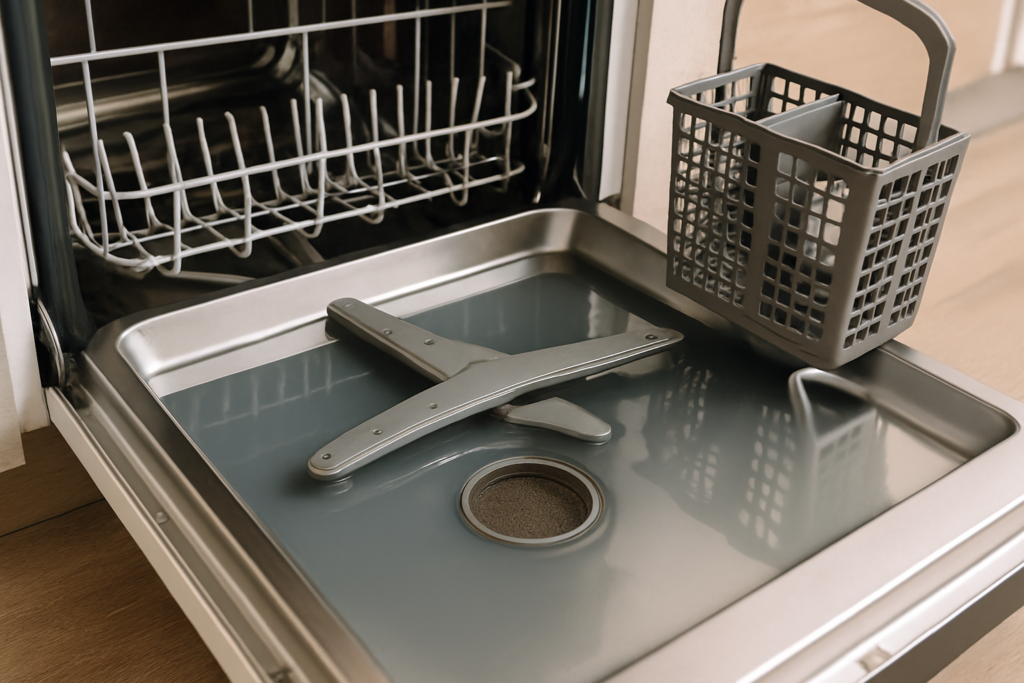
Remove the lower rack and check the filter assembly. On most models, it twists out counterclockwise. Rinse it thoroughly under hot water and use a soft brush to remove stuck-on debris. While you’re there, check the drain sump area for any foreign objects like broken glass or plastic.

Dishwasher Drain Filter
Keep a spare filter on hand since they wear out over time and replacement is quick and easy
The drain pump can also fail mechanically or get jammed with debris. Listen during the drain cycle. You should hear a distinct humming from the pump. If it’s silent or making grinding noises, the pump likely needs replacement. Accessing the pump requires removing the lower panel and disconnecting the mounting screws and hose clamps.
Check the drain hose for kinks or clogs too. This hose connects your dishwasher to either a garbage disposal or your sink’s drain pipe. It should have an air gap or high loop to prevent backflow. A blocked hose creates drainage issues that prevent cycle completion.
Preventive Maintenance Tips
Regular maintenance prevents many of the issues that cause continuous running. Run a cleaning cycle monthly using a dishwasher cleaner to remove mineral buildup and grease from internal components. This keeps sensors and switches operating correctly.
Scrape dishes before loading but don’t pre-rinse too thoroughly. Modern dishwashers actually need some food particles to activate their sensors properly. Just remove large chunks and let the machine do its job.
Check and clean the spray arms every few months. Remove them by unscrewing or unclipping from the center hub, then use a toothpick to clear any blocked spray holes. Clogged spray arms reduce cleaning efficiency and can confuse turbidity sensors.
Inspect door gaskets annually for cracks or tears. A leaking gasket can trigger safety sensors or cause water to reach electrical components. Replace worn gaskets before they cause bigger problems.
Frequently Asked Questions
How long should a normal dishwasher cycle take?
Most standard wash cycles run between 1.5 to 3 hours depending on your model and selected settings. Heavy duty or sanitize cycles can extend to 4 hours. If your dishwasher regularly runs longer than 4 hours or never completes a cycle, you definitely have a problem that needs attention.
Can I reset my dishwasher to fix continuous running?
Try resetting by pressing and holding the start/cancel button for 3-5 seconds, or flip the circuit breaker off for 5 minutes. This clears temporary control board glitches and sometimes resolves the issue. If the problem returns after a reset, you have a hardware failure that needs proper diagnosis.
Why does my dishwasher keep adding water?
Continuous water filling usually indicates a stuck float switch, failed water inlet valve, or faulty control board. Start by checking if the float moves freely. If it does, test the inlet valve for proper electrical function. This problem wastes significant water and should be addressed quickly.
Is it worth repairing an old dishwasher that won’t stop running?
For dishwashers under 7 years old, repairs usually make financial sense unless the control board needs replacement. Machines older than 10 years often develop multiple issues close together, making replacement more economical. Factor in energy efficiency improvements too. A new Energy Star dishwasher uses about 30% less water and energy than models from 2010 or earlier.
This article contains affiliate links. We may earn a small commission at no extra cost to you.