Few things are more frustrating than loading a full dishwasher, reaching for the power button, and getting absolutely nothing in response. No lights, no sounds, no sign of life whatsoever. Before you start shopping for a replacement or calling an expensive repair technician, you should know that most dishwasher power issues have simple fixes you can handle yourself.
This guide walks you through the most common reasons why your dishwasher won’t turn on, from basic troubleshooting steps anyone can do to identifying which parts might need replacement. Most of these fixes take less than 30 minutes and require minimal tools.
Start With the Obvious: Check Your Power Supply
I know it sounds almost insulting, but you’d be surprised how often the issue is simply a tripped breaker or unplugged power cord. Before you pull out your toolbox, spend two minutes checking these basics.
Head to your electrical panel and look for a tripped circuit breaker. A tripped breaker sits in the middle position between ON and OFF, or it might be fully in the OFF position. Reset it by switching it completely off, then back on. Don’t just flip it to ON from the middle position because that won’t actually reset it.
Next, check if your dishwasher is hardwired or plugged in. Many dishwashers connect directly to your home’s wiring, but some models use a standard plug beneath the unit. If yours plugs in, pull the dishwasher out slightly and verify the plug is fully seated in the outlet. Test that outlet with another device like a phone charger to confirm it’s working.
Also check your GFCI outlets. If your dishwasher shares a circuit with a kitchen outlet that has a reset button (usually near the sink), that GFCI might have tripped. Press the reset button and try your dishwasher again.
The Door Latch and Door Switch Problem
Your dishwasher won’t start if it thinks the door is open, even if it looks perfectly closed to you. The door latch and door switch work together as a safety mechanism, and when either fails, your dishwasher appears completely dead.
Open and close your dishwasher door firmly. You should hear a distinct click when it latches. If the latch feels loose, doesn’t catch properly, or you don’t hear that click, you’ve found your problem.
The door switch is a small component behind the latch assembly that tells the control board the door is secure. Over time, these switches wear out or get misaligned. You can test if this is your issue by listening carefully when you close the door. On most models, you should hear a faint click from the switch itself, separate from the mechanical latch sound.
Replacing a door latch assembly typically costs between competitively priced and competitively priced in parts and takes about 20 minutes. You’ll need to remove the inner door panel to access it, which sounds intimidating but usually involves just removing several screws around the door’s edge.
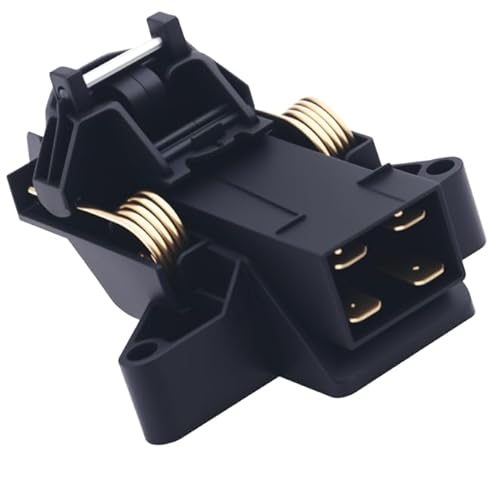
Dishwasher Door Latch Assembly
Universal replacement latches work for most major dishwasher brands.
Perform a Hard Reset on Your Dishwasher
Modern dishwashers are essentially computers with spray arms, and like any computer, they sometimes need a reboot. A hard reset clears the control board’s memory and can fix issues caused by power surges, software glitches, or error codes that have locked up the system.
The universal reset method works for most brands: turn off the circuit breaker to your dishwasher and leave it off for at least five minutes. This gives the capacitors time to fully discharge. Turn the breaker back on and try starting the dishwasher.
Some brands have specific reset procedures. For Bosch dishwashers, you can press and hold the Start button for three to five seconds. KitchenAid models often reset by pressing the heated dry button five times in a row. Check your owner’s manual for brand-specific instructions, but the circuit breaker method works universally.
After a reset, you might need to reprogram your preferred settings. Any custom cycles or options will return to factory defaults.
Thermal Fuse Failures
The thermal fuse is a safety device that protects your dishwasher from overheating. When it blows, it cuts all power to the control panel, making your dishwasher appear completely dead. Unfortunately, this is one of the more common failures in dishwashers over five years old.
Unlike a circuit breaker, a thermal fuse doesn’t reset. Once it blows, you need to replace it. The fuse typically sits behind the control panel or near the motor assembly, depending on your model.
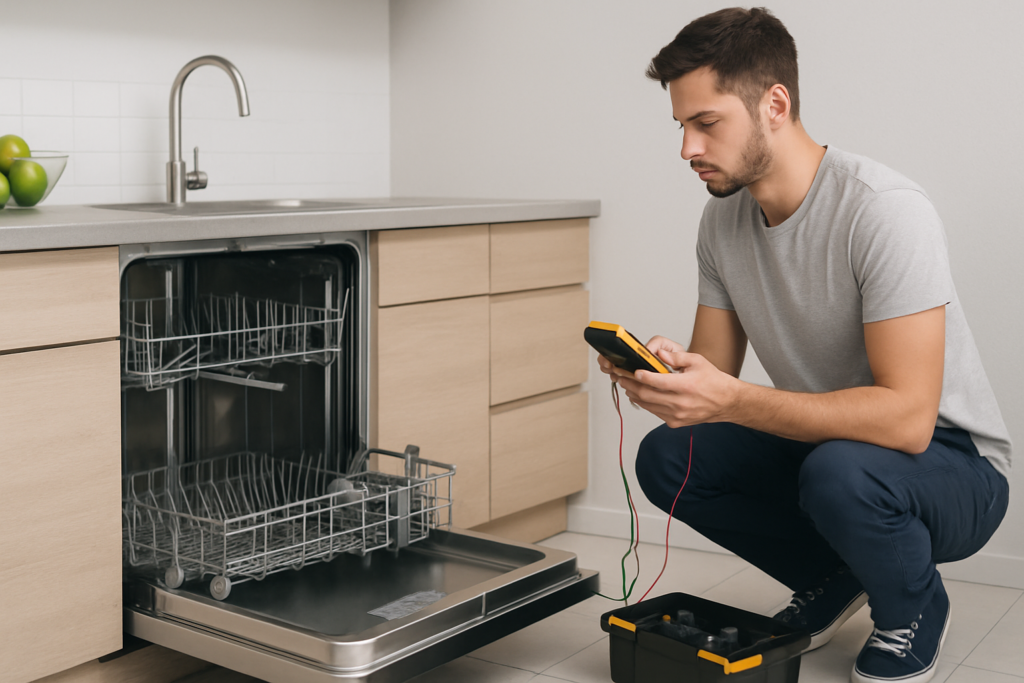
You’ll need a multimeter to test the thermal fuse. Set it to measure continuity (the ohm setting), then touch the probes to each terminal on the fuse. A working fuse shows continuity (the meter beeps or shows a low resistance reading). No continuity means the fuse has blown and needs replacement.
Thermal fuses blow for a reason, usually overheating caused by a failing motor, pump blockage, or ventilation issue. Simply replacing the fuse without addressing the underlying cause means it will likely blow again. Before installing a new fuse, clean your dishwasher thoroughly, check for blockages in the drain filter, and make sure the vent is clear.

Digital Multimeter
Essential for diagnosing any electrical appliance issue, not just dishwashers.
Control Board and Timer Issues
The control board is your dishwasher’s brain. When it fails, you might get no response at all, or you might see random lights, error codes, or buttons that don’t respond properly.
Control board failure often happens after power surges or water damage. Look for visible signs of damage: burn marks, corrosion, or swollen capacitors on the board itself. You’ll need to remove the front panel to inspect the control board on most models.
Water damage is particularly common. Even though the control board sits behind the front panel, steam can condense and drip onto the electronics over years of use. If you see corrosion or water stains, you can try cleaning the board with electrical contact cleaner and letting it dry completely. This sometimes works for minor corrosion, but badly damaged boards need replacement.
Replacement control boards vary widely in cost depending on your model. Generic boards are available for some popular models, while others require manufacturer-specific parts. Before ordering a new control board, verify this is actually the problem because it’s one of the more expensive repairs.
Testing and Replacing the Power Cord (For Portable Models)
Portable and countertop dishwashers use standard power cords that can fray, break, or develop internal damage. This section applies mainly to these models, though some built-in dishwashers also use plug-in connections.
Inspect the entire length of the cord for visible damage: fraying, cuts, burn marks, or areas that feel unusually stiff. Pay special attention to the ends where the cord meets the plug and where it enters the dishwasher body. These are the most common failure points.
Use your multimeter to test the cord. Unplug it from both the wall and the dishwasher. Set your meter to continuity mode and test from each prong on the plug to its corresponding wire at the dishwasher end. Each wire should show continuity. Then test between the prongs to verify there’s no short circuit (there should be no continuity between different wires).
Power cords are easy to replace and inexpensive. Make sure you get the correct amp rating for your model. Most dishwashers use 15-amp cords, but larger models might require 20-amp versions.
When to Call a Professional
Some dishwasher repairs are better left to professionals, especially those involving direct hardwired electrical connections or major component replacements that require specialized knowledge.
Call a technician if you’ve checked everything above and still have no power. You might have a wiring issue inside the walls, a failed junction box connection, or a problem with your home’s electrical system rather than the dishwasher itself.
Also consider professional help if you’re uncomfortable working with electrical components or if your dishwasher is still under warranty. DIY repairs often void manufacturer warranties, and some extended warranty plans cover repair costs that make professional service worthwhile.
For built-in dishwashers with hardwired connections, you legally need a licensed electrician for any work involving the home’s electrical system in many jurisdictions. While you can test and replace components inside the dishwasher itself, modifications to hardwired connections should be done by someone qualified.
Frequently Asked Questions
Why does my dishwasher have power but won’t start a cycle?
If your control panel lights up but the dishwasher won’t actually start washing, you likely have a different issue than a complete power failure. Common causes include a faulty door latch switch, a broken timer, a failed water inlet valve, or an active child lock feature. Check your display for error codes and verify the door is latching properly. Many models won’t start if the door switch isn’t engaging correctly, even though the control panel has power.
How long should a dishwasher last before having power issues?
Most dishwashers last 9-12 years before major electrical components start failing. Thermal fuses and door switches commonly fail around year 7-10, while control boards might last longer unless damaged by power surges. Regular maintenance extends lifespan considerably. Keep the filter clean, avoid overloading, and consider using a surge protector for plug-in models to protect the control board.
Can a blown thermal fuse cause other damage?
The thermal fuse itself doesn’t cause damage because it’s designed to fail safely and protect the dishwasher. However, whatever caused the thermal fuse to blow might have damaged other components. If your motor was overheating badly enough to blow the fuse, the motor itself might be damaged. Always investigate why the fuse blew before simply replacing it, or you’ll end up replacing fuses repeatedly.
Is it worth repairing a dishwasher that won’t turn on?
This depends on the age of your dishwasher and the cost of repair. For dishwashers under five years old, most repairs are worthwhile because the appliance has significant life remaining. For units over 10 years old, replacement often makes more sense unless the fix is simple and inexpensive. A good rule: if the repair costs more than half the price of a comparable new dishwasher, replace it instead. Simple fixes like door latches or thermal fuses are almost always worth doing regardless of age.
This article contains affiliate links. We may earn a small commission at no extra cost to you.