You loaded your dishwasher, added detergent, pressed start, and… nothing. Or maybe you hear it running, but the spray arms aren’t spinning and your dishes come out still dirty. This is one of the most common dishwasher complaints, and the good news is that it’s often fixable without calling a repair technician.
Before you panic, understand that “not spinning” usually refers to the spray arms inside the dishwasher. These are the components that rotate and spray water to clean your dishes. When they stop working, you’ll notice food particles still stuck on plates and glasses that haven’t been rinsed properly.
Common Causes of Spray Arm Problems
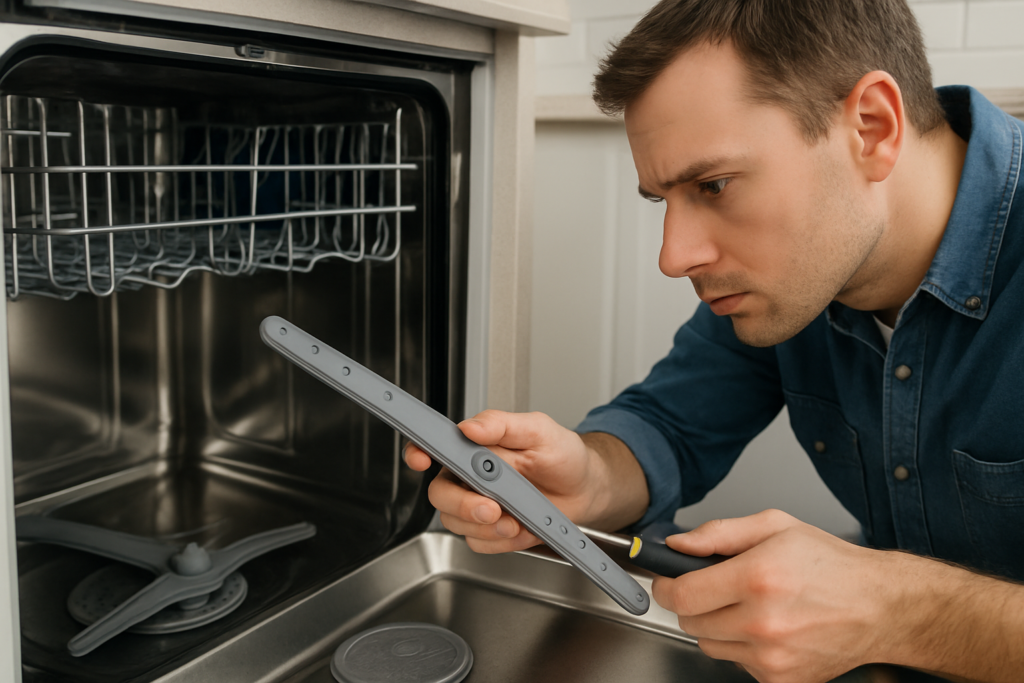
The most frequent culprit is actually the simplest one: blockages. Food debris, small bones, fruit pits, or even broken glass can lodge in the spray arm holes or the center hub where the arm connects. Pull out both the lower and upper spray arms (they usually twist off counterclockwise) and inspect them under bright light.
Run water through the holes and use a toothpick or small wire to clear any clogs. You’d be surprised how often a single clogged hole can prevent proper rotation. While you have them out, check that they spin freely when you turn them by hand.
Another issue is low water pressure reaching the spray arms. Check your dishwasher drain filter at the bottom of the tub. A clogged filter restricts water flow, which means less pressure to spin the arms. Clean this filter every month by removing it, rinsing under hot water, and scrubbing with an old toothbrush.

Dishwasher Cleaning Tablets
Monthly deep cleaning tablets help prevent buildup that can clog spray arms and filters
Motor and Pump Issues
If your spray arms are clean but still won’t spin, the circulation pump might be failing. This pump creates the water pressure needed to rotate the arms. You can test this by running a cycle and listening carefully. You should hear a distinct humming or whooshing sound when water is circulating.
A weak or dying pump motor produces little to no sound, or makes grinding noises. Pump replacement is a bigger job that might require professional help, but it’s worth diagnosing before you buy a new dishwasher. Many pumps can be replaced for less than half the cost of a new appliance.
Check if anything is blocking the pump impeller. Small items like toothpicks, twist ties, or broken glass can jam the pump assembly. Access this by removing the spray arm and filter, then the pump cover (varies by model but usually requires removing a few screws).
Water Supply and Inlet Valve
Sometimes the problem isn’t inside the dishwasher at all. Turn on your kitchen faucet and check the water pressure. Low household water pressure means your dishwasher won’t fill properly, resulting in weak spray action.
The water inlet valve can also fail over time. This valve controls water flow into the dishwasher. When it’s partially clogged with mineral deposits or malfunctioning, you’ll get insufficient water for proper cleaning. You can often hear if this valve is working when the dishwasher starts its fill cycle.

CLR Calcium Lime Rust Remover
Excellent for dissolving mineral deposits in inlet valves and spray arm holes
Quick Fixes to Try First
Before diving into complex repairs, run through this checklist. Make sure large dishes aren’t blocking the spray arm’s path. Check that the spray arms are properly seated and locked into place. Run an empty cycle with a cup of white vinegar on the top rack to dissolve any mineral buildup.
Inspect the dishwasher’s mounting under your counter. Some models can shift over time, causing internal components to misalign. Leveling the unit properly can sometimes solve mysterious performance issues.
Frequently Asked Questions
Why does my dishwasher spray arm spin sometimes but not others?
Intermittent spinning usually indicates partial blockage in the spray arm holes or filter. It can also mean the pump is wearing out and only works well when water temperature and pressure are optimal. Clean all filters and spray arms thoroughly, then monitor if the problem persists. Temperature sensors can also cause this issue, as some dishwashers reduce water pressure when they detect incorrect temperatures.
Can I run my dishwasher if the spray arms aren’t spinning?
You can, but you shouldn’t make a habit of it. Running cycles without proper spray arm function wastes water, electricity, and detergent while leaving your dishes dirty. More importantly, stagnant water at the bottom can lead to mold growth and unpleasant odors. Fix the problem before resuming normal use to avoid creating additional issues that will cost more to repair later.
This article contains affiliate links. We may earn a small commission at no extra cost to you.