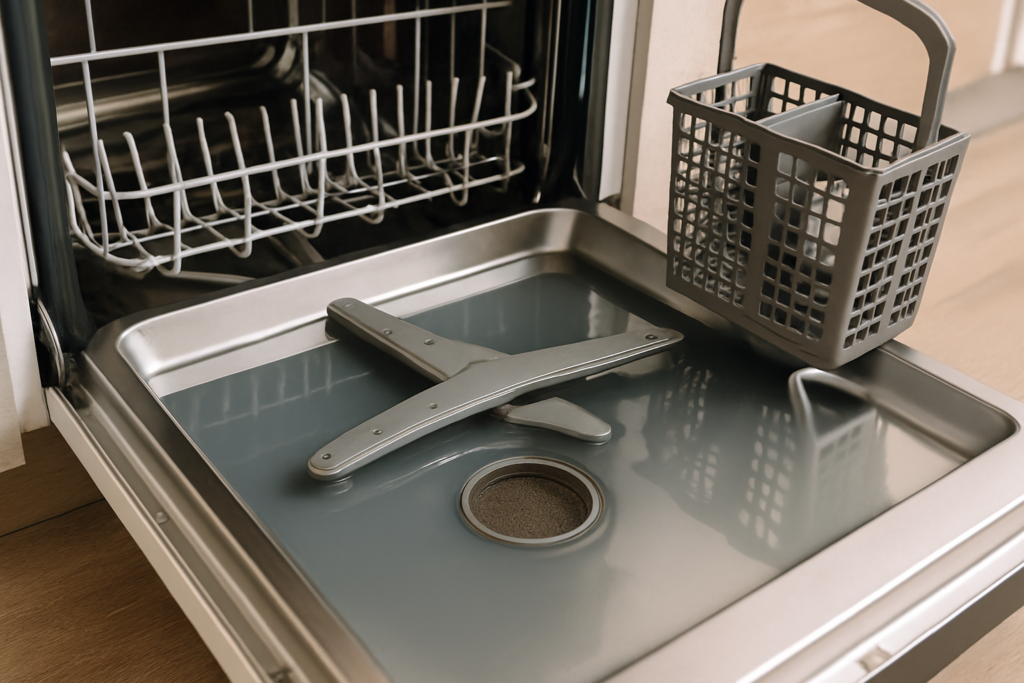
You open your dishwasher expecting clean, dry dishes, and instead you’re greeted by a pool of murky water at the bottom. It’s one of those household problems that stops you in your tracks. A dishwasher that won’t drain isn’t just inconvenient, it can leave you with dishes that aren’t truly clean and a kitchen that smells like yesterday’s dinner.
The good news is that most dishwasher drainage issues have simple causes that you can fix yourself in less than 30 minutes. Before you call a repair technician or start shopping for a new appliance, let’s walk through the most common culprits and how to address them.
Check the Drain Filter First
Your dishwasher’s filter is the first line of defense against food particles, and it’s also the most common reason for drainage problems. Most modern dishwashers have a cylindrical filter located at the bottom of the tub, usually beneath the lower spray arm.
To access it, remove the lower dish rack and twist or lift out the filter assembly. You might be surprised by what you find. I’ve pulled out everything from popcorn kernels to pieces of broken glass, chicken bones, and even small utensils that slipped through the rack.
Rinse the filter under hot water and use a soft brush to remove stubborn debris. If you haven’t cleaned it in months (or ever), you might need to soak it in warm, soapy water for 15 minutes first. Some people use an old toothbrush for this, but a dedicated filter cleaning brush works better and keeps your toothbrush where it belongs.
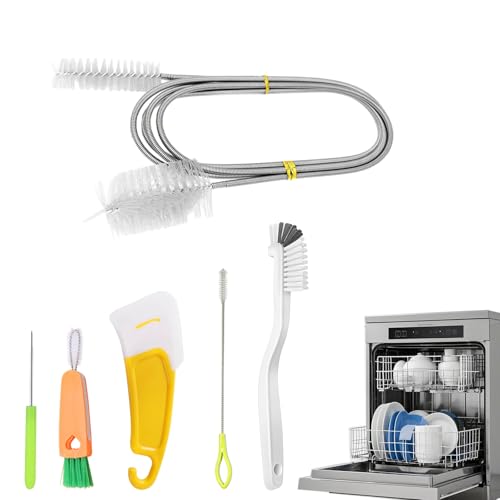
Dishwasher Filter Cleaning Brush Kit
These specialized brushes reach into filter grooves and drain areas that regular brushes miss
While you have the filter out, check the area underneath it. There’s usually a sump or collection basin that can trap larger debris. Wipe this area clean with a damp cloth.
Inspect the Drain Hose
The drain hose carries water from your dishwasher to either your garbage disposal or directly to your sink’s drain pipe. Two main problems occur here: kinks and clogs.
Pull out your dishwasher slightly (turn off the power first) and look at the drain hose on the back. It should make a gradual loop upward before connecting to the disposal or drain. This high loop prevents dirty water from your sink from flowing back into the dishwasher.
Check for any sharp bends or kinks that could restrict water flow. The hose should curve smoothly without any pinch points. If you find a kink, carefully straighten it and secure the hose so it won’t happen again.
For clogs inside the hose, disconnect it at both ends (keep towels handy for spillage) and run water through it. If water doesn’t flow freely, you can try using a plumbing snake or simply replace the hose. Replacement drain hoses are inexpensive and available at most hardware stores or through online retailers.
Clear the Air Gap (If You Have One)
Some dishwasher installations include an air gap, which is a small chrome or plastic cylinder sitting on your countertop or sink deck next to the faucet. Not all homes have these, but if yours does, it could be the source of your drainage woes.
The air gap prevents contaminated water from being siphoned back into your dishwasher. When it gets clogged with food particles or grease, water can’t drain properly. You might even see water overflowing from the top of the air gap during the drain cycle.
Remove the chrome cover (it usually just lifts off or unscrews) and the plastic cap underneath. Clean out any debris you find inside. Use a small bottle brush or a bent wire to clear the openings. Run water through it to make sure it flows freely.
Test the Drain Pump
If your filter is clean and your hose is clear, but water still won’t drain, the drain pump might be failing. This is a bit more technical, but you can still diagnose it yourself.
Start a drain cycle and listen carefully. A working pump makes a distinct humming or whirring sound. If you hear nothing, or if you hear a humming without any water movement, the pump might be jammed or burned out.
The pump is typically located at the bottom of the dishwasher. You’ll need to remove the lower spray arm and filter to access it. Check for any objects blocking the impeller (the small propeller-like part that moves water). Even a small piece of broken glass or a toothpick can jam it.
Try spinning the impeller with your finger. It should move freely. If it’s stuck or doesn’t turn smoothly, you’ve found your problem. Sometimes you can clear the obstruction and get it working again. Other times, you’ll need to replace the pump assembly.

Universal Dishwasher Drain Pump
Compatible with many brands and often easier to install than you’d expect
Check Your Garbage Disposal Connection
If your dishwasher drains into a garbage disposal, there’s a sneaky issue that trips up many homeowners. When you install a new garbage disposal, there’s a knockout plug inside the drain inlet where the dishwasher hose connects.
This plug must be removed before connecting the dishwasher. If it’s still in place, your dishwasher simply can’t drain. You’ll need to disconnect the drain hose, stick a screwdriver into the disposal’s dishwasher inlet, and knock out the plug. Make sure to fish out the plastic piece from inside the disposal afterward.
Even if your disposal isn’t new, food buildup in the disposal itself can block the drain. Run the disposal with hot water for 30 seconds to clear any accumulated debris. A clogged disposal is a common and often overlooked cause of dishwasher drainage problems.
Examine the Check Valve
The check valve (also called a backflow preventer) ensures water flows in only one direction out of the dishwasher. It’s usually a small flapper or ball mechanism located in the drain sump or pump housing.
Over time, this valve can get stuck in the closed position due to mineral buildup or debris. When that happens, water can’t exit the dishwasher even if everything else is working perfectly.
Access to the check valve varies by model. On some dishwashers, you can reach it by removing the filter and spray arm. On others, you might need to remove the lower panel. Consult your owner’s manual for specific instructions.
Clean the valve with warm water and vinegar to dissolve mineral deposits. Make sure it moves freely. If it’s damaged or won’t operate smoothly after cleaning, replacement valves are model-specific but widely available.
When to Call a Professional
Most drainage issues fall within the DIY category, but sometimes professional help makes sense. If you’ve checked all the common causes and water still won’t drain, you might be dealing with a more complex electrical problem, a failed control board, or issues with the main circulation pump.
Additionally, if your dishwasher is less than two years old and still under warranty, attempting certain repairs yourself could void that coverage. Check your warranty documentation before disassembling major components.
Persistent drainage problems combined with other issues like the dishwasher not starting, unusual noises, or error codes pointing to multiple failures might indicate it’s time to replace the unit rather than repair it. For a dishwasher that’s more than eight years old, replacement often makes more financial sense than extensive repairs.
Prevention Tips to Keep Your Dishwasher Draining
Once you’ve got your dishwasher draining properly again, a few simple habits will help prevent future problems.
Scrape plates thoroughly before loading them. You don’t need to pre-rinse (modern dishwashers actually work better with some food residue), but large chunks of food don’t belong in there. Remove bones, fruit pits, and anything that could damage the pump or clog the filter.
Clean the filter monthly. Set a recurring reminder on your phone. This five-minute task prevents 90% of drainage issues. While you’re at it, wipe down the door gasket and spray arms.
Run hot water at the sink before starting the dishwasher. This ensures the dishwasher begins its cycle with hot water, which dissolves grease and detergent more effectively. It also helps prevent grease buildup in the drain system.
Use the right amount of detergent. More isn’t better. Excess detergent creates suds that can interfere with drainage and leave residue throughout the system. Follow the manufacturer’s recommendations, and consider using quality detergent pods for consistent dosing.
Run a cleaning cycle every few months using a dishwasher cleaning product or white vinegar. This helps remove mineral buildup, grease, and odors from internal components including the drain system.

Affresh Dishwasher Cleaner Tablets
Specifically formulated to break down the grease and limescale that cause drainage problems
Frequently Asked Questions
Why does my dishwasher smell bad even after cleaning the filter?
A bad smell usually means food particles are decomposing somewhere in the drain system. Check the drain hose for clogs, clean the area under the filter thoroughly, and make sure your garbage disposal (if connected) is clean. Running a cleaning cycle with vinegar or a commercial dishwasher cleaner should eliminate lingering odors. If the smell persists, there might be a clog further down the drain line that needs professional attention.
Can I use Drano or other chemical drain cleaners in my dishwasher?
Never use chemical drain cleaners in your dishwasher. These products can damage rubber seals, plastic components, and the stainless steel interior. They can also create dangerous fumes when mixed with dishwasher detergent. Stick to manual cleaning methods, enzyme-based cleaners designed for dishwashers, or white vinegar for safe and effective cleaning.
How much water should remain in the bottom of my dishwasher after a cycle?
A small amount of standing water (about a cup or two) in the very bottom sump area is normal. This water helps keep the seals moist and prevents odors. However, if you can see water covering the filter or pooling across the bottom of the tub, that indicates a drainage problem that needs attention.
My dishwasher drains slowly but eventually empties. Is this a problem?
Slow drainage usually indicates a partial clog in the filter, drain hose, or air gap. While the dishwasher might eventually empty, this incomplete drainage leaves dirty water behind that gets recirculated onto your dishes during the next wash. Address slow drainage the same way you’d handle a complete blockage by checking and cleaning all the components mentioned in this article.
This article contains affiliate links. We may earn a small commission at no extra cost to you.