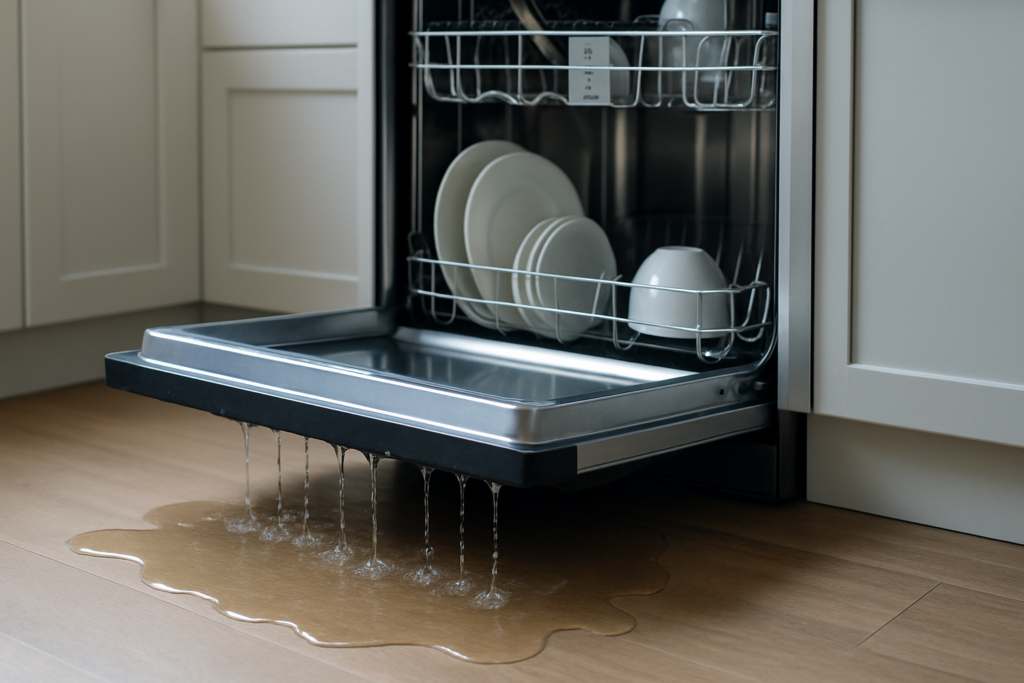
Nothing ruins your morning quite like stepping into a puddle of water in front of your dishwasher. A leaking dishwasher is one of those household problems that starts small but can quickly escalate into water damage, ruined floors, and a hefty repair bill if you ignore it.
The good news is that most dishwasher leaks come from a handful of common culprits, and many of them you can fix yourself with basic tools and a little patience. Let’s walk through the most frequent causes and how to troubleshoot them before you call in a professional.
Check the Door Seal First
The rubber gasket that runs along your dishwasher door is often the first place to develop problems. Over time, this seal gets brittle, cracks, or collects food debris that prevents it from creating a watertight barrier.
Run your hand along the entire perimeter of the door gasket. You’re feeling for cracks, tears, or hardened sections. Pay special attention to the bottom corners where water pools most often. If you spot any damage, the gasket needs replacing.
Sometimes the gasket isn’t damaged, just dirty. Food particles, grease, and mineral deposits can build up and prevent a proper seal. Wipe down the entire gasket with warm soapy water and a soft cloth. For stubborn buildup, use a mixture of equal parts white vinegar and water.

Dishwasher Door Gasket Seal
Universal gaskets fit most major dishwasher brands and are easy to install yourself
Inspect the Water Inlet Valve
The inlet valve controls water flow into your dishwasher. It’s typically located behind the lower front panel where the water supply line connects to the machine. When this valve fails or its connections loosen, water can leak out during the fill cycle.
Turn off the water supply to your dishwasher before investigating. Remove the lower access panel and look for signs of moisture around the inlet valve. Check that all connections are hand-tight and that the valve itself isn’t cracked or corroded.
A failing inlet valve often leaks only during certain parts of the wash cycle, usually when the dishwasher is filling with water. If you notice water pooling specifically during the first few minutes after the dishwasher starts, this is your likely problem.
Don’t Overlook the Drain System
A clogged or malfunctioning drain system causes water to back up and overflow. This usually shows up as water on the floor after the wash cycle completes, not during the washing itself.
Start by removing and cleaning your dishwasher’s filter. Most modern dishwashers have a cylindrical filter at the bottom of the tub that you can twist and lift out. Rinse it thoroughly under hot water and use a soft brush to remove any stuck-on debris. You’d be surprised how much gunk accumulates there.

Dishwasher Drain Filter
Replacement filters are inexpensive and should be replaced every 1-2 years for optimal performance
Next, check the drain hose that runs from your dishwasher to either your garbage disposal or sink drain. Make sure it has a high loop or air gap to prevent backflow. The hose should rise to just below the countertop before dropping down to the drain connection. If it’s lying flat along the floor, water can siphon back into the dishwasher and eventually leak out.
Examine All Hose Connections
Your dishwasher has multiple hoses, and any one of them can develop leaks at connection points or along their length. The two main ones are the water supply hose (bringing clean water in) and the drain hose (taking dirty water out).
Tighten all hose clamps with a screwdriver. Many leaks happen simply because vibration from normal operation loosens these connections over time. While you’re at it, inspect the hoses themselves for cracks, bulges, or signs of wear. Dishwasher supply hoses typically last 5-7 years before they need replacement.
If you have an older dishwasher with rubber hoses, consider upgrading to braided stainless steel versions. They’re more durable and less likely to burst or crack over time.
Look for Spray Arm Issues
This one catches people off guard. A cracked or clogged spray arm can shoot water in the wrong direction, hitting the door seals repeatedly and eventually causing leaks. It can also prevent dishes from getting clean, so you’ll solve two problems at once.
Remove both the upper and lower spray arms (they usually just twist or snap off) and inspect them closely. Look for cracks and make sure all the spray holes are clear. Use a toothpick or small wire to clear out any blocked holes.
When you reinstall them, spin each spray arm by hand to make sure it rotates freely. If it wobbles or catches, that’s a sign it’s not seated properly or the mounting mechanism is worn.
When to Call a Professional
Most of the issues above are DIY-friendly, but some leak sources require professional help. If you’ve checked everything and still can’t find the source, or if the leak is coming from the pump or motor area, it’s time to call in a technician.
Leaks from the tub itself (not the door or hoses) often indicate a cracked tub or failed internal seals. These repairs usually aren’t worth the cost on dishwashers more than 7-8 years old. You’re better off replacing the unit entirely.
Another red flag is if you’re finding water behind or underneath the dishwasher but can’t trace it to any visible component. Internal leaks can be tricky to diagnose and often require specialized tools to pinpoint.
Frequently Asked Questions
Why does my dishwasher only leak sometimes?
Intermittent leaks usually point to a door seal problem or a failing inlet valve. The door seal might only leak when water pressure is at its highest during certain wash cycles. The inlet valve typically leaks only when water is actively flowing through it. Try running your dishwasher while you’re home and checking for leaks at different points in the cycle to narrow down the timing.
Can I use my dishwasher if it’s leaking a little bit?
You really shouldn’t. Even a small leak can cause significant water damage to your floors and cabinets over time. Moisture also promotes mold growth in areas you can’t easily see or clean. Fix the leak first, then run your dishwasher. In the meantime, hand washing dishes is the safer option.
How much does it typically cost to fix a leaking dishwasher?
DIY repairs like replacing a door gasket or tightening hose connections cost very little, usually under competitively priced for parts. Professional repairs vary widely depending on the problem but typically range from competitively priced-competitively priced for common issues like valve replacements or drain repairs. If you’re looking at repairs over competitively priced, compare that to the cost of a new dishwasher, especially if your current one is already aging.
This article contains affiliate links. We may earn a small commission at no extra cost to you.