Standing in the vacuum aisle, you’re faced with a classic dilemma: upright or canister? Both styles have dominated American homes for decades, yet they couldn’t be more different in how they approach the same job. Your choice will affect your daily cleaning routine for years to come.
The decision goes beyond simple preference. Your home’s layout, floor types, and storage situation all play crucial roles in determining which vacuum style will serve you best. Let’s break down the real differences between these two approaches to help you make the right call for your specific needs.
Understanding the Fundamental Differences
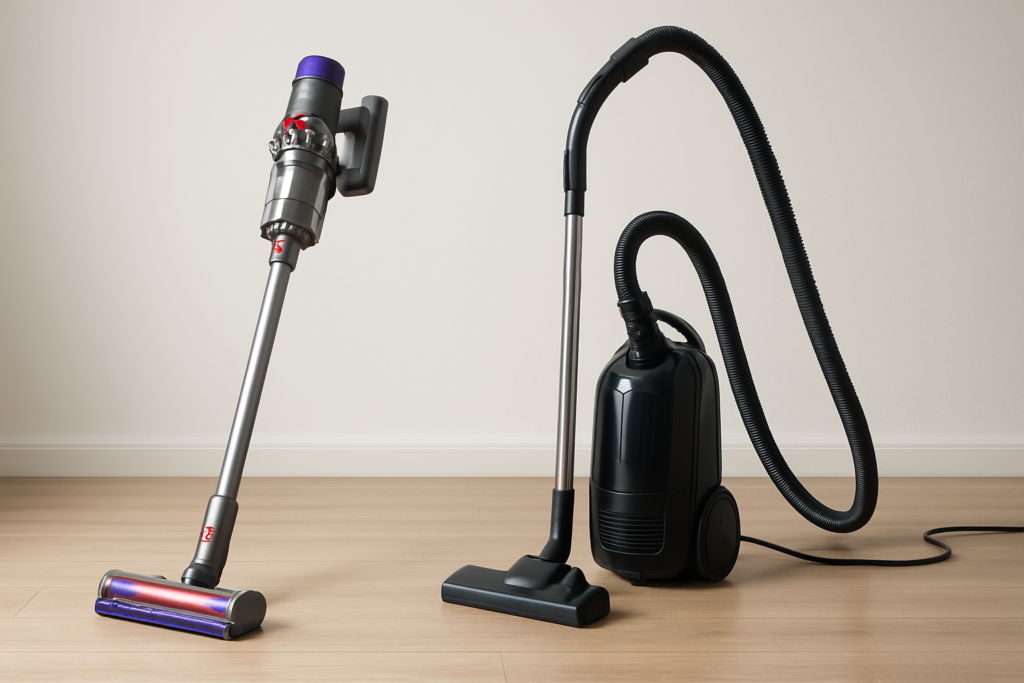
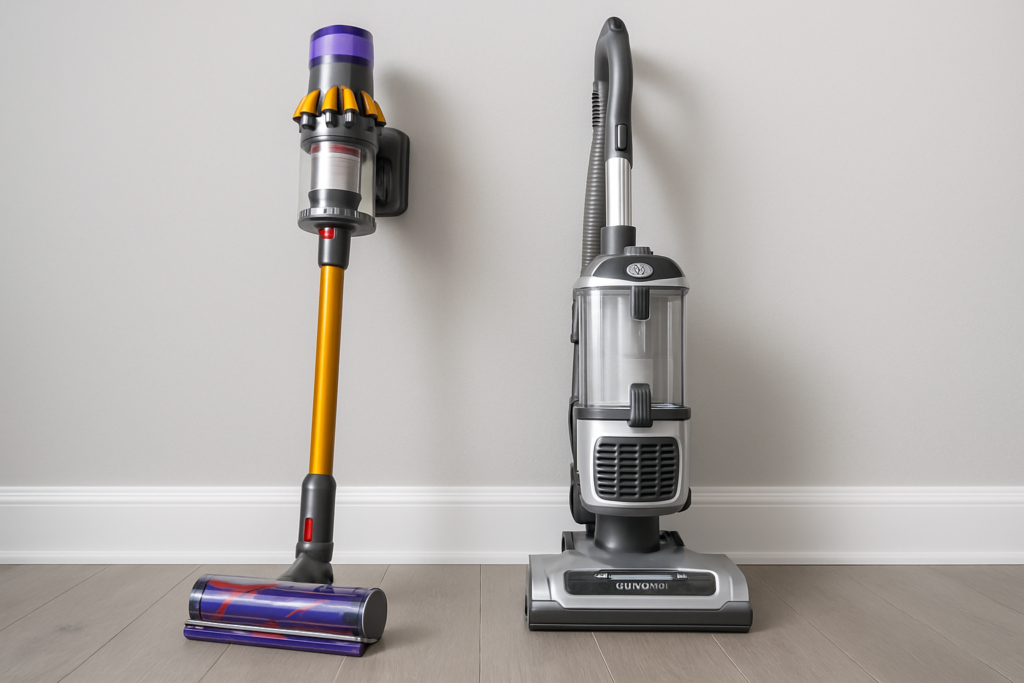
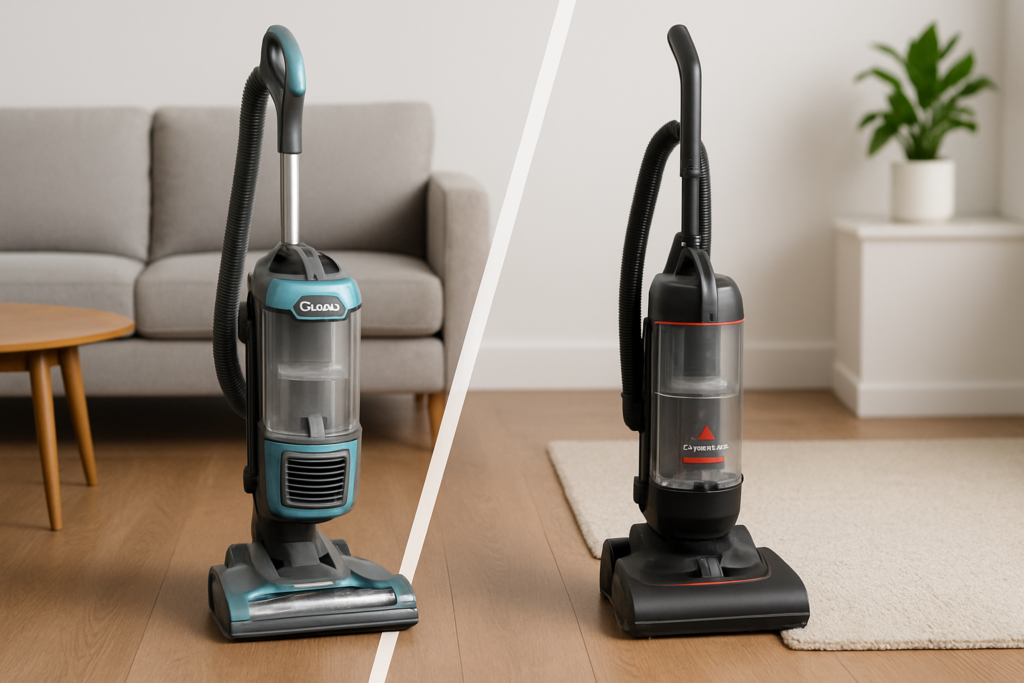
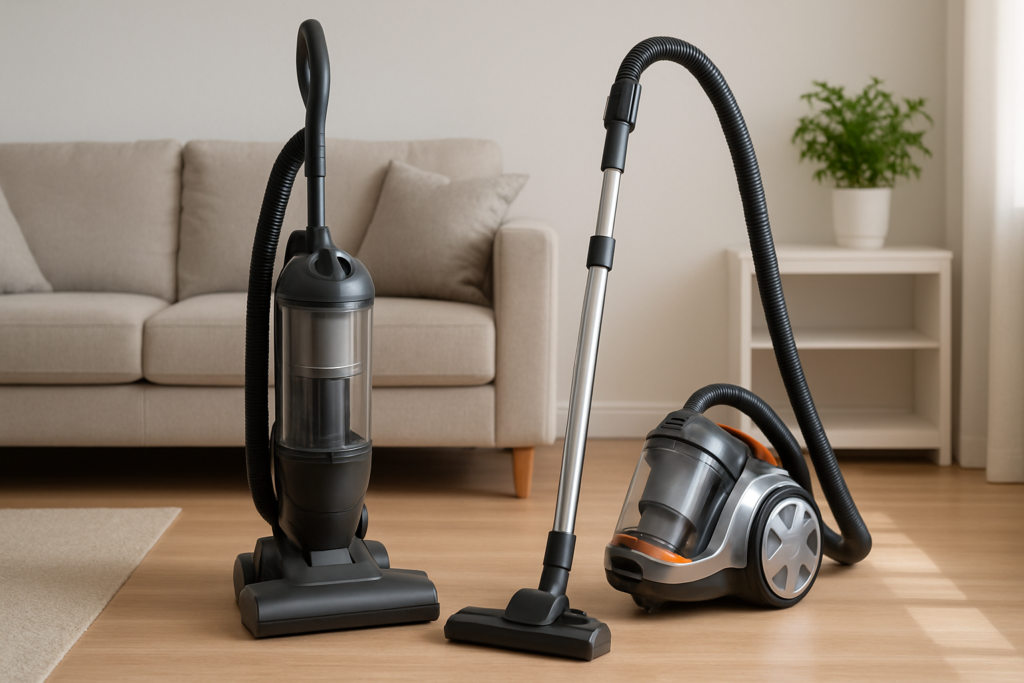
Upright vacuums integrate the motor, brush roll, and collection system into a single vertical unit. You push them forward and pull them back across your floors, with the cleaning head directly attached to the main body. This design prioritizes carpet cleaning power and storage simplicity.
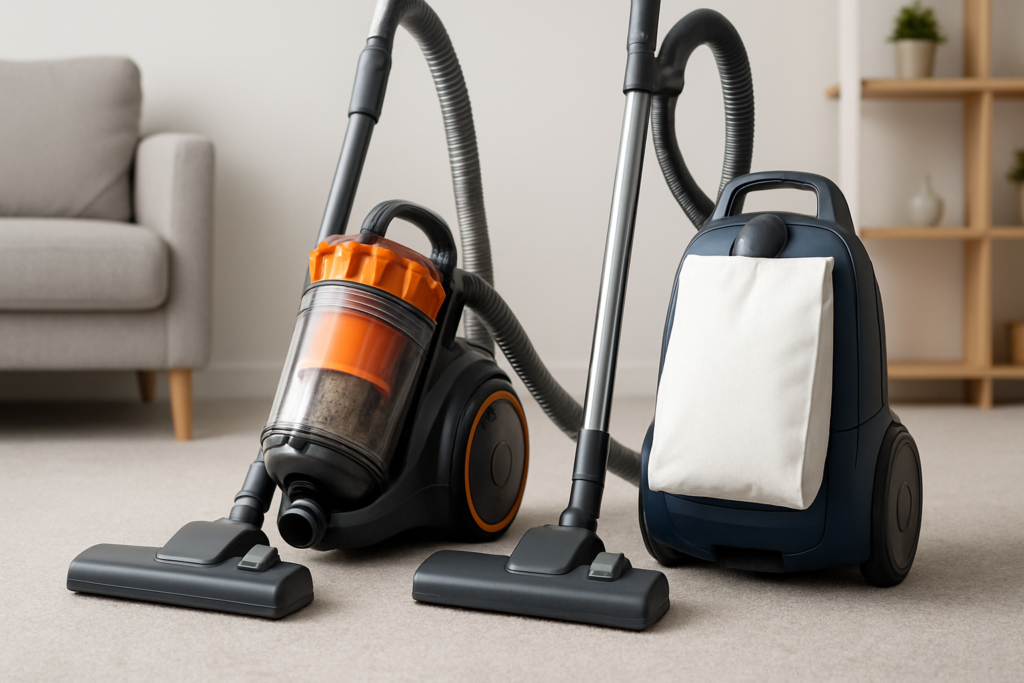
Canister vacuums separate the motor and dust collection into a wheeled unit that follows behind you, connected to a lightweight wand and cleaning head by a flexible hose. This split design offers more versatility but requires coordination between two separate pieces.
The fundamental difference shapes everything else about how these vacuums perform in real-world use.
Floor Type Performance
Carpet Cleaning Capabilities
Upright vacuums excel on carpeted floors, particularly medium to thick pile carpets. The direct motor connection to the brush roll creates powerful agitation that lifts embedded dirt and pet hair. Most uprights also provide better weight distribution over the cleaning head, helping the brush penetrate carpet fibers more effectively.
The Shark Navigator Lift-Away Professional NV356E represents this advantage well, delivering strong carpet performance at an accessible price point.
Shark Navigator Lift-Away Professional NV356E
Combines upright carpet power with detachable canister versatility for stairs and furniture
Canister vacuums can clean carpets effectively, but they typically require more passes to achieve the same deep cleaning results. The flexible hose connection creates slight suction loss, and maintaining proper brush contact pressure requires more technique.
Hard Floor Excellence
Canister vacuums dominate on hard floors. The lightweight wand and specialized floor tools glide smoothly across hardwood, tile, and laminate without the bulk of an upright’s main body. You can easily maneuver around furniture legs and clean right up to baseboards.
Many canister models include dedicated hard floor tools with soft bristles that capture fine dust without scratching delicate surfaces. Upright vacuums often struggle with large debris on hard floors, pushing items around rather than picking them up cleanly.
Mixed Flooring Solutions
Homes with both carpet and hard floors present interesting challenges. Modern uprights often include height adjustments and brush roll controls to handle different surfaces, but transitions can feel abrupt and require manual adjustments.
Canister vacuums handle mixed flooring more gracefully by swapping tools, but this means more interruptions to your cleaning routine. Some users prefer keeping multiple tools attached and switching as needed, while others find the tool changes disruptive.
Home Layout Considerations
Single-Story Homes
Single-level homes typically favor upright vacuums. You can move efficiently from room to room without carrying anything up or down stairs. The larger cleaning path of most uprights also helps you cover expansive open floor plans more quickly.
Canister vacuums work well in single-story homes too, especially if you have lots of furniture to navigate around or prefer the lighter feel of the wand.
Multi-Story Challenges
Stairs create the biggest differentiation between vacuum styles. Carrying a full upright vacuum between floors gets exhausting quickly. Even lift-away uprights that detach into lighter units still require hauling the main canister portion.
Canister vacuums shine in multi-story homes. The separate motor unit stays on one floor while you extend the hose to clean stairs comfortably. You can often clean an entire staircase from one landing position.
For multi-story homes with significant carpeting on upper floors, some families choose an upright for the main level and a lightweight stick vacuum or second canister for upstairs.
Room Size and Layout
Large, open rooms favor uprights with their wider cleaning paths and push-forward operation. Small, cluttered rooms benefit from the precision maneuvering possible with canister wands.
Homes with lots of furniture, tight spaces, or decorative elements that require cleaning around and under them typically work better with canister flexibility.
Storage Space Reality Check
Upright Storage
Uprights win the storage game through simplicity. Most models stand upright in a closet and take up minimal floor space. You don’t need to worry about coiling hoses or organizing separate tools.
However, uprights are typically taller than canister units, which can create issues in closets with low shelving or in apartments with limited vertical storage space.
Canister Storage Complexity
Canister vacuums require more storage planning. You need space for the main unit plus room to properly coil the hose and store attachments. Many people struggle with hose storage, leading to kinked hoses or cluttered closets.
The advantage comes in flexibility. Canister units are often shorter and can fit under shelving or in spaces where an upright won’t fit. Some models include onboard tool storage that keeps everything organized in one place.
Cleaning Preferences and Physical Factors
Physical Comfort
Upright vacuums require pushing and pulling motions that some users find more natural and less tiring. The handle height and weight distribution work well for people who prefer keeping the vacuum in front of them.
Canister vacuums reduce the weight in your hands to just the wand and cleaning head, making them easier on your arms and back. However, you need to coordinate pulling the canister unit behind you, which some find awkward initially.
People with mobility limitations often prefer canisters for the reduced weight handling, while others find uprights more stable and easier to control.
Cleaning Style Preferences
Methodical cleaners who like to work systematically through rooms often prefer uprights. The straightforward back-and-forth motion feels efficient and easy to track.
Detail-oriented cleaners typically gravitate toward canisters for the precise control and specialized tools. The ability to easily switch between cleaning heads mid-session appeals to thorough cleaners.
Maintenance and Durability Factors
Upright Maintenance
Uprights typically have fewer moving parts and connections, which can translate to better long-term reliability. The direct drive systems are often more durable than flexible hose connections.
However, uprights put more stress on brush rolls and belts due to their aggressive carpet cleaning approach. These components need regular replacement, especially in homes with long-haired pets.
Canister Longevity
Quality canister vacuums often outlast uprights, particularly European brands built for durability. The separated motor design reduces vibration stress on components.
The flexible hose represents the main weak point in canister designs. Hoses can develop cracks, lose suction, or have connection issues over time. Replacement hoses can be expensive.
Specific Model Recommendations by Home Type
Best for Carpet-Heavy Homes
Homes with wall-to-wall carpeting throughout most rooms benefit most from powerful uprights. The Shark Rotator Professional Lift-Away NV501 offers excellent carpet deep-cleaning with lift-away versatility for stairs and upholstery.
Shark Rotator Professional Lift-Away NV501
Professional-grade carpet cleaning power with detachable canister for versatility
For premium performance, the Dyson Ball Animal 2 provides exceptional pet hair removal and maintains strong suction across all carpet types.
Ideal for Hard Floor Majority
Homes with primarily hard flooring should consider quality canister models. The Miele Complete C3 Marin Canister Vacuum excels on hard floors while handling area rugs effectively.
Miele Complete C3 Marin Canister Vacuum
German engineering delivers superior hard floor cleaning with exceptional build quality
Budget-conscious buyers can get excellent hard floor performance from the Bissell Zing Lightweight Bagless Canister, which offers surprising effectiveness for basic cleaning needs.
Multi-Story Compromise Solutions
Multi-level homes with mixed flooring present the toughest choice. Lift-away uprights like the Shark Navigator Lift-Away Professional provide the best compromise, offering upright carpet power with canister convenience for stairs.
Shark Navigator Lift-Away Professional
Perfect compromise offering both upright carpet power and portable canister convenience
Alternatively, investing in a quality canister like the Miele Complete C3 Cat & Dog handles all floors effectively while excelling at stair cleaning.
Making Your Final Decision
Your specific situation determines the right choice more than general preferences. Calculate how much of your home has carpet versus hard floors, consider your storage limitations, and think honestly about your cleaning habits.
Carpet-dominant homes, especially single-story layouts, typically benefit from upright power and convenience. Hard floor majority homes, multi-story layouts, or homes requiring lots of above-floor cleaning favor canister flexibility.
Don’t overlook hybrid solutions. Some households benefit from a primary vacuum of one type plus a secondary lightweight option for quick cleanups or specific challenges.
Frequently Asked Questions
Can canister vacuums clean carpets as well as uprights?
Quality canister vacuums can clean carpets effectively, but they typically require more passes than powerful uprights to achieve deep cleaning. The flexible hose connection creates slight suction loss compared to direct drive uprights. For homes with thick carpets or heavy soiling, uprights generally provide superior results.
Are upright vacuums too heavy for elderly users?
Modern uprights vary significantly in weight, with many lightweight models available. However, elderly users often prefer canister vacuums because you only handle the lightweight wand during cleaning, while the heavier motor unit rolls behind on wheels. The reduced weight in your hands typically causes less fatigue.
Which vacuum type works better for pet hair removal?
Both styles can excel at pet hair removal with the right features. Uprights with strong brush roll agitation typically pull pet hair from carpets more effectively. Canister vacuums with specialized pet tools often work better on furniture, stairs, and hard floors where pet hair accumulates. Consider your pets’ primary shedding locations when deciding.
Do I need different attachments for upright vs canister vacuums?
Upright vacuums typically include basic attachments like crevice tools and upholstery brushes that connect to a hose port. Canister vacuums usually come with more specialized tools and rely on tool changes more heavily during regular cleaning. Canister systems generally offer more attachment variety and easier tool switching.
This article contains affiliate links. We may earn a small commission at no extra cost to you.