There’s nothing quite like standing in your kitchen, watching dirty water slowly pool around your feet while last night’s dinner refuses to go down the drain. A clogged kitchen sink always seems to happen at the worst possible moment, usually when you’re already running late or have a pile of dishes waiting.
The good thing is that most kitchen sink clogs aren’t actually plumbing emergencies. They’re typically caused by everyday culprits like grease buildup, food particles, or soap scum that has accumulated over time. With a few common household items and some basic techniques, you can often get your drain flowing freely again in under an hour.
Before you reach for that bottle of chemical drain cleaner or call an expensive plumber, try these proven methods that work for most kitchen sink blockages. You probably already have everything you need sitting in your pantry or toolbox.
Start with the Basics: Hot Water and Dish Soap
Sometimes the simplest solution is the most effective. Begin by boiling a large pot of water on your stove. While it heats up, squirt a generous amount of dish soap directly into the drain. The soap helps break down grease and food particles that might be causing the blockage.
Pour the boiling water down the drain in two or three stages, allowing it to work for about 10 seconds between each pour. This method works particularly well for grease-related clogs, which are common in kitchen sinks. The hot water melts the grease while the soap helps wash it away.
If you have PVC pipes under your sink, use very hot tap water instead of boiling water. PVC can be damaged by extremely high temperatures, and you don’t want to create a bigger problem than you started with.
The Baking Soda and Vinegar Method
This classic combination creates a fizzing reaction that can help break up stubborn clogs. Start by removing any standing water from your sink using a cup or bowl. You want the baking soda to reach the actual clog, not just sit in a pool of water.
Pour one cup of baking soda directly into the drain opening. Follow this immediately with one cup of white vinegar. You’ll hear fizzing and bubbling, which means the reaction is working. Quickly cover the drain with a drain plug, wet cloth, or even the bottom of a cup turned upside down.
Let this mixture work for about 30 minutes. The chemical reaction helps break down organic matter, while the fizzing action can dislodge particles stuck in the pipe. After 30 minutes, flush the drain with hot water to wash everything away.
This method is particularly effective for clogs caused by food particles and organic buildup. It’s also much safer for your pipes and your family than harsh chemical cleaners.
Using a Plunger the Right Way
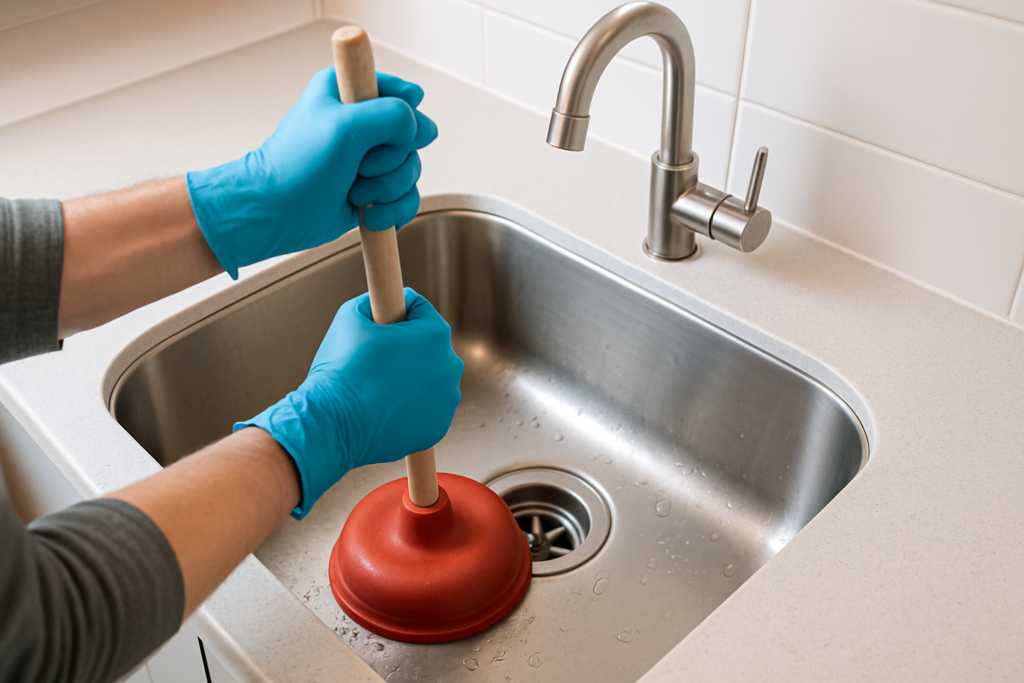
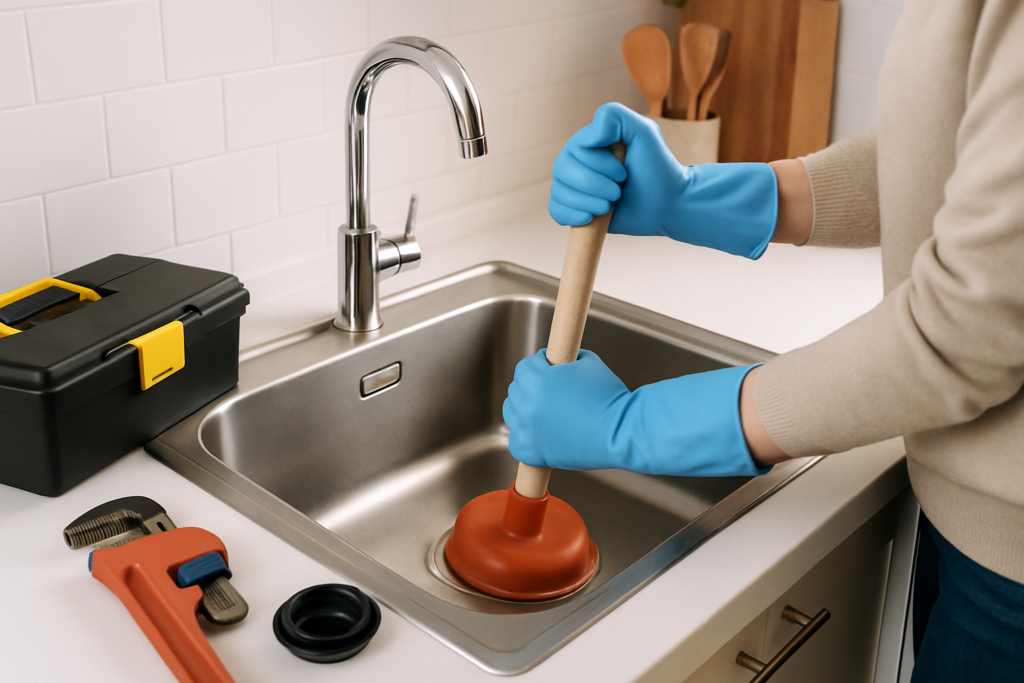
Many people don’t realize that a standard toilet plunger can work wonders on kitchen sink drains. You’ll get better results with a cup plunger (the kind with a flat bottom) rather than a flange plunger designed for toilets.
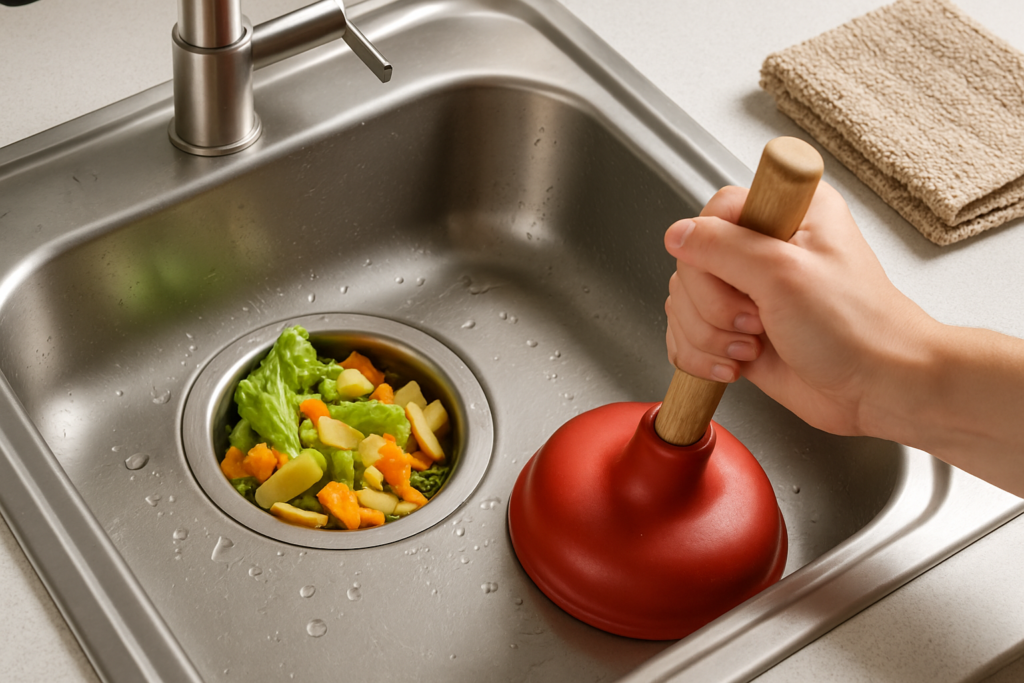
First, remove any standing water until there’s just enough to cover the plunger cup. If you have a double sink, plug the other drain with a wet cloth to create proper suction. Place the plunger directly over the drain opening and make sure you have a good seal.
Use quick, forceful plunges rather than slow, gentle ones. The rapid change in pressure is what dislodges the clog. Plunge about 10-15 times, then quickly pull the plunger away to see if water drains. You might need to repeat this process several times for stubborn blockages.
When to Bring Out the Drain Snake
If the previous methods haven’t worked, you’re likely dealing with a more serious blockage that requires mechanical removal. A drain snake (also called a drain auger) is a long, flexible tool designed to reach deep into pipes and break up or retrieve clogs.
For kitchen sinks, a 25-foot drain snake with a 1/4-inch cable works well for most situations. Insert the snake into the drain opening and slowly feed it down while turning the handle clockwise. You’ll feel resistance when you hit the clog.
RIDGID 41408 Model K-3 Toilet Auger
Professional-grade tool that works exceptionally well for kitchen sink clogs
Once you feel the snake catch something, continue turning while applying gentle pressure. Sometimes you’ll break up the clog and push it through. Other times, you’ll hook onto debris that you can pull back up and out of the drain.
Work slowly and patiently. Forcing the snake too aggressively can damage your pipes or push the clog deeper into your plumbing system.
Cleaning the P-Trap
If all else fails, the clog might be located in the P-trap, the curved section of pipe directly under your sink. This is actually one of the most common places for kitchen sink blockages to occur because food particles and grease naturally settle there.
Before starting, place a bucket under the P-trap to catch water and debris. You’ll also want to have some old towels handy. Turn off the water supply to be safe, although this step isn’t always necessary.
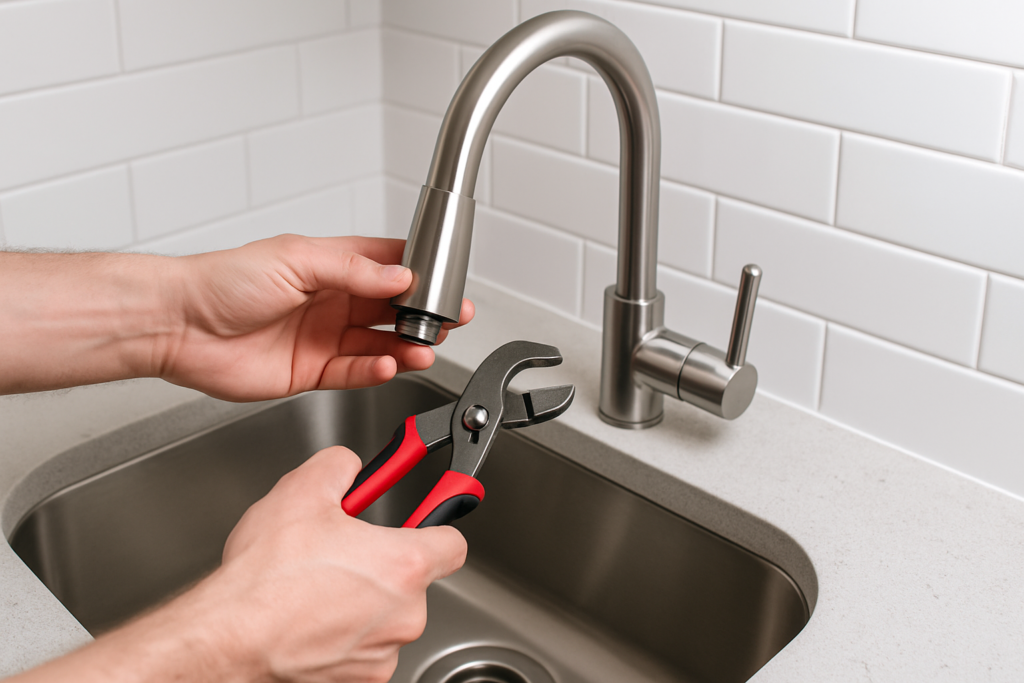
Most P-traps have two slip nuts that can be loosened by hand or with adjustable pliers. Loosen these nuts and carefully remove the curved section of pipe. Water and debris will come out, which is exactly what you want.
Clean out the P-trap thoroughly with hot water and a bottle brush or old toothbrush. Check both ends for stubborn buildup and scrape it away. Once clean, reassemble everything, making sure the slip nuts are tight but not over-tightened.
Ridgid Pipe Wrench Set
Essential plumbing tool that makes P-trap removal much easier
Important Safety Warnings About Chemical Drain Cleaners
While chemical drain cleaners are readily available and heavily marketed, they come with serious risks that many homeowners don’t consider. These products contain caustic chemicals like sodium hydroxide or sulfuric acid that can cause severe burns to your skin, eyes, and respiratory system.
Chemical cleaners can also damage your pipes over time, particularly if you have older plumbing or PVC pipes. They create heat as they work, which can soften or warp plastic components. In metal pipes, repeated use can lead to corrosion and eventual leaks.
Perhaps most dangerously, if a chemical cleaner doesn’t clear your clog, you’re left with a sink full of caustic liquid that creates toxic fumes. This makes it extremely hazardous to try other methods or call a plumber.
If you do choose to use a chemical drain cleaner, never mix different products, always wear protective gear, ensure proper ventilation, and keep children and pets away from the area.
Prevention Tips to Avoid Future Clogs
The best clog is the one that never happens. A few simple habits can keep your kitchen drain flowing freely and save you from future headaches.
Never pour grease, oil, or fat down your kitchen drain. These substances solidify as they cool and create stubborn blockages. Instead, let grease cool and scrape it into the trash, or collect it in a container for disposal.
Use a sink strainer to catch food particles before they go down the drain. Empty it regularly and give it a quick rinse to prevent buildup.
Run hot water down your drain for about 30 seconds after each use, especially after washing dishes or disposing of food particles. This helps flush away small debris before it can accumulate.
Once a week, pour a kettle of boiling water down your drain to help dissolve any grease or soap buildup. This simple maintenance step can prevent many clogs from forming.
OXO Good Grips Silicone Sink Strainer
Durable design that catches debris while allowing water to flow freely
When to Call a Professional
While these DIY methods solve most kitchen sink clogs, some situations require professional help. Call a plumber if you notice water backing up into other drains when you run your kitchen sink, which could indicate a main line blockage.
Persistent odors coming from your drain, even after cleaning, might signal a deeper problem in your plumbing system. Similarly, if you’ve tried multiple methods without success, the clog might be located in a section of pipe that requires professional tools to reach.
Any signs of pipe damage, such as leaks under your sink or water stains on cabinet walls, warrant immediate professional attention. Attempting DIY repairs on damaged pipes often makes the problem worse and more expensive to fix.
Frequently Asked Questions
How long should I wait before trying a different method?
Give each method at least 30 minutes to work, especially the baking soda and vinegar technique. Chemical reactions and heat need time to break down clogs effectively. If one method doesn’t work after a reasonable time, drain any standing water and move on to the next approach.
Is it safe to use a drain snake in garbage disposal pipes?
You can use a drain snake in pipes connected to a garbage disposal, but make sure the disposal is completely turned off and unplugged first. Never put the snake through the disposal unit itself. If your clog seems to be in the disposal, try running it with cold water first, as it might clear the blockage on its own.
Why does my kitchen sink keep clogging even after I clear it?
Recurring clogs usually indicate an underlying problem like insufficient slope in your drain pipes, a damaged pipe that catches debris, or habits that contribute to blockages. Consider having a plumber camera-inspect your pipes if clogs happen frequently, and review your kitchen practices to eliminate contributing factors.
Can I prevent clogs if I have a garbage disposal?
Garbage disposals help but don’t prevent all clogs. Avoid putting fibrous foods like celery, grease, bones, or large quantities of food down the disposal. Always run cold water while using it and continue running water for about 10 seconds after turning it off. Regular cleaning with ice cubes and citrus peels keeps the disposal working efficiently.
Most kitchen sink clogs respond well to these DIY methods, saving you both time and money. Start with the simplest approaches and work your way up to more involved techniques. With a little patience and the right approach, you’ll have your drain flowing freely again without needing to call a plumber.
This article contains affiliate links. We may earn a small commission at no extra cost to you.