Standing in the cleaning aisle, staring at the endless options for floor cleaning tools, you’ve probably wondered whether it’s time to upgrade from your trusty traditional mop to one of those sleek steam mops everyone’s talking about. The decision isn’t as simple as picking the shiniest option.
Both steam mops and traditional mops have loyal followers who swear by their chosen method. Steam mop enthusiasts rave about the sanitizing power and convenience, while traditional mop users appreciate the control and versatility. But which one actually delivers better results for your specific needs and floor types?
After testing both methods extensively on various surfaces and analyzing real-world performance, we’ve broken down everything you need to know to make the right choice for your home in 2024.
How Steam Mops Work vs Traditional Mopping
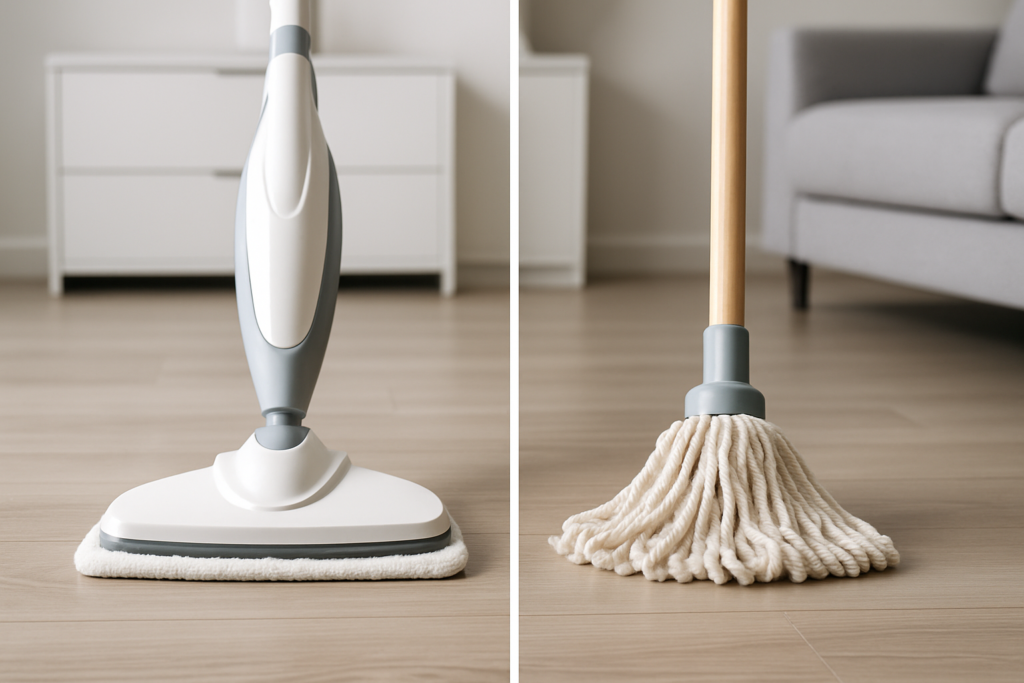
Steam mops heat water to create vapor that’s released through the mop head, typically reaching temperatures between 200-250°F. This hot steam loosens dirt and grime while the microfiber pad picks up debris. Most models heat up in 30-60 seconds and can run for 15-20 minutes per tank.
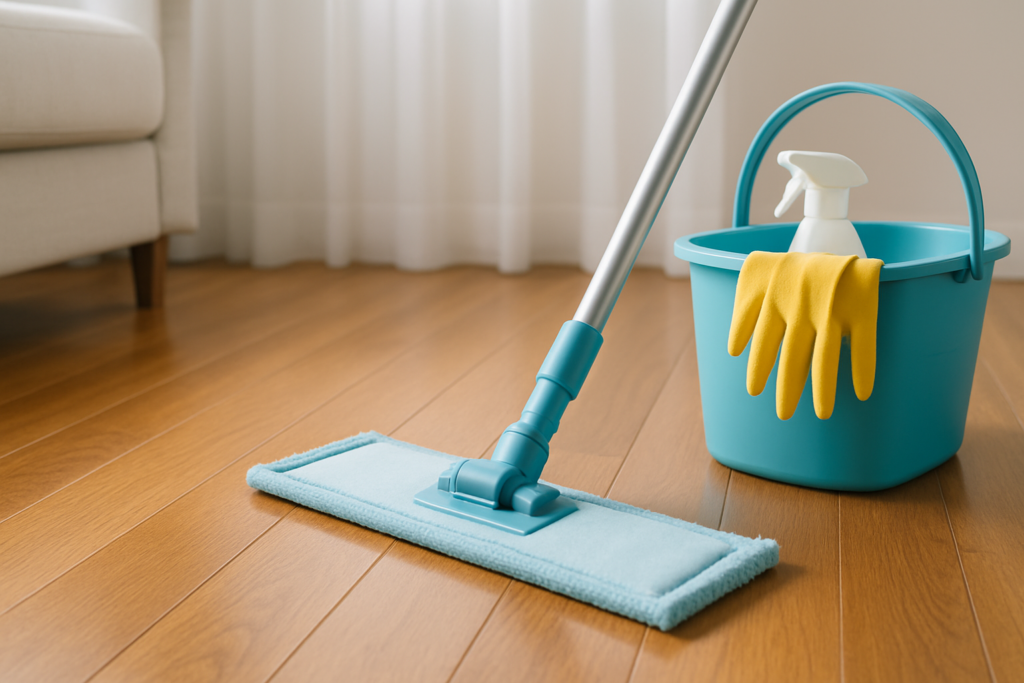
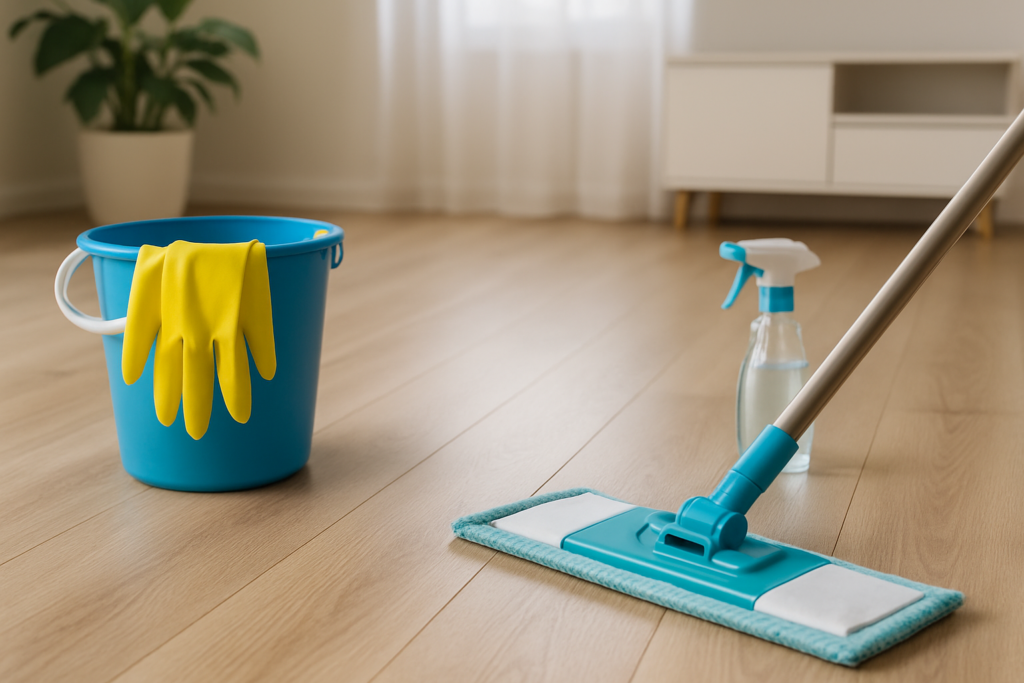
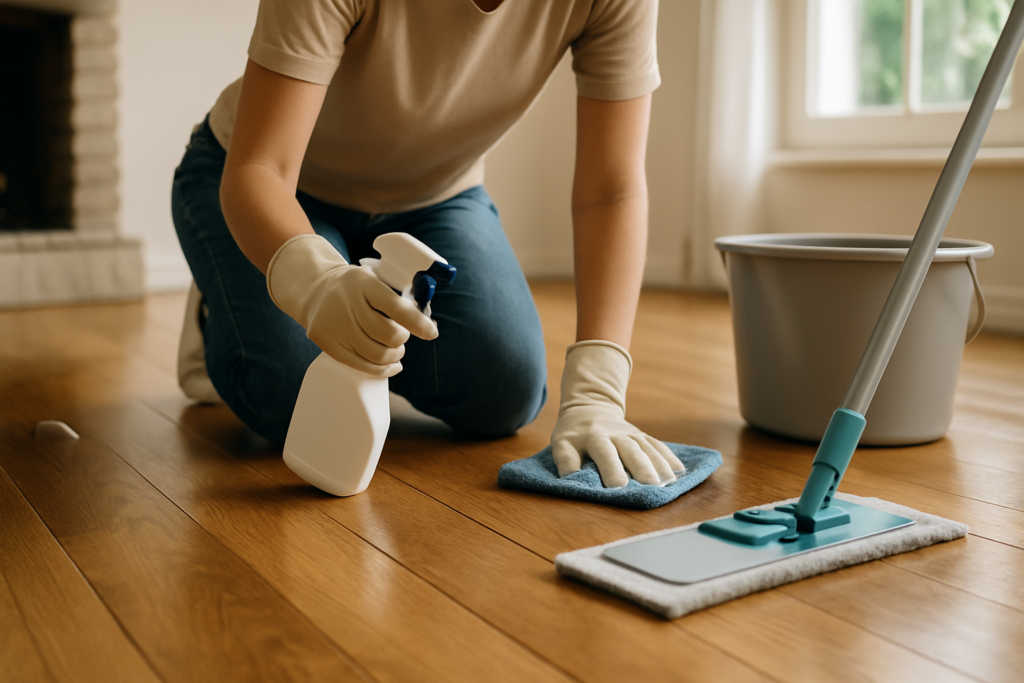
Traditional mopping involves a bucket, cleaning solution, and a mop head (string, microfiber, or sponge). You dip, wring, and clean in sections, refreshing your solution as needed. It’s the time-tested method your grandmother probably used, just with better mop designs and cleaning products.
The fundamental difference lies in the cleaning mechanism. Steam mops rely on heat and minimal moisture, while traditional mops use chemical cleaners and more water to break down dirt.
Cleaning Effectiveness Comparison
Steam Mop Cleaning Power
Steam mops excel at killing bacteria, viruses, and dust mites without chemicals. The high temperature eliminates 99.9% of common household germs, making them particularly valuable if you have pets, small children, or family members with allergies.
For everyday dirt and light stains, steam mops perform admirably. They’re especially effective on sticky spills and dried-on messes that traditional mops might just push around. The heat helps break down substances that cold water and cleaners struggle with.
Shark Steam Pocket Mop Hard Floor Cleaner
This reliable steam mop offers excellent cleaning power with easy-to-replace pads and quick heat-up time.
However, steam mops have limitations with ground-in dirt and heavily soiled areas. They work best as part of regular maintenance cleaning rather than deep cleaning sessions.
Traditional Mop Versatility
Traditional mops shine when it comes to versatility and cleaning power for tough messes. You can choose specific cleaners for different problems: degreasing agents for kitchen floors, disinfectants for bathrooms, or specialized wood floor cleaners.
The ability to use more water and scrubbing action makes traditional mops superior for heavily soiled floors. You can pre-treat stains, use different cleaning solutions in the same session, and apply more pressure when needed.
Traditional mops also handle large debris better. While you should sweep before steam mopping, traditional mops can pick up small particles and hair more effectively during the cleaning process.
Time Efficiency and Convenience
Steam mops win hands down for convenience. There’s no mixing cleaning solutions, no heavy buckets to fill and empty, and no wringing required. You simply fill the tank with water, wait for heat-up, and start cleaning.
The cleaning process itself is faster with steam mops. You make one pass over the floor, and you’re done. The pads dry quickly, and floors are ready to walk on almost immediately.
O-Cedar EasyWring Microfiber Spin Mop
This innovative traditional mop system reduces wringing effort and provides excellent control over moisture levels.
Traditional mopping takes more time and physical effort. You’ll spend time filling buckets, mixing solutions, and making multiple passes to rinse away cleaner residue. The wringing process can be tough on your hands and back.
However, traditional mops don’t require heat-up time or cooling down periods. You can start and stop as needed, which is helpful when cleaning multiple rooms over several days.
Cost Analysis: Initial Investment and Long-term Expenses
Traditional mops have a lower barrier to entry. A quality microfiber mop and bucket system costs significantly less than most steam mops. Replacement mop heads are also more affordable than steam mop pads.
Steam mops require a higher upfront investment, and replacement pads cost more per unit. However, they eliminate the ongoing expense of floor cleaning chemicals, which can add up over time.
Consider the hidden costs too. Steam mops use electricity and require distilled water in hard water areas to prevent mineral buildup. Traditional mops need regular replacement of cleaning products and more frequent mop head changes due to chemical breakdown.
Over two years of regular use, the costs often even out, but your specific situation (floor size, cleaning frequency, chemical preferences) will determine which option offers better value.
Floor Type Compatibility
Hardwood Floors
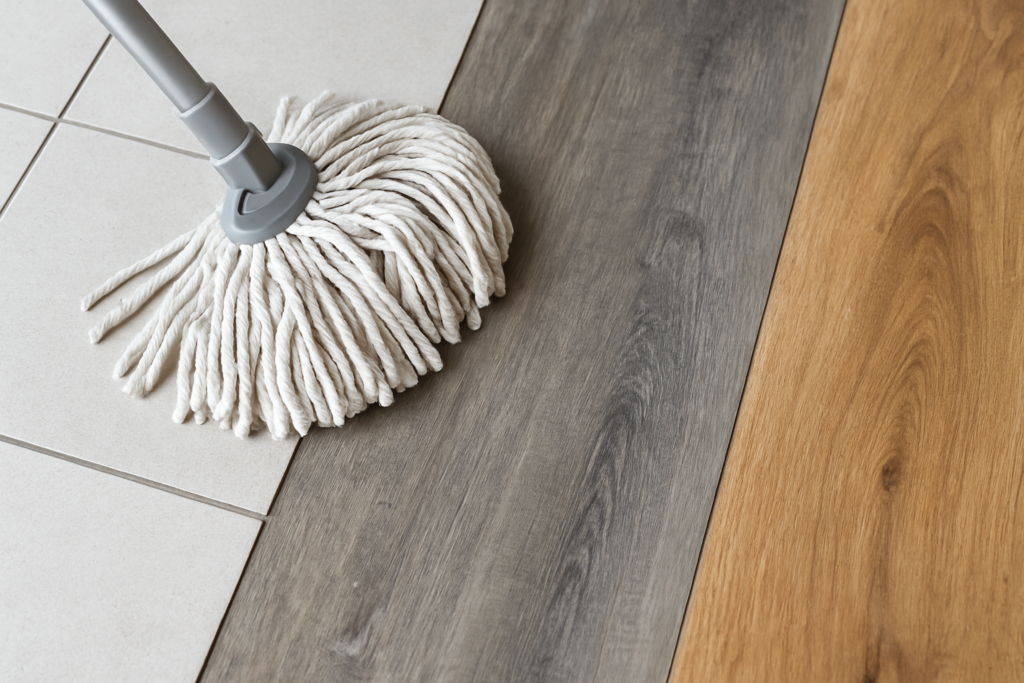
Both methods work on sealed hardwood, but traditional mops offer better moisture control. Excessive heat and moisture from steam mops can damage certain wood finishes over time, especially if seals are compromised.
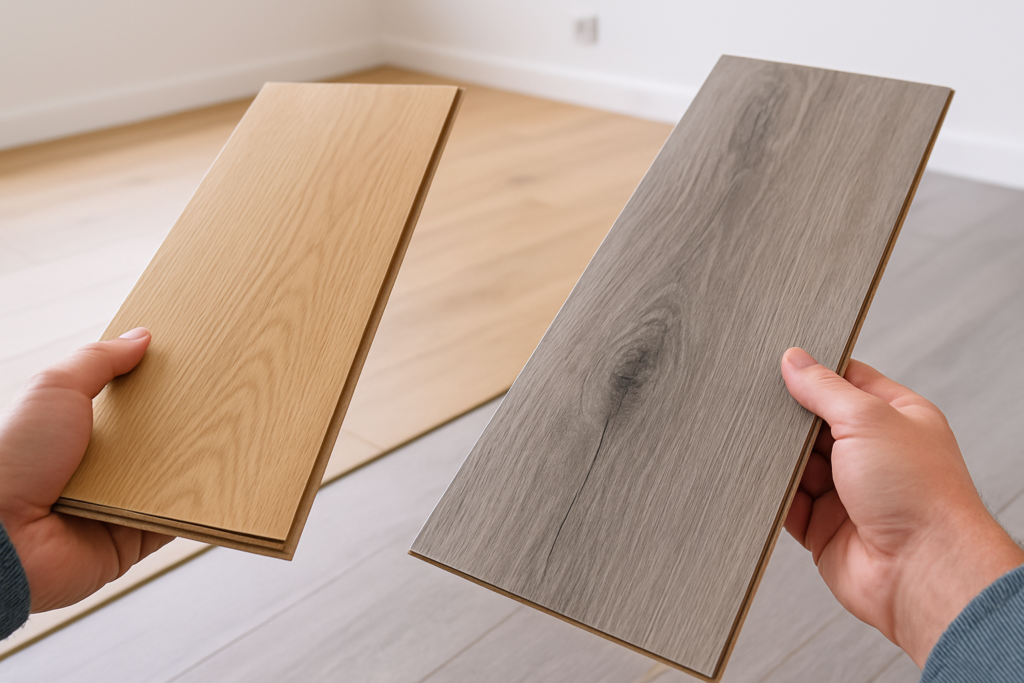
For engineered hardwood and luxury vinyl planks, steam mops are generally safe but check manufacturer recommendations. Traditional mops with wood-specific cleaners often provide better long-term care.
Tile and Stone
Steam mops excel on ceramic tile, porcelain, and most natural stone surfaces. The heat helps clean grout lines effectively without harsh chemicals. However, avoid steam on unsealed natural stone like marble or limestone.
Traditional mops work well on all tile types and give you more control over cleaning products. This matters for natural stone that requires pH-neutral cleaners.
Laminate and Vinyl
Modern laminate floors typically handle steam well, but check your warranty first. Some manufacturers void warranties if steam cleaning is used.
Traditional mops are universally safe for laminate and vinyl. They also do a better job removing scuff marks and sticky residues that steam alone might not eliminate.
Maintenance Requirements
Steam mops require regular descaling to prevent mineral buildup, especially in hard water areas. Most manufacturers recommend using distilled water, which adds to operating costs. The heating element and internal components need occasional deep cleaning.
Replacement pads for steam mops can be machine washed but wear out faster than traditional mop heads due to heat exposure. You’ll typically need to replace them every 3-6 months with regular use.
Rubbermaid Reveal Spray Mop
This traditional mop alternative uses refillable bottles and washable pads for convenient, chemical-free cleaning.
Traditional mops are simpler to maintain. Rinse after use, machine wash mop heads regularly, and replace when they start falling apart. The bucket might need occasional disinfecting, but there are no internal components to worry about.
String mops require more frequent replacement than microfiber options, but they’re also less expensive. Microfiber mop heads can last 6-12 months with proper care.
Environmental Impact
Steam mops have environmental advantages by eliminating chemical cleaners. They only use water and electricity, reducing plastic waste from cleaning product bottles and chemical runoff.
The electricity usage is relatively minimal, similar to running a small appliance for 15-20 minutes. However, the manufacturing process for steam mops involves more complex components and electronics.
Traditional mops create ongoing environmental impact through chemical cleaners and their packaging. However, the mops themselves are simpler to manufacture and often more durable.
You can reduce the environmental impact of traditional mopping by choosing concentrated, eco-friendly cleaners and reusable microfiber pads instead of disposable options.
Which Method Wins for Different Users
Steam mops are ideal if you have pets, young children, or allergies that make chemical-free cleaning important. They’re also perfect for busy households that prioritize convenience and speed over deep cleaning power.
Choose a steam mop if you primarily have tile, sealed hardwood, or other steam-safe surfaces, and if your cleaning routine focuses on regular maintenance rather than heavy-duty cleaning.
Traditional mops remain the better choice for mixed flooring types, heavily soiled areas, or when you need maximum cleaning versatility. They’re essential if you have unsealed natural stone, damage-prone surfaces, or prefer the control that comes with choosing your own cleaning products.
Large homes might benefit from traditional mops since you’re not limited by tank capacity or heat-up times between rooms.
Top Product Recommendations for 2024
For steam mops, the Bissell CrossWave Pet Pro stands out for homes with pets, while the Black+Decker Steam Mop offers excellent value for basic needs.
Bona Hardwood Floor Premium Spray Mop
Specifically designed for hardwood floors with a gentle cleaning solution and microfiber pad that won’t damage finishes.
In the traditional mop category, the Libman Wonder Mop provides excellent wringing control, while microfiber options like the Cedar EasyWring RinseClean offer superior cleaning power.
For apartment dwellers or those with limited storage, spray mop systems combine some benefits of both approaches without the bulk of traditional bucket systems or the complexity of steam units.
Frequently Asked Questions
Can steam mops damage my floors?
Steam mops can damage unsealed wood, waxed floors, and some types of laminate. Always check your floor manufacturer’s warranty and care instructions before using steam. When in doubt, test in an inconspicuous area first.
Do steam mops really clean without chemicals?
Yes, the high temperature steam (200-250°F) effectively kills most bacteria and viruses without chemicals. However, for heavily soiled areas or specific stains, you might still need pre-treatment with appropriate cleaners.
How often should I replace mop pads and heads?
Steam mop pads typically last 3-6 months with regular use, while traditional microfiber mop heads can last 6-12 months. String mop heads need replacement every 2-4 months. Replace any mop head when it starts leaving streaks or doesn’t absorb well.
Which method is better for pet owners?
Both have advantages for pet owners. Steam mops eliminate odor-causing bacteria without chemicals that might irritate sensitive pets. Traditional mops with enzymatic cleaners can break down pet accidents more effectively. Consider your specific pet-related cleaning challenges when choosing.
This article contains affiliate links. We may earn a small commission at no extra cost to you.