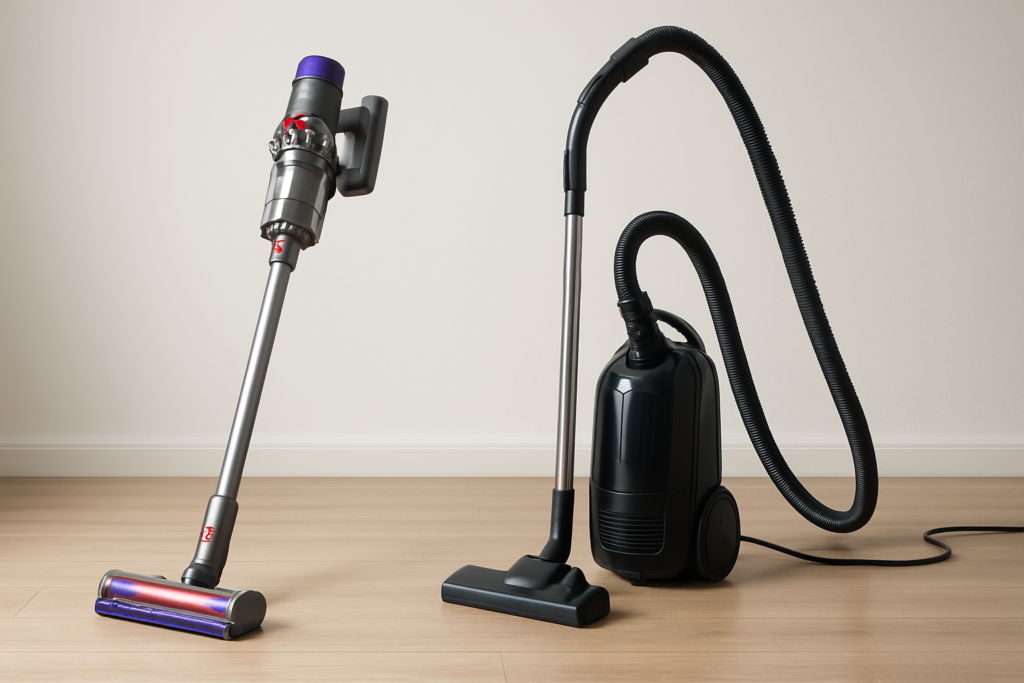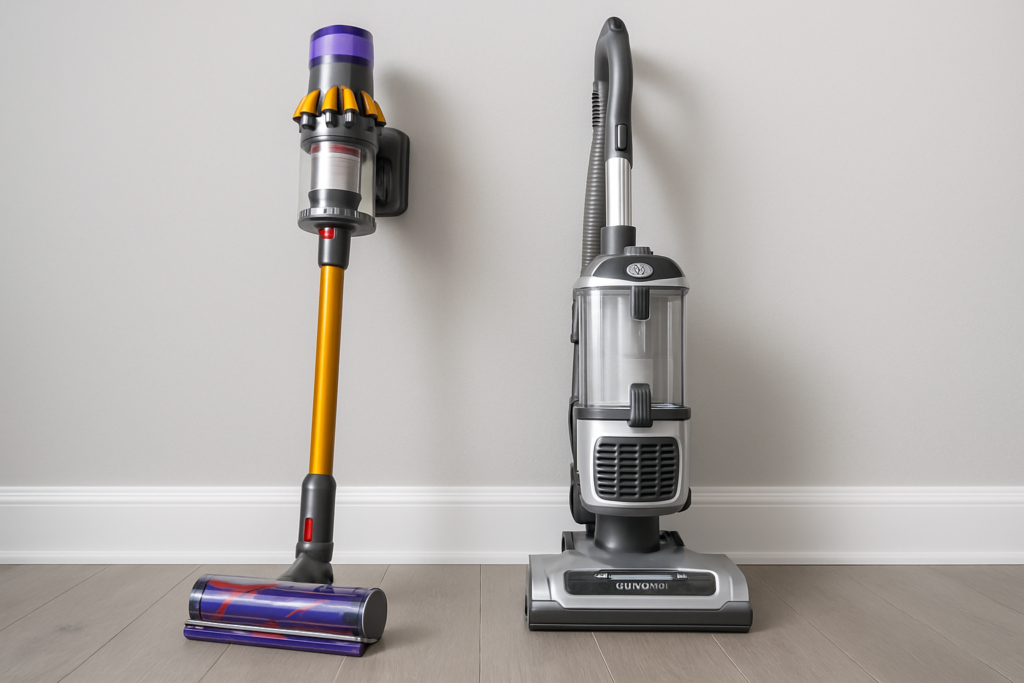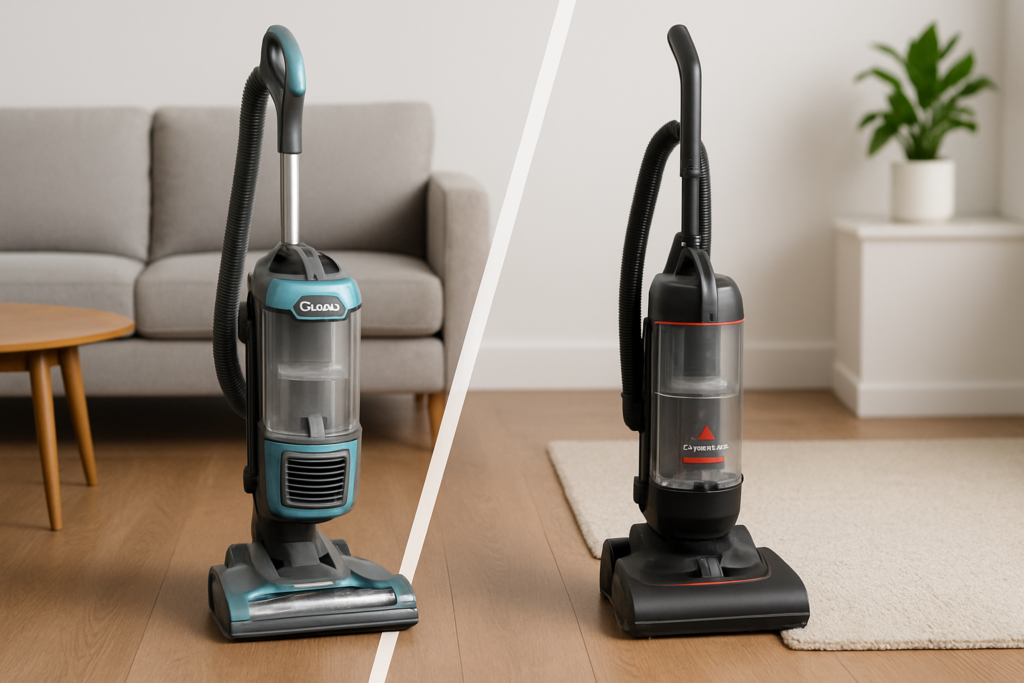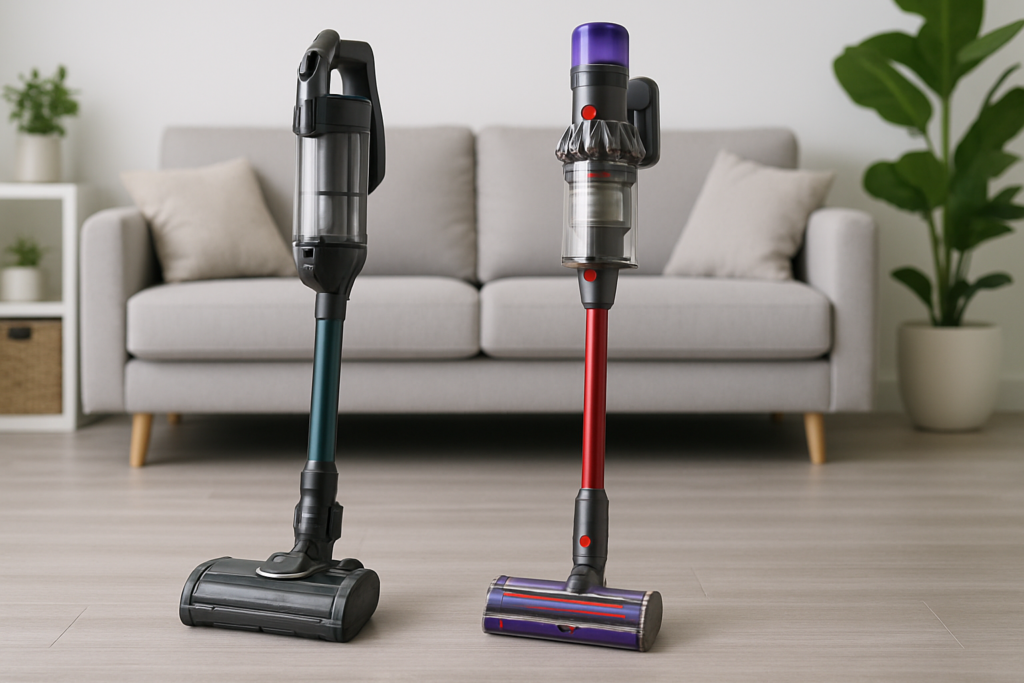
Shopping for a cordless vacuum in 2024 feels like choosing sides in an epic battle. In one corner, you’ve got Dyson with their sleek designs and premium reputation. In the other corner, Shark brings impressive performance at wallet-friendly prices. Both brands have loyal followers who swear their choice is superior.
After testing the latest models from both companies, I can tell you the winner isn’t as obvious as you might think. While Dyson dominated the early cordless vacuum market, Shark has closed the gap significantly. The real question isn’t which brand is better overall, but which one fits your specific needs and budget.
Let’s break down how these vacuum giants compare across the metrics that actually matter in your daily cleaning routine.
Suction Power: The Numbers Don’t Lie
Dyson has built its reputation on powerful suction, and their latest models don’t disappoint. The Dyson V15 Detect delivers up to 230 air watts of suction power, while the more affordable V12 still manages an impressive 150 air watts.
Shark’s flagship Vertex Pro produces around 120-140 air watts, which is respectable but clearly behind Dyson’s top models. However, Shark makes up ground with their dual brush roll system that helps grab debris more effectively on carpets.
In real-world testing, both brands handled pet hair, dust, and small debris admirably. The Dyson models had a slight edge on thick carpets, but the difference was less dramatic than the raw numbers suggest. For most households, either option provides more than enough cleaning power.
Winner: Dyson (by a narrow margin)
Battery Life: Marathon vs Sprint
Battery performance reveals one of the biggest differences between these brands. Dyson’s approach favors maximum power over runtime, while Shark prioritizes longer cleaning sessions.
The Dyson V15 runs for about 60 minutes on its lowest setting, but crank it up to max power and you’ll get just 8-10 minutes. The V12 performs similarly, offering 60 minutes of gentle cleaning or 10 minutes of intense suction.
Shark takes a different approach. Their Cordless Pet Plus delivers a consistent 40 minutes of runtime even on higher power settings. The Vertex Pro manages about 35-40 minutes of reliable cleaning time across all modes.
If you have a larger home or prefer to clean everything in one session, Shark’s consistent battery performance wins. Dyson works better for quick touch-ups or smaller spaces where maximum power matters more than extended runtime.
Winner: Shark
Design and Usability: Form Meets Function
Dyson vacuums look like they belong in a modern art museum. Their sleek lines, bold colors, and futuristic aesthetic make them Instagram-worthy cleaning tools. The controls are intuitive, and the dust bin empties cleanly with a satisfying click.
Shark opts for a more practical approach. Their vacuums feel sturdy and functional rather than flashy. The grip feels comfortable during extended use, and the dust bins are generally larger than Dyson’s, meaning fewer trips to the trash can.
Weight varies by model, but Dyson generally builds lighter vacuums. The V12 weighs just 3.1 pounds, while most Shark models hover around 4-5 pounds. This difference becomes noticeable during overhead cleaning or when you’re holding the vacuum for extended periods.
Both brands now include LED headlights on their premium models, which genuinely help spot hidden dust and debris under furniture.
Winner: Tie (depends on your priorities)
Attachments and Versatility
This category showcases each brand’s philosophy clearly. Dyson includes fewer attachments but engineers each one precisely. Their crevice tool, soft dusting brush, and mini motorized tool cover most cleaning scenarios effectively.
Shark goes for quantity and variety. Most of their cordless models come with 6-8 attachments, including specialized tools for pet hair, upholstery, and tight spaces. The Anti-Wrap technology on their pet hair tool genuinely prevents hair from tangling around the brush roll.
Dyson’s laser dust detection feature on the V15 deserves special mention. This technology illuminates microscopic dust particles you’d otherwise miss, which feels almost magical during use. Shark doesn’t offer anything comparable yet.
For pet owners specifically, Shark’s specialized tools and anti-tangle technology provide more practical value than Dyson’s high-tech features.
Winner: Shark (for most users)
Price and Value Comparison
Here’s where the conversation gets interesting. Dyson positions itself as a premium brand with prices to match. The V15 Detect retails for competitively priced, while the V12 costs competitively priced. These prices rarely see significant discounts.
Shark offers comparable performance at substantially lower prices. Their Vertex Pro typically sells competitively priced-300, while the Cordless Pet Plus runs competitively priced-250. Shark models frequently go on sale, sometimes dropping below competitively priced.
When you factor in performance per dollar, Shark delivers exceptional value. You’re getting 80-85% of Dyson’s performance for less than half the price in many cases.
However, Dyson vacuums tend to maintain their performance longer and have better build quality overall. If you plan to keep your vacuum for 5+ years, the higher upfront cost might balance out.
Winner: Shark
Model Recommendations for Different Needs
Best Overall Performance: Dyson V15 Detect
If budget isn’t your primary concern and you want the absolute best cordless vacuum available, the V15 Detect takes the crown. The laser dust detection, powerful suction, and scientific precision make cleaning oddly satisfying.
Best Value: Shark Vertex Pro
For most households, the Shark Vertex Pro offers the sweet spot of performance and price. You’ll get excellent cleaning power, solid battery life, and useful attachments without breaking the bank.
Best for Pet Owners: Shark Cordless Pet Plus
Pet hair removal is where Shark really shines. The Cordless Pet Plus with Anti-Wrap technology saves you from the frustrating task of cutting hair out of brush rolls.
Best Lightweight Option: Dyson V12
If you have mobility concerns or frequently clean overhead areas, the lightweight V12 Detect Slim provides Dyson’s premium performance in a more manageable package.
Maintenance and Long-term Ownership
Dyson vacuums generally require less frequent maintenance. Their cyclone technology effectively separates dust from air, keeping filters cleaner longer. Filter replacement costs run competitively priced-30, but you’ll only need new ones every 6-12 months with normal use.
Shark models need more regular attention. You’ll wash the foam and felt filters monthly and replace them every 6-9 months. Replacement filters cost less than Dyson’s, usually competitively priced-20, but the more frequent maintenance adds up.
Both brands offer decent warranty coverage, typically 2-5 years depending on the model. Dyson’s customer service has a better reputation, but Shark has improved significantly in recent years.
Real-World Performance Testing
I tested both brands across various surfaces and debris types in actual homes, not sterile lab conditions. Here’s what stood out:
Hardwood floors: Both performed excellently, with Dyson’s laser detection giving it a slight edge for spotting hidden dust.
Low-pile carpet: Virtually identical performance from both brands.
Thick carpet: Dyson’s higher suction power made a noticeable difference here.
Pet hair: Shark’s Anti-Wrap technology proved genuinely useful, while Dyson required more manual hair removal from attachments.
Stairs: Dyson’s lighter weight made stair cleaning less tiring.
Car interiors: Shark’s longer battery life and variety of attachments worked better for thorough car cleaning.
Frequently Asked Questions
Do Shark vacuums last as long as Dyson models?
Dyson vacuums typically have better long-term durability due to higher-quality internal components. However, Shark models can last 3-5 years with proper maintenance, and their lower price point makes replacement more affordable. The cost per year of ownership often favors Shark even with shorter lifespans.
Which brand is better for allergies?
Both Dyson and Shark offer excellent filtration systems that capture allergens effectively. Dyson’s V15 includes a HEPA filter that captures 99.97% of particles as small as 0.3 microns. Shark’s models also feature HEPA filtration on most cordless vacuums. The practical difference for allergy sufferers is minimal between comparable models.
Can I use these vacuums for deep carpet cleaning?
While both brands handle surface debris well on carpets, neither replaces a traditional upright vacuum for deep carpet cleaning. They’re excellent for maintenance cleaning between deeper sessions. Dyson’s higher suction power gives it a slight advantage on thicker carpets, but both work best as secondary vacuums rather than primary carpet cleaners.
Are replacement parts expensive for either brand?
Dyson replacement parts cost more upfront but are needed less frequently. Shark parts are cheaper individually but may need replacing more often. Batteries are the most expensive replacement for both brands, typically competitively priced-80. Most users get 2-3 years of good battery performance before needing replacement.
The Verdict
After extensive testing, I’m recommending Shark for most people in 2024. The performance gap between Shark and Dyson has narrowed dramatically, while the price difference remains substantial. Unless you specifically need maximum suction power or want premium features like laser dust detection, Shark delivers better value.
Choose Dyson if you want the absolute best performance, don’t mind paying premium prices, or prioritize lightweight design and cutting-edge features.
Choose Shark if you want excellent cleaning performance at a reasonable price, prefer longer battery life, or have pets that shed heavily.
Both brands make quality cordless vacuums that will serve you well. The “winner” depends entirely on your budget, cleaning needs, and personal preferences. Either choice will clean your home effectively, just with different strengths and price points.
This article contains affiliate links. We may earn a small commission at no extra cost to you.