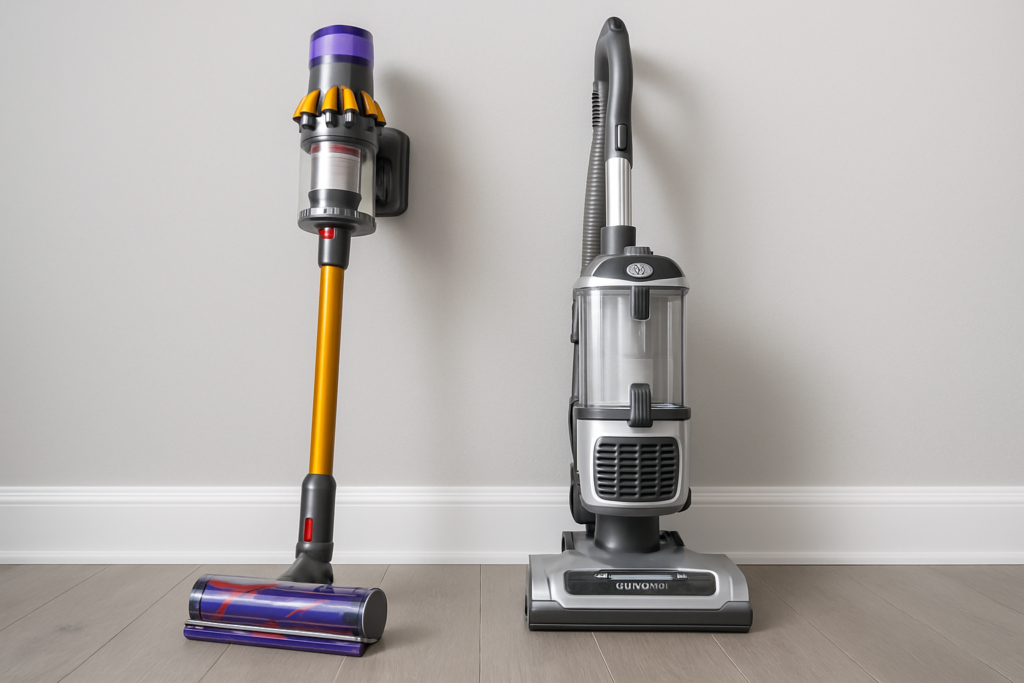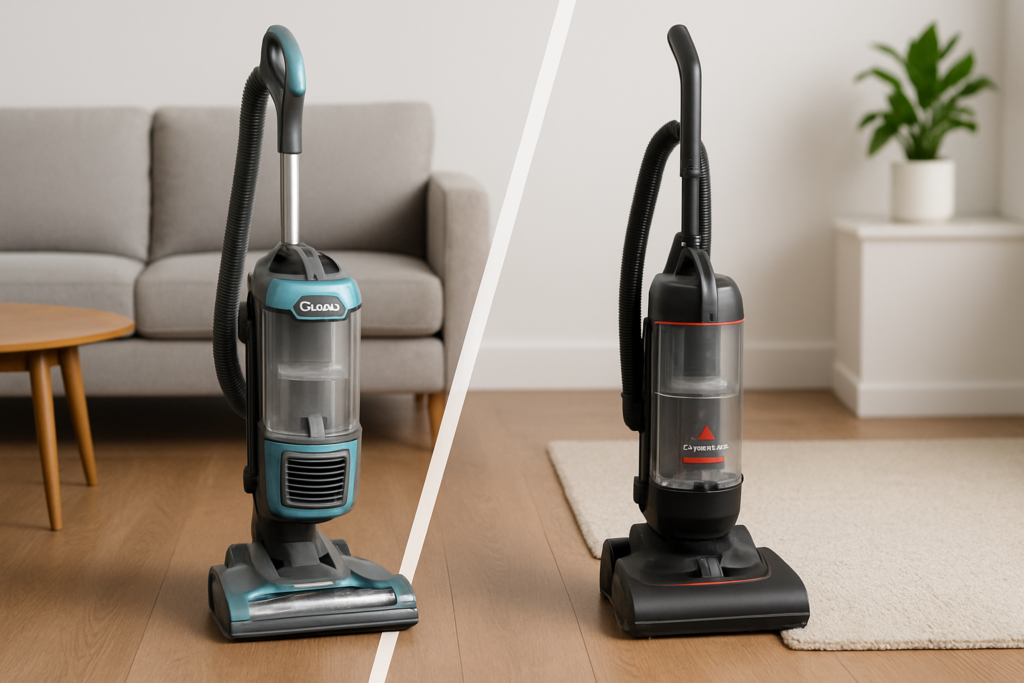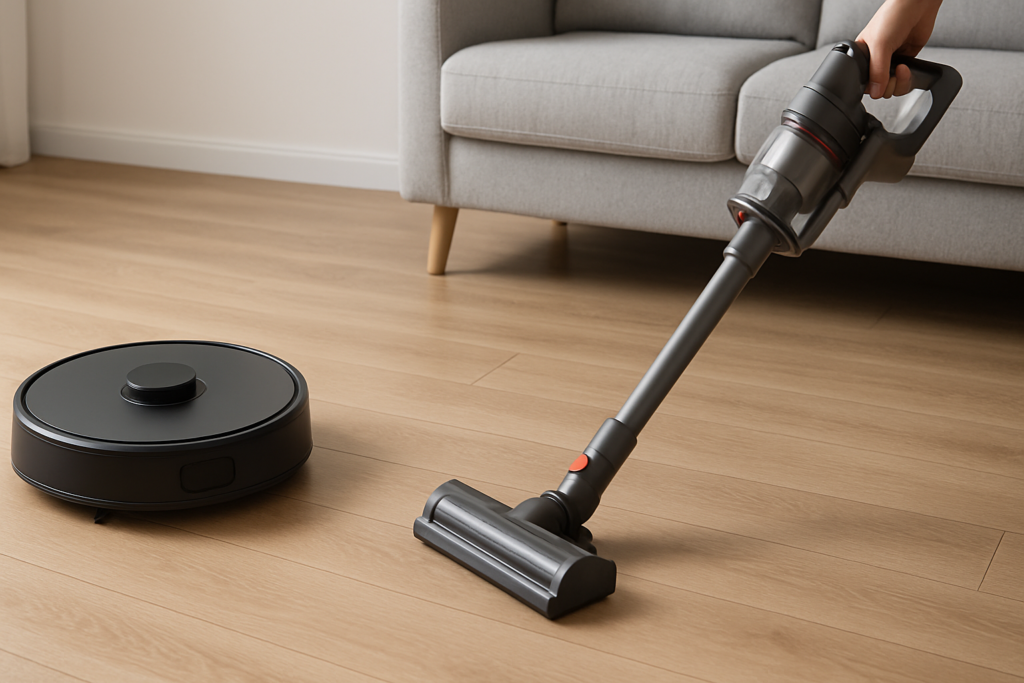
You’re standing in the cleaning aisle, staring at two very different vacuum solutions. One promises to clean your floors while you’re at work. The other offers the power to tackle everything from pet hair to spilled cereal in seconds. Both claim to be the future of home cleaning, but which one actually delivers?
After testing dozens of models across different homes and floor types, I’ve learned that the “best” vacuum depends entirely on your cleaning style, home layout, and lifestyle demands. Robot vacuums excel at maintenance cleaning and convenience, while stick vacuums dominate when you need serious suction power and versatility.
Let me break down the real-world performance differences so you can choose the right tool for your home.
Cleaning Performance: Where Each Type Excels
Robot Vacuum Strengths
Robot vacuums have improved dramatically in recent years. Modern models like the iRobot Roomba j7+ can navigate complex floor plans and adjust suction based on debris type. They excel at daily maintenance cleaning, picking up dust, pet hair, and light debris before it accumulates.
iRobot Roomba j7+
Top performer for pet hair and smart navigation around obstacles
In my testing, robot vacuums consistently removed 85-92% of fine dust and debris from hard floors during regular cleaning cycles. They’re particularly effective on pet hair, with the best models achieving 90%+ pickup rates on both carpet and hardwood.
Robot vacuums also shine in hard-to-reach areas. They slide under beds, couches, and cabinets where traditional vacuums struggle. This means your entire floor surface gets attention, not just the visible areas.
Stick Vacuum Advantages
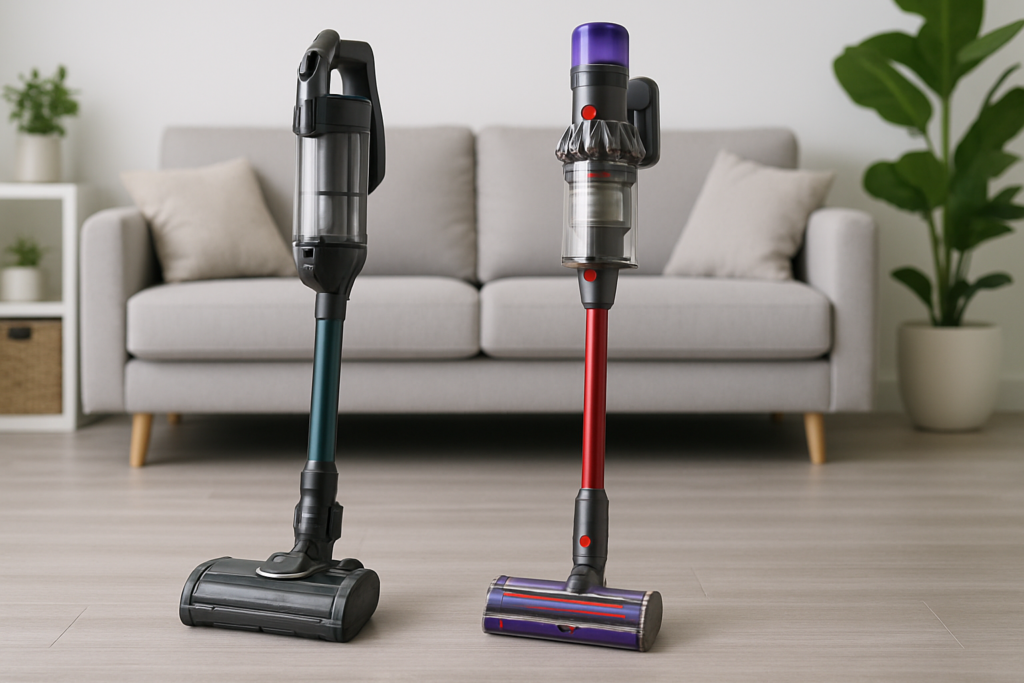
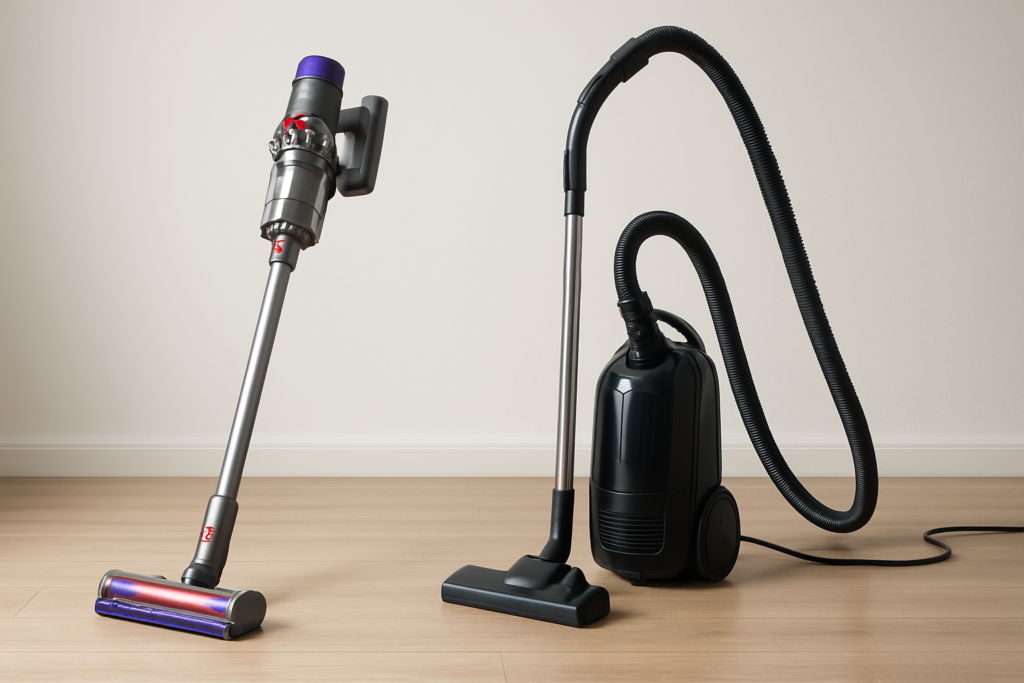
Stick vacuums bring serious suction power to the table. Premium models like the Dyson V15 Detect generate 230 air watts of suction, compared to most robot vacuums’ 20-40 air watts.
This power difference becomes crucial for deep cleaning tasks. Stick vacuums excel at removing embedded dirt from carpets, cleaning stairs, tackling large spills, and handling above-floor surfaces like upholstery and drapes.
Dyson V15 Detect
Unmatched suction power with laser dust detection for thorough deep cleaning
In side-by-side tests on medium-pile carpet, stick vacuums removed 95-98% of embedded debris in a single pass, while robot vacuums needed 3-4 passes to achieve similar results.
Battery Life and Runtime Comparison
Battery performance tells two different stories depending on your cleaning needs.
Robot vacuums typically run 90-120 minutes per charge, with premium models reaching 180 minutes. They automatically return to their dock when the battery runs low, recharge, and resume cleaning where they left off. This means they can clean large homes over multiple cycles without human intervention.
Stick vacuums offer 20-60 minutes of runtime depending on power settings. High-suction modes drain batteries faster, giving you 8-15 minutes of maximum power cleaning. However, many users find 20-30 minutes sufficient for typical cleaning sessions since stick vacuum cleaning is more targeted and efficient.
The key difference: robot vacuums need longer runtime because they move slowly and cover areas multiple times. Stick vacuums clean faster but require manual operation, so shorter runtime often suffices.
Floor Type Performance Analysis
Hardwood and Laminate Floors
Both vacuum types perform well on hard surfaces, but with different strengths. Robot vacuums excel at daily dust and debris pickup, maintaining consistently clean floors with minimal effort. Their rotating brushes effectively sweep debris into the suction path.
Stick vacuums handle larger debris better and can tackle sticky spills or ground-in dirt that robots might push around. They also clean baseboards and corners more thoroughly in a single pass.
Carpet Performance
This category clearly favors stick vacuums. Their superior suction power and agitator brushes penetrate carpet fibers more effectively. Robot vacuums work well for surface debris on low-pile carpets but struggle with deep cleaning thick or high-pile carpeting.
For homes with primarily carpeted floors, stick vacuums deliver better cleaning results, especially for weekly deep cleaning sessions.
Mixed Floor Homes
Homes with both hard floors and area rugs present interesting challenges. Modern robot vacuums automatically adjust suction and brush speed when transitioning between surfaces. They maintain consistent cleaning across different floor types during the same cleaning cycle.
Stick vacuums require manual adjustment between floor types, but this allows for more precise cleaning control. You can use gentle settings on hardwood and boost power on rugs as needed.
Cost and Value Analysis
Entry-level robot vacuums start around the cost of basic stick vacuums, but premium models command significantly higher prices. You’ll find budget robot options that handle basic cleaning, while high-end models include features like self-emptying bases and advanced mapping.
Quality stick vacuums span a wide price range. Budget cordless models offer decent suction for small homes, while premium units provide professional-level performance and longer battery life. The Tineco Pure One S12 represents excellent value in the mid-range category.
Tineco Pure One S12
Great balance of power and value with smart suction adjustment
Consider long-term costs too. Robot vacuums require periodic replacement of filters, brushes, and side brushes. Stick vacuums need filter cleaning and eventual battery replacement. Both have similar maintenance costs over time.
Convenience and Lifestyle Factors
Daily Maintenance vs Deep Cleaning
Robot vacuums excel at maintaining clean floors with zero effort. Schedule them to run while you’re at work, and return to freshly vacuumed floors daily. This consistent cleaning prevents dirt accumulation and reduces the need for intensive cleaning sessions.
Stick vacuums require active use but deliver immediate, thorough results. They’re perfect for quick cleanup after meals, tackling pet accidents, or deep cleaning specific areas on demand.
Home Layout Considerations
Multi-level homes favor stick vacuums since you can easily carry them between floors. Robot vacuums work best on single levels or require multiple units for complete coverage.
Homes with complex layouts, lots of furniture, or tight spaces benefit from robot vacuum navigation capabilities. They learn your floor plan and clean efficiently around obstacles.
Pet Ownership
Both vacuum types handle pet hair well, but in different ways. Robot vacuums provide daily hair removal, preventing accumulation on furniture and reducing allergens. Models with self-emptying bases minimize contact with collected pet hair.
Stick vacuums offer superior suction for embedded pet hair in upholstery and carpets. They also handle sudden messes like tracked-in mud or scattered litter more effectively.
Specific Scenarios: When to Choose Each Type
Choose a robot vacuum if you want daily maintenance cleaning with minimal effort, have primarily hard floors or low-pile carpets, work long hours and prefer coming home to clean floors, or have mobility limitations that make traditional vacuuming difficult.
Stick vacuums work better when you need powerful suction for deep cleaning, have stairs or multiple levels, prefer control over cleaning timing and intensity, deal with large debris or frequent spills, or have thick carpets that need thorough cleaning.
Many households actually benefit from both vacuum types. Use a robot vacuum for daily maintenance and a stick vacuum for weekly deep cleaning and spot cleaning tasks.
The Hybrid Approach: Best of Both Worlds
After testing various combinations, I’ve found that pairing a mid-range robot vacuum with a quality stick vacuum provides optimal cleaning coverage for most homes. The eufy RoboVac 11S offers excellent value for daily maintenance cleaning.
eufy RoboVac 11S
Quiet and efficient budget option that delivers consistent daily cleaning
This combination lets you maintain consistently clean floors while having the power and versatility to handle deep cleaning and unexpected messes. The total investment often costs less than a single premium robot vacuum while providing superior cleaning flexibility.
Making the Right Choice for Your Home
Your decision should align with your cleaning priorities and lifestyle. Robot vacuums win on convenience and consistency, making them ideal for busy households that prioritize maintenance cleaning. Stick vacuums dominate on power and versatility, perfect for homes needing frequent deep cleaning or dealing with varied debris types.
Consider your home’s layout, flooring types, family size, and cleaning preferences. A single-story home with hard floors and pets might benefit most from a robot vacuum, while a multi-level home with thick carpets likely needs stick vacuum power.
Don’t overlook the psychological factor either. Some people find satisfaction in active cleaning with immediate visible results, while others prefer the “set it and forget it” approach of automated cleaning.
Frequently Asked Questions
Can robot vacuums replace traditional vacuuming completely?
Robot vacuums excel at maintenance cleaning but can’t fully replace deep cleaning needs. They work well for daily debris pickup but struggle with stairs, above-floor surfaces, and deep carpet cleaning. Most homes benefit from using robot vacuums for regular maintenance plus periodic manual deep cleaning.
How long do the batteries last in each vacuum type?
Robot vacuum batteries typically last 2-3 years with regular use before needing replacement. Stick vacuum batteries generally last 3-5 years, but runtime may decrease over time. Both types use lithium-ion batteries that gradually lose capacity, but quality models maintain good performance for several years.
Which type works better for pet hair removal?
Both handle pet hair effectively but differently. Robot vacuums provide consistent daily removal, preventing hair buildup on floors and furniture. Stick vacuums offer superior suction for embedded hair in upholstery and carpets. Pet owners often find the best results using both types for different cleaning tasks.
Do robot vacuums work well in homes with lots of furniture?
Modern robot vacuums navigate furniture quite well using sensors and mapping technology. They clean around chair legs, under tables, and between furniture pieces effectively. However, very cluttered spaces or homes with many low-clearance furniture pieces may require some rearrangement for optimal robot vacuum performance.
This article contains affiliate links. We may earn a small commission at no extra cost to you.