Pet accidents happen to even the most well-trained furry friends, and when they do, the clock starts ticking. What seems like a simple cleanup can turn into a persistent nightmare of lingering odors and stubborn stains that seem to reappear just when you think you’ve won the battle.
I’ve spent countless hours testing different removal methods on everything from fresh puppy mishaps to ancient cat accidents that the previous homeowner left behind. After trying dozens of products and techniques, I can tell you that success comes down to understanding the science behind pet stains and using the right approach for each situation.
The key lies in targeting both the visible stain and the underlying odor-causing compounds that your nose might miss but your pet’s sensitive senses will definitely detect. Get this wrong, and you’ll be dealing with repeat offenses in the same spot.
Understanding Pet Stains: Why They’re Different
Pet urine isn’t just water and waste. It contains uric acid crystals that bond tightly to carpet fibers and create that distinctive ammonia smell as they break down. These crystals are incredibly stubborn and can reactivate with moisture, even months later.
Traditional cleaners often make the problem worse by setting the stain deeper into the carpet backing. Soap-based products can actually attract more dirt to the area, creating a cleaning cycle that never really ends.
The real challenge comes from the three components you need to eliminate: the visible stain, the odor-causing bacteria, and the uric acid crystals that keep the smell coming back. Miss any one of these, and your cleanup effort fails.
Enzyme Cleaners: The Science-Backed Solution
Enzyme cleaners work by breaking down the organic compounds in pet waste at a molecular level. These specialized proteins literally digest the mess, converting odor-causing substances into harmless byproducts.
I’ve tested multiple enzyme cleaners, and Nature’s Miracle Advanced Stain and Odor Eliminator consistently delivers the best results. The key is patience – enzyme cleaners need time to work, sometimes up to 24 hours for complete breakdown.
Nature’s Miracle Advanced Stain and Odor Eliminator
My top pick for enzyme cleaning that actually eliminates odors instead of masking them.
How to Use Enzyme Cleaners Properly
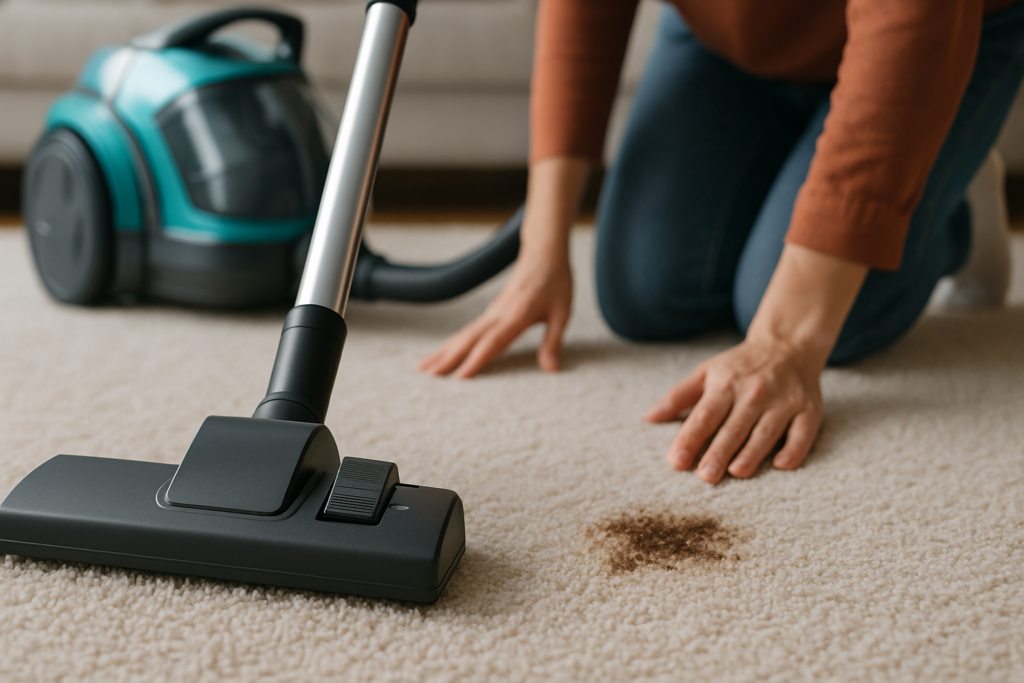
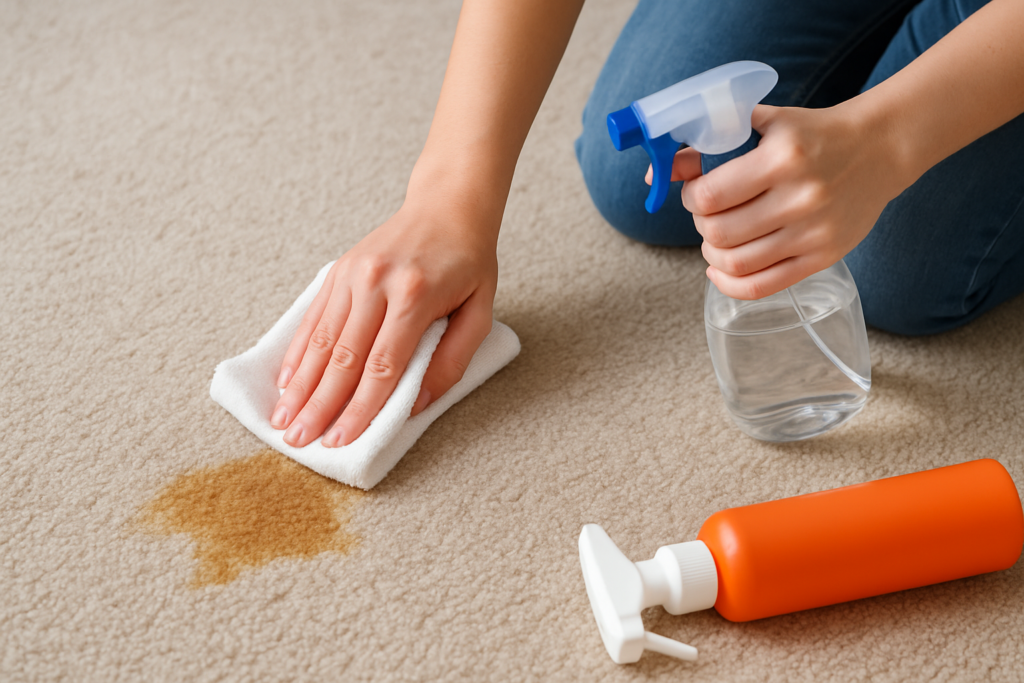
First, blot up as much liquid as possible with clean towels. Press firmly but don’t rub, which can spread the stain or push it deeper into the padding.
Apply the enzyme cleaner generously, covering an area larger than the visible stain. The urine likely spread beyond what you can see, especially if it reached the carpet backing.
Cover the treated area with a clean, damp cloth and let it sit for the recommended time. Some enzyme cleaners work faster than others, but rushing this step is the most common mistake I see.
After the treatment time, blot the area dry and allow it to air-dry completely. Avoid using heat or fans, which can deactivate the enzymes before they finish working.
DIY Solutions That Actually Work
While enzyme cleaners are my first choice, several homemade solutions can be effective, especially when you need immediate action and don’t have commercial products on hand.
White Vinegar and Baking Soda Method
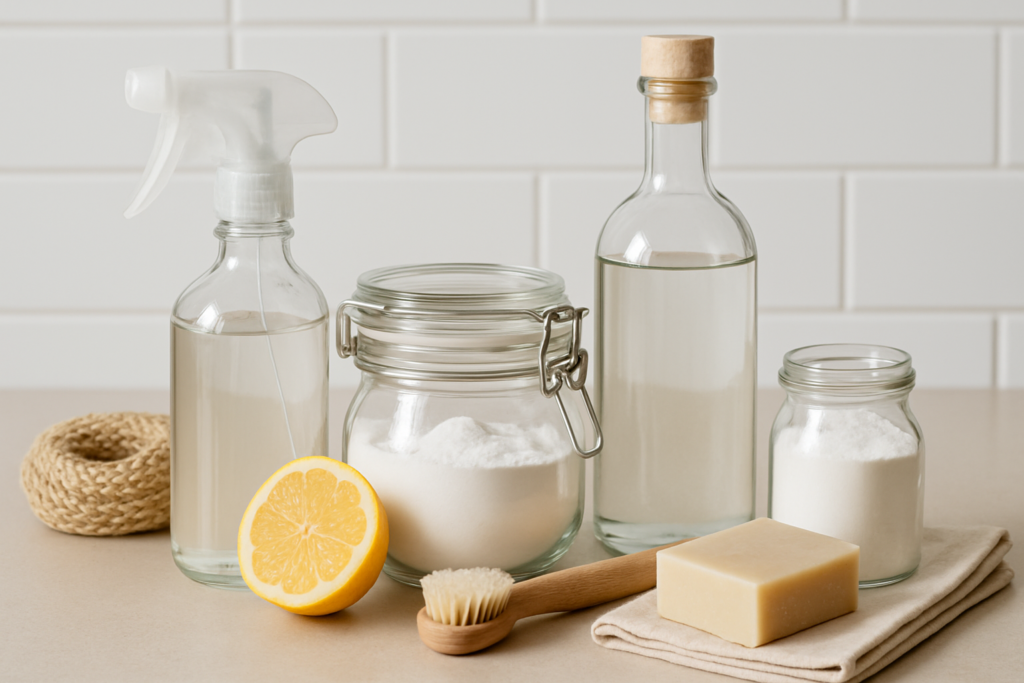
This two-step process tackles both the stain and odor using ingredients you probably have in your kitchen. Mix equal parts white vinegar and water in a spray bottle.
Spray the solution onto the stain and let it sit for 5-10 minutes. The acidity helps break down the alkaline components in urine while neutralizing odors.
Blot the area thoroughly, then sprinkle baking soda over the damp spot. The baking soda will foam slightly as it reacts with any remaining vinegar and absorbs lingering odors.
Let the baking soda sit for several hours or overnight, then vacuum it up completely. This method works particularly well on fresh stains but can also improve older problem areas.
Hydrogen Peroxide Treatment
For tougher stains, especially on lighter carpets, hydrogen peroxide can provide extra cleaning power. Mix one part 3% hydrogen peroxide with two parts water and add a small amount of dish soap.
Test this solution in an inconspicuous area first, as hydrogen peroxide can lighten some carpet colors. Apply the mixture to the stain and let it sit for 10-15 minutes.
The peroxide will bubble as it breaks down organic matter. Blot the area clean and rinse with plain water to remove any soap residue.
Professional Techniques for Set-In Stains
Old stains require more aggressive treatment because the urine has had time to penetrate deep into the carpet and potentially into the subfloor. These situations call for professional-grade techniques.
Hot Water Extraction Method
Rent or buy a carpet cleaner that uses hot water extraction. Bissell ProHeat 2X Revolution Max Clean Pet Pro is specifically designed for pet messes and includes specialized cleaning solutions.
Bissell ProHeat 2X Revolution Max Clean Pet Pro
Powerful carpet cleaner with pet-specific features that can reach deep into carpet fibers and padding.
Pre-treat the stain with an enzyme cleaner and let it work for the recommended time. Then use the carpet cleaner with hot water to extract both the cleaning solution and the broken-down waste products.
Make multiple passes over the area, alternating between cleaning solution and plain water rinses. The goal is to remove everything from the carpet fibers and backing.
Sub-Surface Treatment
When urine has reached the carpet padding or subfloor, surface cleaning won’t solve the problem. You’ll need to treat the padding directly or potentially replace it in severe cases.
Pull back the carpet in the affected area and treat the padding with enzyme cleaner. For concrete subfloors, use a concrete sealer designed for pet odors after the area is completely clean and dry.
This level of treatment usually requires professional help, but it’s the only way to permanently eliminate odors from deeply penetrated accidents.
Treating Fresh vs. Old Stains
Fresh Accident Protocol
Speed is your best friend with fresh accidents. Blot immediately with clean towels, applying pressure to absorb as much liquid as possible. Change towels frequently and keep blotting until no more moisture transfers.
Apply your chosen cleaner while the stain is still damp. Fresh stains respond much better to treatment because the urine hasn’t had time to crystallize and bond with carpet fibers.
Don’t use steam or heat on fresh urine stains. Heat can set protein-based stains permanently, making them nearly impossible to remove later.
Dealing with Set-In Stains
Old stains require rehydration before treatment can be effective. Spray the area with warm water to reactivate the crystallized compounds, then treat with your chosen cleaning method.
You might need multiple treatment cycles for old stains. Plan to repeat your cleaning process 2-3 times, allowing complete drying between treatments.
Black light can help you identify old stains that aren’t visible to the naked eye. Pet urine fluoresces under UV light, showing you the true extent of the contaminated area.
Addressing Persistent Odors
Sometimes you can eliminate the visible stain but still smell lingering odors, especially in humid conditions. This usually means you haven’t reached all the contaminated material.
Anti Icky Poo Odor Remover uses a different enzyme blend that can tackle odors that other products miss. It’s particularly effective on cat urine, which tends to be more concentrated than dog urine.

Anti Icky Poo Odor Remover
Specialized enzyme formula that excels at eliminating stubborn cat urine odors that other cleaners leave behind.
Consider using an ozone generator in severely affected rooms, but only when the space can be completely vacated for 24-48 hours. Ozone can eliminate odors at the molecular level but requires careful handling.
Preventing Re-Soiling
Even after successful cleaning, pets often return to previously soiled areas. This happens because trace odors remain that humans can’t detect but animals can easily smell.
Apply a pet-safe carpet deodorizer after cleaning to mask any remaining scent markers. Some enzyme cleaners include these compounds, but separate application can provide extra insurance.
Temporarily restrict your pet’s access to the cleaned area while it fully dries and the treatment completes its work. Use baby gates or close doors to prevent immediate re-soiling.
Consider placing your pet’s food and water bowls near previously soiled areas once they’re clean. Animals instinctively avoid eliminating near their food sources.
When to Replace Instead of Clean
Sometimes cleaning isn’t enough, especially with severe contamination or repeated accidents in the same area. Carpet padding that’s been saturated multiple times rarely recovers completely.
If you can smell odors even after multiple professional cleanings, replacement might be more cost-effective than continued treatment attempts. This is particularly true for older carpets with worn backing materials.
Hardwood or concrete subfloors that show staining or damage may need refinishing or sealing before new carpet installation to prevent odor transfer.
Testing Results: What Actually Works
After testing various methods on controlled stains, enzyme cleaners consistently outperformed DIY solutions for complete odor elimination. However, the vinegar and baking soda method proved surprisingly effective for fresh stains when enzyme cleaners weren’t immediately available.
Commercial carpet cleaners with pet-specific formulations removed more contamination from carpet backing than portable spot cleaners, making them worth the investment for multiple pet households.
Combination treatments – using an enzyme cleaner followed by professional extraction – produced the best results for old, set-in stains that had resisted other methods.
Frequently Asked Questions
How long do enzyme cleaners take to work completely?
Most enzyme cleaners need 8-24 hours for complete breakdown of odor-causing compounds. The exact time depends on the severity of the stain, temperature, and humidity levels. Rushing this process by cleaning too early can leave residual odors that return later.
Can I use regular carpet cleaner on pet stains?
Regular carpet cleaners often contain soaps and detergents that can set protein-based pet stains permanently. They may also leave residues that attract more dirt to the cleaned area. Stick with enzyme-based cleaners or pet-specific formulations for best results.
Why does my pet keep going back to the same spot?
Pets have much more sensitive noses than humans and can detect trace odors even after cleaning that appears successful. If your pet returns to the same area, it usually means some odor-causing compounds remain. Try a different enzyme cleaner or consider professional deep cleaning.
Will professional carpet cleaning remove old pet stains?
Professional cleaning can be very effective, especially when combined with pre-treatment using enzyme cleaners. However, very old stains that have penetrated into padding or subfloor materials may require additional steps like padding replacement or subfloor treatment for complete odor elimination.
This article contains affiliate links. We may earn a small commission at no extra cost to you.