Staring into your pantry and feeling overwhelmed by the chaos? You’re not alone. That jumbled mess of half-open cereal boxes, mystery jars, and expired canned goods is costing you more than just stress. It’s wasting your time, money, and valuable kitchen space.
A well-organized pantry transforms your cooking experience completely. You’ll spend less time hunting for ingredients, reduce food waste by actually seeing what you have, and create more storage space than you thought possible. The key lies in smart organization strategies that work with your lifestyle, not against it.
These 15 proven pantry hacks will help you maximize every inch of storage space, whether you’re working with a walk-in pantry or a single cabinet. Let’s turn that chaotic food storage area into an efficient, Instagram-worthy space you’ll actually want to use.
The Foundation: Clear Containers and Proper Storage
1. Invest in Airtight Clear Containers
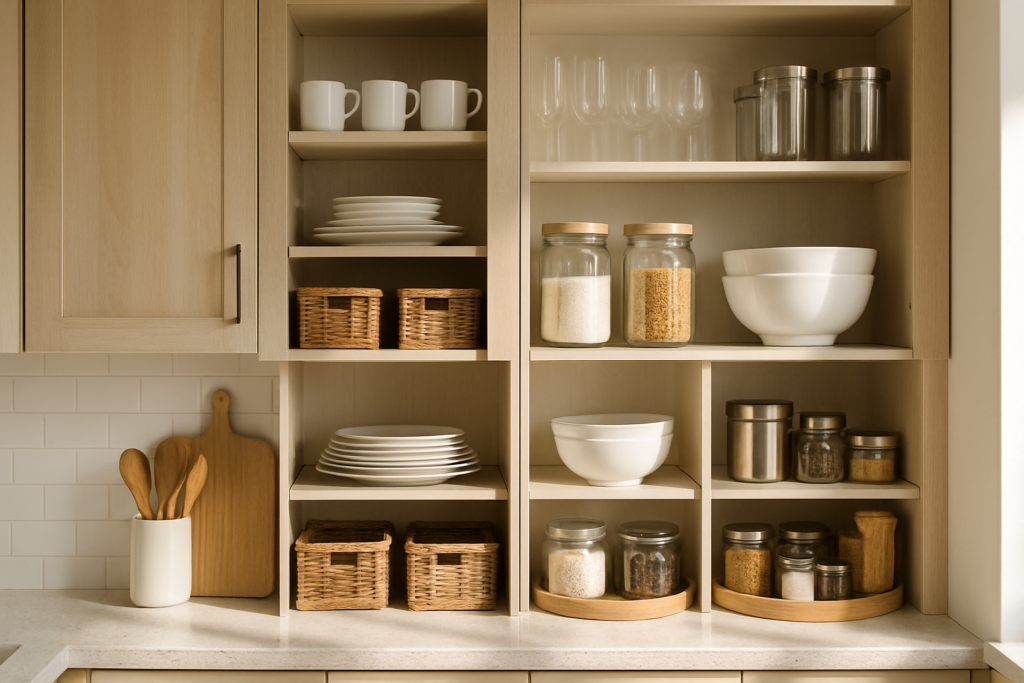
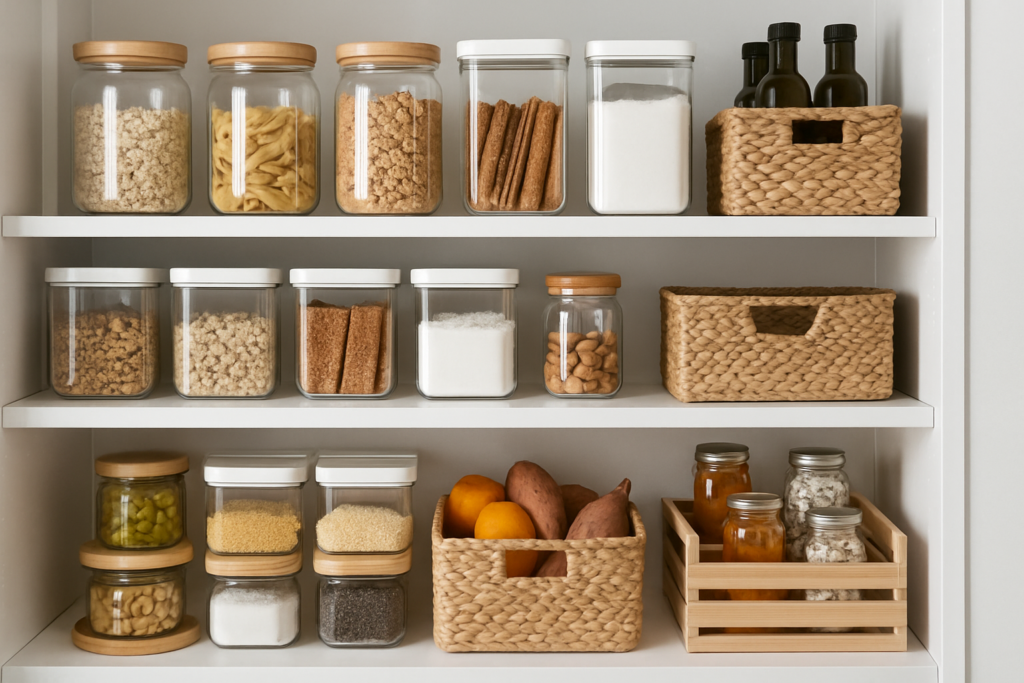
Cardboard boxes and bags are pantry space killers. They’re irregular shapes that waste precious real estate and hide what’s inside. Clear airtight containers solve both problems instantly.
The OXO POP containers are my top recommendation. They stack perfectly, have airtight seals, and come in sizes that actually make sense for everyday ingredients. A set of these containers can increase your storage capacity by 30% compared to keeping items in original packaging.
For bulk items, consider larger options like the Rubbermaid Brilliance pantry containers. They’re crystal clear, completely airtight, and designed to maximize shelf space.
2. Create a Smart Labeling System
Labels aren’t just pretty additions. they’re functional tools that keep your family on board with the organization system. A label maker is worth the investment, but even simple masking tape works.
Include expiration dates on your labels. This simple addition prevents the “mystery container syndrome” and helps you rotate stock properly. For bulk bins, add the purchase date so you can track freshness.
Mastering Vertical Storage
3. Install Adjustable Shelving
Fixed shelves waste vertical space because they can’t adapt to different container heights. Adjustable wire shelving units let you customize spacing to fit your specific storage needs.
Position shelves with just enough clearance to comfortably remove items. Too much space between shelves is wasted storage opportunity.
4. Use Stackable Bins for Categories
Stackable bins turn your pantry into a filing system for food. Group similar items together: all baking supplies in one bin, snacks in another, canned goods in a third.
Clear stackable bins work best because you can see contents at a glance. Choose bins with built-in handles for easy access to bottom containers.
5. Add Shelf Risers for Double-Duty Storage
Shelf risers instantly double your storage capacity on existing shelves. They’re perfect for canned goods, spices, and small jars that tend to get lost in the back.
Metal expanding shelf risers adjust to fit different shelf widths and support more weight than plastic versions. They’re particularly useful for heavy items like canned tomatoes or pasta sauces.
Smart Door and Wall Storage Solutions
6. Maximize Door Real Estate
Pantry doors are prime real estate that most people completely ignore. An over-door organizer adds significant storage without taking up floor space.
Use door storage for lightweight items: spices, condiment packets, tea bags, and small snacks. Avoid heavy items that can strain door hinges over time.
7. Install Wall-Mounted Spice Racks
Spices take up disproportionate shelf space considering their size. Wall-mounted magnetic spice jars or narrow spice racks free up valuable shelf real estate for larger items.
Mount spice storage at eye level for easy identification. Alphabetical organization works better than grouping by cuisine type for most home cooks.
Zone Organization for Maximum Efficiency
8. Create Functional Zones
Organize your pantry like a grocery store. Create distinct zones: breakfast items, baking supplies, snacks, canned goods, and oils/vinegars. This system makes meal planning faster and prevents duplicate purchases.
Keep frequently used items at eye level in the “golden zone” between shoulder and waist height. Store backup supplies and rarely used items on higher or lower shelves.
9. Use Deep Drawers for Heavy Items
Deep pantry shelves create black holes where items disappear. Install pull-out drawer systems to make everything accessible.
These drawers work particularly well for heavy items like bulk rice, flour, or canned goods. You can see and reach everything without playing pantry Jenga.
10. Implement the “First In, First Out” System
Rotate stock like a professional kitchen to minimize waste. Place new purchases behind existing items, and always use older products first.
This system is easier to maintain when you can see everything clearly, which is why clear containers and good lighting are so important.
Small Pantry Solutions
11. Use Every Inch with Slim Rolling Carts
Small pantries require creative solutions. Slim rolling carts fit in narrow spaces between appliances or cabinets and provide surprising storage capacity.
These carts work particularly well for cleaning supplies, small appliances, or overflow pantry items. Choose models with multiple tiers and locking wheels.
12. Hang Baskets from Shelves
Under-shelf baskets add storage without using floor space. They’re perfect for lightweight items like bread, chips, or paper products.
Wire baskets allow airflow, which is important for fresh produce or items that might otherwise get stale in closed containers.
Advanced Organization Strategies
13. Create a Pantry Inventory System
Keep a simple inventory list posted inside your pantry door. This prevents overbuying and helps with meal planning. Update it monthly or whenever you do major grocery shopping.
A whiteboard or laminated list with dry-erase markers makes updates easy. Include quantities for items you tend to stockpile.
14. Use Uniform Containers for Visual Appeal
Matching containers aren’t just about aesthetics. they maximize space efficiency because they stack and align perfectly. Uniform sizing also makes it easier to plan storage layouts.
Choose containers with straight sides rather than curved ones. They pack more efficiently and waste less space.
15. Install LED Strip Lighting
Good lighting is often overlooked but crucial for maintaining organization. Battery-powered LED strips are easy to install and make it possible to see everything clearly.
Motion-activated lights are even better because they turn on automatically when you open the pantry door.
Maintaining Your Organized Pantry
Organization without maintenance quickly turns back into chaos. Schedule a 15-minute pantry reset every two weeks. During this time, return items to their designated spots, check expiration dates, and wipe down surfaces.
Make organization a family effort. When everyone knows where things belong, the system maintains itself better. Consider color-coding or picture labels for young children.
Seasonal deep cleans are important too. Every three months, empty your pantry completely, clean all surfaces, and reassess your organization system. Your needs change over time, and your pantry should adapt accordingly.
Frequently Asked Questions
How often should I reorganize my pantry?
You should do minor maintenance every two weeks and a complete reorganization every 3-4 months. Minor maintenance involves returning items to their proper places and checking for expired products. Quarterly deep cleans allow you to reassess your system and make improvements based on how your family actually uses the space.
What’s the best way to store opened packages?
Transfer opened dry goods like cereal, crackers, and pasta into airtight containers immediately. This prevents staleness, pest issues, and package damage. For items you can’t transfer completely, use chip clips or bag sealers, then store in clear bins so you can easily see what needs to be used first.
How do I organize a pantry when family members have different heights?
Place frequently used items for shorter family members at their eye level and arm’s reach. Use step stools safely stored nearby for accessing higher shelves. Consider pull-down organizers for upper cabinets, and ensure that everyday items like snacks and breakfast foods are accessible to everyone who needs them regularly.
Should I store everything in containers or keep some original packaging?
Transfer bulk dry goods, opened packages, and frequently used items to containers for better space efficiency and freshness. Keep original packaging for items you use infrequently, products with important cooking instructions, or things with long shelf lives that you buy occasionally. The key is consistency within categories rather than an all-or-nothing approach.
This article contains affiliate links. We may earn a small commission at no extra cost to you.