You’ve probably heard the buzz around Marie Kondo’s life-changing magic, but there’s another decluttering philosophy gaining serious traction: Swedish death cleaning. Both promise to transform your living space, but they take completely different approaches to getting there.
The KonMari Method focuses on keeping items that “spark joy,” while Swedish death cleaning (or döstädning) encourages you to gradually reduce your belongings so loved ones won’t have to deal with the mess later. One celebrates what you love, the other prepares for what’s inevitable.
After trying both methods and helping countless clients through each process, I can tell you they’re suited for very different personalities and life stages. Let me break down exactly how they work, what to expect, and which one might be the perfect fit for your situation.
Understanding the KonMari Method
Marie Kondo’s approach revolves around keeping only items that spark joy. You work through five categories in a specific order: clothes, books, papers, komono (miscellaneous items), and sentimental items.
The process is intensive and meant to be completed in one fell swoop, typically taking several weeks to a few months. You gather every item from each category, hold each piece individually, and ask yourself whether it brings you happiness. Items that don’t make the cut get donated or discarded immediately.
What makes KonMari unique is its focus on gratitude and emotional connection. You’re encouraged to thank items before letting them go, creating a positive relationship with your belongings rather than feeling guilty about accumulating too much stuff.
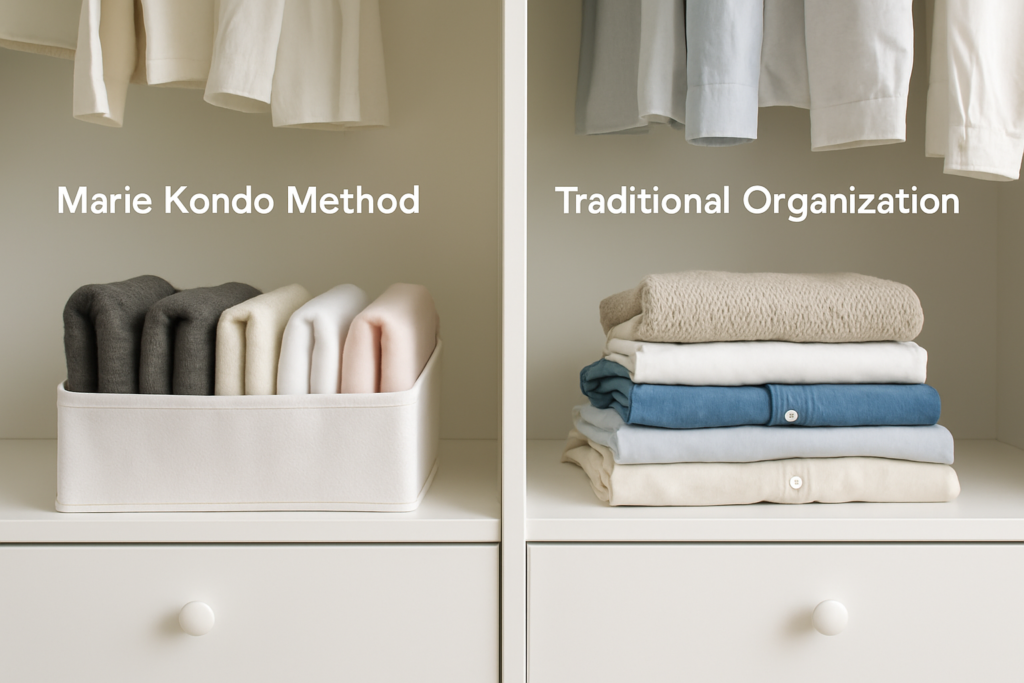
The method also emphasizes specific folding and storage techniques. Everything gets a designated home, and clothes are folded to stand upright rather than stacked. This visibility helps prevent re-accumulation and makes it easier to maintain your newly organized space.
Simple Houseware Closet Underwear Organizer Drawer Divider
Perfect for implementing Marie Kondo’s folding and organization system
What Is Swedish Death Cleaning?
Swedish death cleaning sounds morbid, but it’s actually quite liberating. The concept comes from Margareta Magnusson’s book about gradually reducing your possessions throughout your lifetime, particularly as you age.
Unlike KonMari’s intensive sprint, döstädning is a marathon. You slowly work through your belongings over months or years, making deliberate decisions about what’s truly necessary and what your family might actually want to inherit.
The philosophy centers on practicality rather than emotion. Instead of asking whether something sparks joy, you consider whether it serves a purpose or holds genuine value for your loved ones. Family photos and heirlooms might stay, but that collection of decorative plates probably goes.
Swedish death cleaning encourages honest conversations with family members about what they actually want. You might discover that your children have no interest in your china set but would treasure your recipe collection.
Time Investment: Marathon vs Sprint
The KonMari Method demands significant upfront time investment. Plan to dedicate entire weekends to each category, especially clothes and miscellaneous items. Most people need 20-40 hours spread over 1-3 months to complete the full process.
The intensity can be both a blessing and a curse. You see dramatic results quickly, which maintains motivation. However, the time commitment can feel overwhelming for busy parents or people with demanding jobs.
Swedish death cleaning operates on a completely different timeline. You might spend 15-30 minutes a week sorting through a drawer or closet. The process could take years, but it never disrupts your routine.
This gradual approach allows for more thoughtful decision-making. You’re not rushing through belongings in a decluttering frenzy. Instead, you have time to consider each item’s true value and discuss decisions with family members.
Psychological Benefits of Each Approach
KonMari delivers an immediate psychological boost. The rapid transformation of your space creates a genuine high, and the focus on joy helps you develop a more positive relationship with your belongings.
Many people report feeling lighter and more energetic after completing the KonMari process. The method’s emphasis on gratitude can shift your mindset from scarcity to abundance, making future purchasing decisions more intentional.
However, the intensity can also create pressure. Some people feel anxious about making quick decisions or worry they’re not feeling “joy” correctly. The all-or-nothing approach doesn’t work well for perfectionists who get stuck on individual items.
Swedish death cleaning offers different psychological benefits. The gradual process feels less overwhelming and allows you to process emotions attached to belongings at your own pace.
There’s something profoundly caring about preparing your space for the people you’ll leave behind. Many people find this gives their decluttering efforts deeper meaning and purpose.
SONGMICS Plastic Storage Bins with Lids
Excellent for storing items you’re still deciding about during the gradual Swedish death cleaning process
Effectiveness for Different Life Stages
Your age and life circumstances play a huge role in which method works better. KonMari tends to be most effective for people in their 20s, 30s, and early 40s who are establishing their adult identities and living spaces.
Young professionals and new parents often love the quick results and energy boost. The method helps them create functional systems during busy life transitions.
Swedish death cleaning becomes more appealing as you enter your 50s and beyond. Empty nesters often find themselves surrounded by decades of accumulated belongings and appreciate the gentler, more reflective approach.
People dealing with aging parents also gravitate toward Swedish death cleaning. Watching someone else struggle to sort through a lifetime of possessions makes the gradual approach feel wise and considerate.
Practical Implementation Tips
Starting Your KonMari Journey
Begin with clothes since they’re typically the easiest category to evaluate. Gather everything from every closet, drawer, and laundry basket. Create a massive pile and work through it systematically.
Don’t skip the physical handling aspect. Actually touching each item helps you connect with whether it brings you joy. Trust your first instinct rather than overthinking the decision.
Prepare donation bags and boxes before you start. Having a clear exit strategy for discarded items prevents them from lingering and undermining your progress.
Schedule your decluttering sessions like important appointments. Block out solid chunks of time and treat them as non-negotiable commitments to yourself.
Implementing Swedish Death Cleaning
Start with obviously unnecessary items like expired medications, old electronics, or duplicates of household items. These easy wins build momentum for harder decisions later.
Create three sorting categories: keep, donate/sell, and “ask family.” The middle category helps you involve loved ones in decisions without overwhelming them.
Focus on one small area each week. A single drawer or shelf is plenty. The goal is consistent progress, not dramatic transformation.
Document special items with photos and stories before passing them on. This preserves memories while reducing physical clutter.
When Each Method Falls Short
KonMari can struggle with practical necessities that don’t spark joy. Your fire extinguisher might not bring happiness, but you definitely need it. The method also doesn’t address ongoing systems for managing incoming items.
Some people find the joy-based criteria too subjective or emotionally demanding. Making decisions based on feelings rather than logic doesn’t work for everyone’s decision-making style.
Swedish death cleaning can move too slowly for people who need immediate results. The gradual pace might not provide enough motivation to maintain consistency.
The method also requires a level of life experience and family consideration that younger people might not relate to. The mortality-focused framing can feel premature or depressing for some.
mDesign Fabric Storage Organizer Bins for Closet
Versatile storage solution that works well with either organizing method
Combining Both Approaches
You don’t have to choose just one method. Many people find success combining elements of both approaches based on their current needs and circumstances.
Consider using KonMari for a initial major declutter, then switching to Swedish death cleaning principles for ongoing maintenance. This gives you the psychological boost of quick results while building sustainable long-term habits.
Alternatively, apply KonMari to personal items like clothes and books, while using Swedish death cleaning for family heirlooms and shared spaces. Different categories of belongings might call for different approaches.
The key is staying flexible and adjusting your method as your life changes. What works in your 30s might need modification in your 50s.
My Recommendation
After working with both methods extensively, I believe KonMari works best for people under 45 who want quick results and have the time for intensive organization sessions. It’s perfect for major life transitions like moving, marriage, or starting a family.
Swedish death cleaning is superior for people over 50, those with limited time or energy for intensive decluttering, or anyone who finds the KonMari approach too emotionally demanding. It’s also ideal if you’re dealing with inherited belongings or planning for your own legacy.
For most people in middle age, a hybrid approach works best. Use KonMari principles for personal belongings and Swedish death cleaning philosophy for family items and long-term planning.
Frequently Asked Questions
Can I do KonMari if I have young children at home?
Yes, but you’ll need to modify the approach. Work in shorter sessions during nap times or after bedtime. Consider hiring childcare for major clothing or miscellaneous category days. Involve older children in age-appropriate decisions about their own belongings, but don’t expect them to fully embrace the joy-sparking criteria.
How do I start Swedish death cleaning without depressing my family?
Frame it as “life simplification” or “mindful downsizing” rather than death cleaning. Focus on the positive aspects: creating more space, reducing maintenance, and ensuring meaningful items go to people who appreciate them. Start the process privately and only involve family when you’re ready to offer specific items.
What if I regret getting rid of something using either method?
Regret is normal and usually temporary. Most people only regret 1-2% of their decluttering decisions. For KonMari, trust that items truly bringing joy would have been obvious. For Swedish death cleaning, remember that the gradual pace should minimize hasty decisions. Keep a small “maybe” box for items you’re genuinely unsure about and revisit it in 6 months.
Which method is better for people with sentimental attachment issues?
Swedish death cleaning typically works better for highly sentimental people. The gradual pace allows time to process emotions, and the focus on family legacy can make letting go feel purposeful rather than painful. KonMari’s quick decisions can feel too rushed for people who need time to work through attachments to their belongings.
This article contains affiliate links. We may earn a small commission at no extra cost to you.