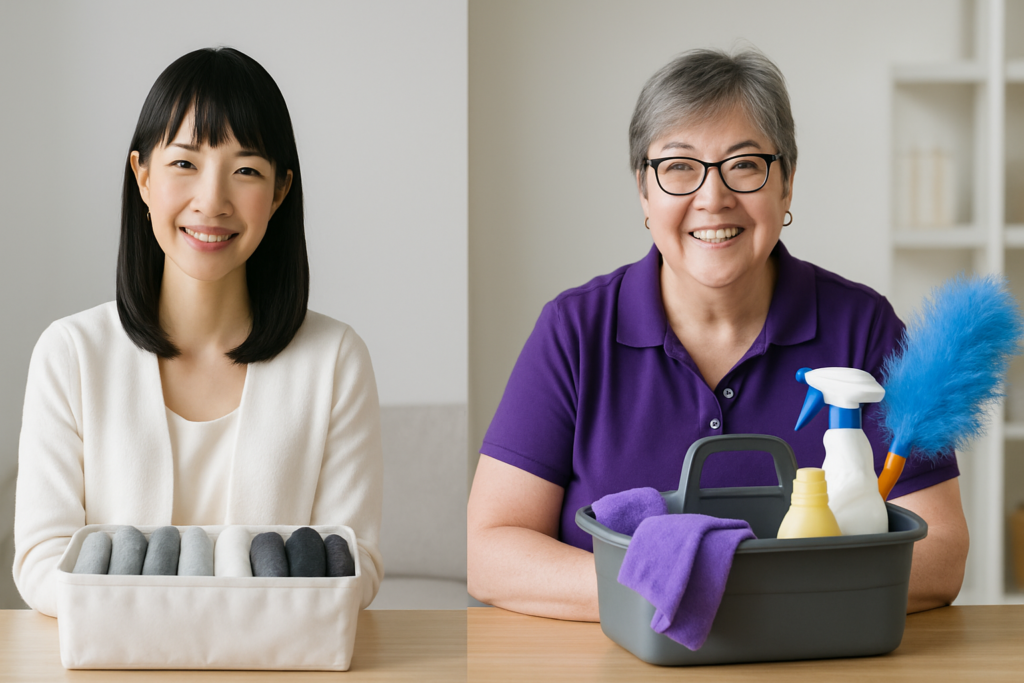
Your home feels chaotic, papers pile up faster than you can sort them, and you’ve tried countless organization systems that lasted about as long as your New Year’s resolutions. You’re not alone in this struggle, and you’ve probably heard of two wildly different approaches that promise to transform your space: Marie Kondo’s KonMari method and Marla Cilley’s FlyLady system.
These two organization philosophies couldn’t be more different. Kondo asks you to hold every item and determine if it sparks joy, then tackle your entire home in one massive decluttering marathon. FlyLady takes the opposite approach, asking you to start with your kitchen sink and build tiny habits over months or years.
After testing both methods extensively and watching friends succeed (and fail) with each approach, I can tell you that your personality type and current life situation will determine which system transforms your home and which one leaves you more frustrated than when you started.
The KonMari Method: All or Nothing Transformation
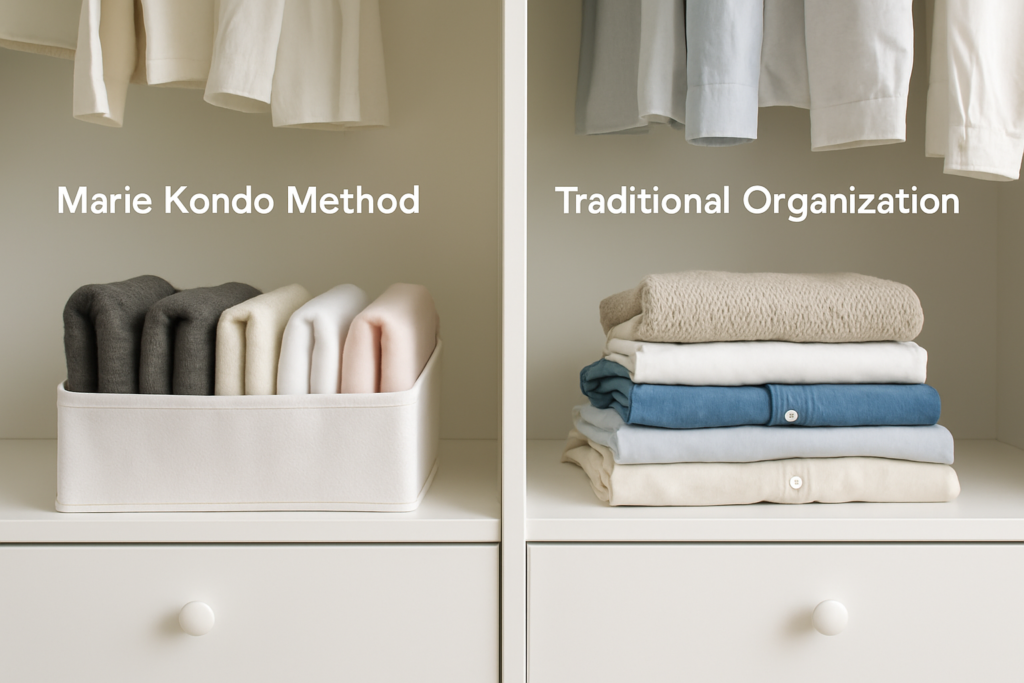
Marie Kondo’s approach centers around one dramatic lifestyle change. You commit to tidying up completely, all at once, in the right order. The process involves gathering every item in a category (clothes, books, papers, komono, and sentimental items), piling everything together, then keeping only what sparks joy.
The philosophy runs deeper than simple decluttering. Kondo believes that surrounding yourself only with items that make you happy creates a foundation for the life you want to live. Each object in your home should serve a purpose or bring you genuine pleasure.
Time Commitment and Process
The KonMari method demands intensive time blocks. You might spend an entire weekend going through clothes or dedicate several evenings to books. Most people complete the full process in 2-6 months, depending on how much stuff they own and how quickly they can make decisions.
You start with clothes because they’re easier to evaluate than sentimental items. Then you move through books, papers, komono (miscellaneous items), and finally tackle photos and keepsakes. This order prevents you from getting overwhelmed by emotional attachments early in the process.
The method requires you to physically handle every single item you own. You can’t just glance at a sweater and decide its fate. You must pick it up, hold it, and genuinely assess whether it makes you happy.
Real-World Application
Sarah, a marketing manager in Portland, completed her KonMari journey last year. She spent three months working through her 1,200-square-foot condo, dedicating 4-6 hours every Saturday to the process. By month three, she had donated 12 bags of clothes, sold furniture she never liked, and created a home where everything had a designated place.
The transformation stuck. Eight months later, Sarah’s home remains organized because she only kept items she genuinely wanted. When she brings something new home, she evaluates it using the same joy-sparking criteria.
However, the method proved too overwhelming for her friend Jessica, who has three young children. Jessica tried to tackle clothes during naptime but couldn’t maintain the focus needed for proper evaluation. The massive piles of clothing created more chaos in her already busy household.
The FlyLady System: Baby Steps and Habits
Marla Cilley’s FlyLady system takes the complete opposite approach. Instead of dramatic transformation, you build tiny habits that compound over time. The method recognizes that many people feel overwhelmed by their homes and need gentle, manageable steps to create change.
FlyLady’s philosophy centers around progress, not perfection. You start with one simple task (shining your kitchen sink) and gradually add new routines. The system emphasizes that any progress is good progress, and you should never try to catch up if you fall behind.
The Foundation: Shining Your Sink
Every FlyLady journey begins with the same task: clean and shine your kitchen sink until it gleams. You maintain this habit for one week before adding anything else. This single action creates momentum and gives you one consistently clean spot in your home.
The clean sink serves as a visual reminder of your commitment to change. When you see it sparkling, you’re more likely to wash dishes immediately rather than letting them pile up. This one habit often triggers other positive changes without conscious effort.
Building Routines Gradually
After mastering the sink, you add morning and evening routines piece by piece. Your morning routine might include making your bed and starting a load of laundry. Evening routines focus on preparing for the next day and maintaining your clean sink.
FlyLady divides your home into zones, spending one week focusing on each area. During zone weeks, you spend 15 minutes daily on that specific area. This prevents you from neglecting any part of your home while keeping tasks manageable.
The system includes daily missions (specific tasks that take 15 minutes or less) and hot spot fire drills (attacking clutter areas for 2-minute bursts). These short time limits prevent the overwhelming feeling that stops many people from starting.
Real-World Application
Linda, a single mom with two teenagers, found success with FlyLady after multiple failed attempts at massive decluttering projects. She started with just the sink habit and gradually built routines over six months.
Her morning routine now includes making beds, starting laundry, and doing a 5-minute pickup in the main living areas. Evening routines involve laying out clothes for the next day and cleaning the kitchen. These habits became automatic, requiring no willpower or decision-making.
The gradual approach worked because Linda never felt overwhelmed. When life got hectic, she could maintain just the sink habit without feeling like she had failed. The system’s flexibility allowed her to adapt routines around her family’s changing schedule.
Sustainability: Which Method Lasts?
KonMari’s sustainability depends entirely on your follow-through with the joy evaluation. If you truly only kept items that make you happy, maintaining organization becomes much easier. You have fewer possessions, and everything has a designated home.
The challenge comes with new acquisitions. You must consistently apply the joy test to incoming items, or clutter creeps back in. Many people successfully complete the initial KonMari process but struggle with ongoing maintenance because they never developed daily organizational habits.
FlyLady’s sustainability relies on habit formation rather than willpower. Once routines become automatic, they require minimal mental energy to maintain. The system builds slowly, allowing habits to solidify before adding new challenges.
The weakness of FlyLady appears in its lack of aggressive decluttering. You might develop excellent cleaning habits while still owning too much stuff. Some people need the dramatic reduction that KonMari provides before any organizational system can work effectively.
Personality Types and Success Factors
KonMari Works Best For
All-or-nothing personalities thrive with KonMari. If you prefer dramatic changes over gradual improvements, this method aligns with your natural tendencies. People who can dedicate large time blocks and maintain focus during lengthy organizing sessions see the best results.
The method also suits people who struggle with decision-making about possessions. The joy evaluation provides a clear criteria for keeping or discarding items, removing the ambiguity that paralyzes many people during decluttering.
Visual learners often prefer KonMari because the transformation is immediately apparent. When you finish a category, you see dramatic results that motivate you to continue.
FlyLady Works Best For
Busy parents and people with demanding schedules often find more success with FlyLady. The short time commitments (2-15 minutes) fit into packed days better than the marathon sessions KonMari requires.
Perfectionists who get paralyzed by all-or-nothing thinking benefit from FlyLady’s emphasis on progress over perfection. The system gives permission to do things imperfectly as long as you’re taking action.
People with ADHD or executive function challenges often respond well to FlyLady’s structure and routine. The system provides external organization for brains that struggle with internal organization.
Combining Elements from Both Systems
You don’t have to choose just one method. Many people find success combining KonMari’s aggressive decluttering with FlyLady’s habit-building approach. Start with a modified KonMari process to dramatically reduce your possessions, then use FlyLady routines to maintain your newly organized space.
This hybrid approach addresses both systems’ weaknesses. You get the dramatic transformation that motivates continued effort, plus the daily habits that prevent backsliding. The key is completing enough decluttering that your remaining possessions can be maintained with short daily routines.
Another effective combination involves using KonMari’s joy evaluation for new purchases while following FlyLady’s routines for daily maintenance. This prevents new clutter from accumulating while keeping your existing space organized.
The Verdict: Which Method Wins?
FlyLady takes the crown for most people, especially those who have failed at organization before. The gradual approach builds sustainable habits that last long-term, and the short time commitments make it accessible for busy lives.
However, KonMari wins for specific situations. If you’re facing a major life transition (moving, divorce, retirement) or you have the time and energy for intensive work, the dramatic results can create lasting change.
The best choice depends on your current situation, available time, and personality type. FlyLady works better as a lifestyle change, while KonMari functions better as a one-time reset.
Getting Started with Your Chosen Method
If you choose KonMari, clear your calendar for several weekends and prepare emotionally for intensive work. Start with clothes as recommended, and resist the urge to organize by room rather than category. Trust the process even when your house looks worse before it looks better.
If you choose FlyLady, start tonight by cleaning your kitchen sink until it shines. Set a timer for exactly 15 minutes and don’t work longer than that. Focus only on the sink for one full week before adding any other tasks.
For either method, take before and after photos to track your progress. The visual evidence of change will motivate you during difficult moments when you want to quit.
Frequently Asked Questions
Can I do KonMari with young children in the house?
KonMari becomes significantly more challenging with young children because you need uninterrupted time blocks to properly evaluate items. Most parents with children under 10 find more success with FlyLady’s shorter time commitments. If you want to try KonMari, consider hiring childcare for weekend organizing sessions or work during nap times and after bedtime.
How long does each method take to show results?
KonMari shows dramatic visual results quickly, often within the first category you complete. Most people see significant transformation in their homes within 2-3 months. FlyLady shows gradual improvement, with most people noticing meaningful change around the 3-6 month mark as habits become automatic and compound.
What if I start one method and want to switch to the other?
Switching between methods is perfectly acceptable and often beneficial. Many people start with FlyLady to build basic habits, then do a KonMari-style decluttering session, then return to FlyLady routines for maintenance. Others begin with KonMari for dramatic results but adopt FlyLady habits when they realize they need more structure for ongoing organization.
Do I need to buy special organizing products for either method?
Neither method requires expensive organizing products. KonMari emphasizes using boxes and containers you already own for organizing categories like socks and accessories. FlyLady focuses on establishing routines with basic cleaning supplies you likely already have. Both methods actually discourage buying organizing products until after you’ve decluttered and established systems.