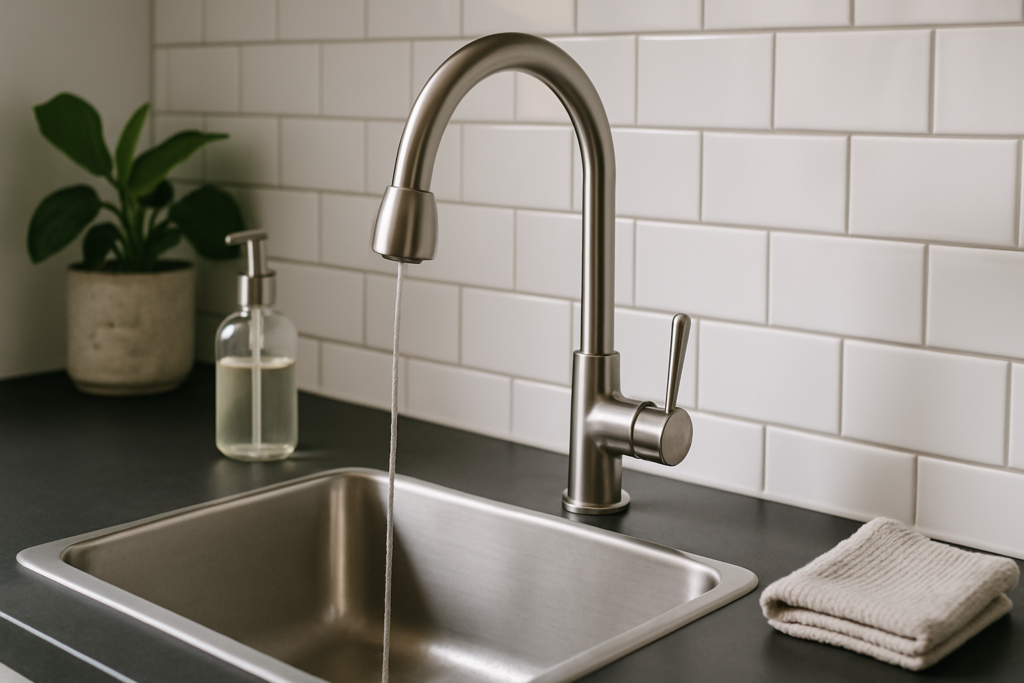
You turn on your kitchen faucet expecting a normal flow of water, but instead get a weak trickle that makes washing dishes feel like torture. Low water pressure in the kitchen sink is one of those problems that starts as a minor annoyance but quickly becomes a daily frustration.
The kitchen sink gets more use than almost any other fixture in your home, so when the water pressure drops, you notice it immediately. Before you call a plumber or start panicking about expensive repairs, there are several simple fixes you can try yourself.
Most kitchen sink pressure issues stem from easily solvable problems like clogged aerators or partially closed valves. We’ll walk through seven proven solutions, starting with the simplest five-minute fixes and progressing to more involved repairs that might require professional help.
Diagnosing the Problem First
Before diving into fixes, spend a few minutes figuring out exactly what you’re dealing with. Turn on both hot and cold water separately to see if the pressure issue affects one or both lines. Check other faucets in your home to determine if this is a house-wide problem or isolated to your kitchen sink.
If every fixture has low pressure, the issue likely lies with your main water line, water meter, or municipal supply. Contact your water utility company first to rule out service issues in your area.
When only your kitchen sink has pressure problems, you’re looking at a localized issue that you can probably fix yourself. Pay attention to whether the problem started suddenly or developed gradually, as this can point you toward the right solution.
Fix #1: Clean the Aerator
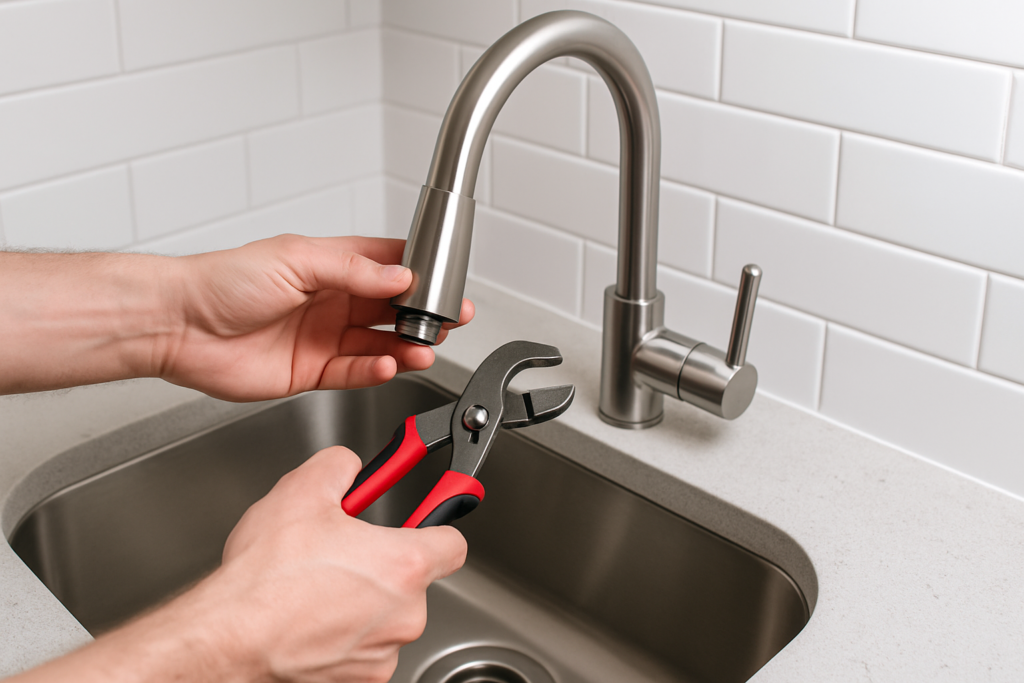
The aerator is that small screen at the tip of your faucet that mixes air with water. This little device collects mineral deposits, debris, and sediment over time, creating the most common cause of kitchen sink pressure problems.
Unscrew the aerator by turning it counterclockwise with your fingers. If it’s stuck, wrap a cloth around it and use pliers, being careful not to scratch the finish. Once removed, you’ll likely see white or greenish buildup on the screen and internal components.
Rinse the aerator parts under hot water and scrub with an old toothbrush. For stubborn mineral deposits, soak the pieces in white vinegar for 30 minutes, then scrub again. Make sure all the tiny holes in the screen are clear.
Neoperl Dual Thread Faucet Aerator
A reliable replacement aerator that fits most standard kitchen faucets and improves water flow
Reassemble the aerator in reverse order and screw it back onto your faucet. This simple cleaning often restores normal water pressure immediately and costs nothing but a few minutes of your time.
Fix #2: Check the Shutoff Valves
Your kitchen sink has shutoff valves under the cabinet, typically one for hot water and one for cold. These valves control water flow to your faucet and might not be fully open, especially if someone recently worked on your plumbing.
Look under your sink for two knobs or handles attached to the water supply lines. Turn both valves counterclockwise until they stop turning. Even if they appear to be open, they might only be partially open, which can significantly reduce water pressure.
Sometimes these valves get accidentally bumped when you’re storing items under the sink or during routine cleaning. A valve that’s only three-quarters open can cut your water pressure by 50% or more.
While you’re under there, check for any obvious leaks or damage to the supply lines. Corroded or damaged valves might need replacement, but that’s a more advanced repair.
Fix #3: Clear Clogged Supply Lines
The flexible supply lines connecting your shutoff valves to your faucet can accumulate debris over time, particularly in areas with hard water. These lines have small internal diameters, so even minor buildups can impact pressure noticeably.
Turn off both shutoff valves and disconnect the supply lines from the bottom of your faucet. Have a bucket ready to catch any remaining water in the lines. Flush each line by temporarily turning the shutoff valve back on and letting water flow through.
If water flows freely from the disconnected supply line but pressure is still low at the faucet, the blockage is in your faucet itself. If water barely trickles from the supply line, you’ve found your problem.
For stubborn clogs, you might need to replace the supply lines entirely. Modern braided stainless steel lines are more durable and less prone to internal corrosion than older rubber or plastic versions.
Fix #4: Clean the Faucet Cartridge
Many kitchen faucets use cartridges to control water flow and mixing. These cartridges can become clogged with mineral deposits or debris, reducing water pressure even when everything else looks fine.
Removing a faucet cartridge varies by manufacturer, but generally involves removing the handle and any decorative caps or rings. Take a photo before disassembly so you remember how everything goes back together.
Once you’ve accessed the cartridge, pull it straight out. You might need special pliers depending on your faucet model. Rinse the cartridge thoroughly and soak it in vinegar if you see mineral buildup.
Moen 1255 Duralast Replacement Cartridge
Compatible with many Moen single-handle faucets and often solves persistent pressure issues
Check the cartridge housing inside the faucet body as well. Debris often collects there and needs to be flushed out. Replace any worn O-rings on the cartridge before reinstalling.
Fix #5: Address Water Heater Issues
If low pressure only affects your hot water, your water heater might be the culprit. Sediment buildup in the tank or problems with the dip tube can reduce hot water pressure throughout your home.
Check the temperature and pressure relief valve on your water heater. This valve sometimes gets stuck partially open, reducing pressure to your fixtures. Lifting and releasing the valve handle can sometimes free it up.
Mineral deposits in the bottom of your water heater tank can also affect performance. Flushing the tank annually helps prevent this buildup, but established sediment layers might require professional attention.
Consider the age of your water heater as well. Units older than 10-12 years often develop internal problems that affect both pressure and efficiency. A professional inspection can help determine if replacement makes more sense than repair.
Fix #6: Install a Water Pressure Booster
When your home’s overall water pressure is marginally low, a pressure booster can make a significant difference. These devices increase water pressure throughout your plumbing system, not just at your kitchen sink.
Whole-house pressure boosters require professional installation and electrical connections, but they solve pressure problems permanently. They’re particularly effective for homes at the end of municipal water lines or at higher elevations.
Point-of-use pressure boosters can be installed just for your kitchen sink, though these are less common and typically less effective than whole-house systems. They work best when your main pressure is adequate but your kitchen line has specific restrictions.
Davey Water BT20-30T2-USA Pressure Booster System
A reliable whole-house booster that maintains consistent pressure and includes automatic controls
Before installing any pressure booster, have your water pressure tested professionally. Most systems work best when incoming pressure is at least 20-25 PSI, and boosting pressure too high can damage your plumbing fixtures.
Fix #7: Replace Old Plumbing
Sometimes low water pressure indicates bigger problems with your home’s plumbing. Galvanized steel pipes, common in homes built before 1960, corrode internally over decades and can reduce water flow to a trickle.
If your kitchen has noticeably lower pressure than other fixtures, the supply lines serving that area might need replacement. This is particularly common in kitchen additions or remodels where smaller diameter pipes were used to save money.
Copper pipes can also develop problems, especially at joints and connections. Pinhole leaks might not be visible but can significantly impact pressure. A professional plumber can test your lines to identify hidden leaks or restrictions.
Replacing plumbing isn’t a DIY project for most homeowners, but it permanently solves pressure problems. Modern PEX piping resists corrosion and maintains consistent internal diameter better than older materials.
When to Call a Professional
While many pressure problems have simple solutions, some situations require professional expertise. Call a plumber if you discover leaks during your diagnosis, if your water heater needs major service, or if multiple fixtures throughout your home have pressure issues.
Municipal water supply problems also need professional attention. Your water utility company should investigate pressure issues affecting multiple homes or sudden changes in service quality.
Don’t hesitate to get professional help if you’re uncomfortable working with plumbing connections or if simple fixes don’t solve your problem. A good plumber can diagnose complex issues quickly and avoid the frustration of trial-and-error repairs.
Prevention Tips
Regular maintenance prevents many water pressure problems from developing. Clean your aerator every three months, especially if you have hard water. Annual water heater flushing removes sediment before it affects performance.
Keep shutoff valves fully open and check them periodically. Test your home’s water pressure annually with a simple gauge to catch problems early. Normal residential pressure should be between 40-60 PSI.
Consider installing a whole-house water filter if you have heavily mineralized water. These systems protect all your fixtures and appliances from buildup that causes pressure problems and premature failure.
Frequently Asked Questions
Why does my kitchen sink have low pressure but other faucets are fine?
This typically indicates a localized problem with your kitchen sink’s aerator, cartridge, or supply lines. Start by cleaning the aerator, which solves the majority of single-fixture pressure problems. If that doesn’t work, check the shutoff valves under your sink to ensure they’re fully open.
Can low water pressure damage my dishwasher or other appliances?
Most appliances can handle moderate pressure variations, but severely low pressure can affect performance and efficiency. Dishwashers need adequate pressure for proper spray arm function, and ice makers might not fill properly. Address pressure problems promptly to avoid appliance issues.
How do I know if my whole house needs a pressure booster?
Test your water pressure at multiple locations with a pressure gauge. If pressure consistently measures below 40 PSI throughout your home, a whole-house booster might be beneficial. However, check with your water utility first to rule out service problems or meter issues.
Is it safe to increase water pressure too much?
Excessive water pressure (above 80 PSI) can damage fixtures, cause leaks, and waste water. Most homes work best with pressure between 40-60 PSI. If you install a pressure booster, make sure it includes proper regulation and doesn’t exceed safe levels for your plumbing system.
This article contains affiliate links. We may earn a small commission at no extra cost to you.