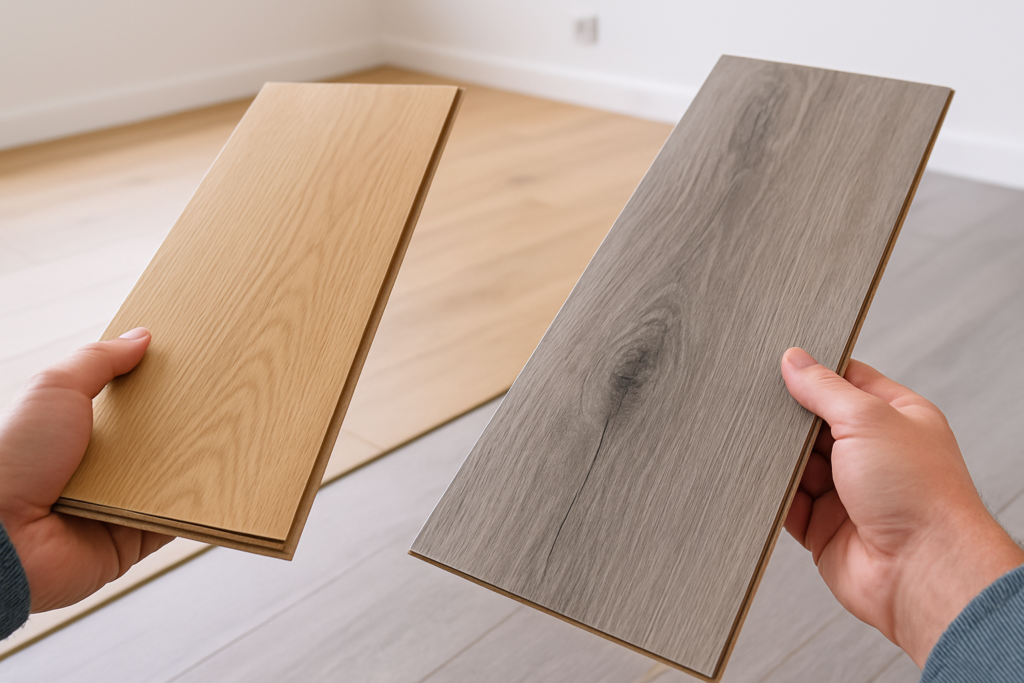
You’re standing in the flooring aisle, samples in hand, trying to figure out which option will best serve your home for years to come. Both laminate and vinyl flooring have come a long way from their humble beginnings, and choosing between them isn’t as simple as it used to be.
The modern versions of these materials offer impressive durability, realistic wood and stone looks, and installation methods that make weekend DIY projects actually achievable. But they excel in different areas, and picking the wrong one for your specific situation can lead to regret down the road.
This guide breaks down everything you need to know about laminate versus vinyl flooring, from water resistance to pet-friendliness, so you can make the right choice for your home and lifestyle.
Understanding the Basics: What Sets Them Apart
Laminate flooring consists of four layers: a protective wear layer on top, a photographic layer that creates the visual design, a high-density fiberboard (HDF) core, and a backing layer for stability. The core is wood-based, which gives laminate its firm feel underfoot but also makes it vulnerable to moisture.
Vinyl flooring comes in two main types: luxury vinyl plank (LVP) and luxury vinyl tile (LVT). Both are made entirely of synthetic materials, typically PVC, with wear layers, design layers, and backing systems. This all-synthetic construction makes vinyl completely waterproof, not just water-resistant.
The key difference lies in their cores. Laminate’s wood-based core gives it a more solid, traditional feel but limits where you can install it. Vinyl’s synthetic core allows for complete water immunity but feels softer underfoot.
Water Resistance: The Make-or-Break Factor
Water resistance often determines which flooring wins in specific rooms. Traditional laminate flooring struggles with moisture because of its HDF core. Even small amounts of standing water can seep through seams and cause the core to swell and warp.
Some newer laminate products feature enhanced water resistance with better sealants and coatings, but they’re still not recommended for bathrooms, laundry rooms, or basements prone to moisture issues.
Vinyl flooring dominates this category completely. Its synthetic construction makes it 100% waterproof, not just on the surface but throughout the entire plank or tile. You can install vinyl in any room without worry, including full bathrooms and basements.
For kitchens, vinyl’s water immunity provides peace of mind around sinks, dishwashers, and refrigerators where minor leaks and spills happen regularly.
Durability and Longevity Comparison
Both flooring types can handle normal household traffic, but they wear differently over time. Laminate’s wear layer protects against scratches and scuffs, and higher-end options with AC4 or AC5 ratings can withstand heavy commercial traffic.
The weakness of laminate lies in its inability to be refinished. Once the wear layer is damaged, you need to replace individual planks or the entire floor. However, quality laminate can easily last 15-20 years in residential settings.
Vinyl flooring’s durability depends heavily on the thickness of its wear layer, measured in mils. Residential vinyl typically ranges from 6-20 mils, with thicker wear layers lasting longer. Premium vinyl products can handle decades of use without showing significant wear.
Vinyl has an advantage in high-impact situations. While both materials can dent from heavy furniture or dropped objects, vinyl’s flexibility helps it bounce back better than laminate’s rigid construction.
Installation: DIY-Friendliness and Professional Requirements
Both laminate and vinyl have embraced click-lock installation systems that make DIY installation possible for most homeowners. These systems eliminate the need for glue or nails in most cases.
Laminate installation requires careful attention to expansion gaps around room perimeters. The wood-based core expands and contracts with temperature and humidity changes, so proper spacing is critical to prevent buckling.
Vinyl installation tends to be more forgiving. Most vinyl products don’t require expansion gaps, and the material’s flexibility makes it easier to work around obstacles and irregular room shapes.
Subfloor preparation matters for both materials, but vinyl can handle minor imperfections better than laminate. Laminate needs a very level subfloor to prevent hollow spots that can cause planks to flex and potentially break.
Roberts 70-193A Super Felt Underlayment
Quality underlayment that works well under most laminate installations for noise reduction and moisture protection.
Cost Analysis: Initial Investment and Long-Term Value
Pricing for both laminate and vinyl varies widely based on quality, thickness, and design complexity. Entry-level options in both categories offer budget-friendly solutions, while premium versions compete with hardwood and natural stone pricing.
Basic laminate typically costs less upfront than comparable vinyl, but you need to factor in underlayment costs for laminate installation. Many vinyl products include attached backing, reducing overall material costs.
Installation costs vary by region and complexity, but both materials generally cost less to install than hardwood or tile. DIY installation can significantly reduce total project costs for both options.
Long-term value considerations include replacement frequency and maintenance costs. Vinyl’s waterproof nature and repairability can provide better value in moisture-prone areas, while laminate’s traditional feel might offer better resale appeal in main living areas.
Comfort and Feel Underfoot
The difference in how these materials feel when you walk on them is noticeable. Laminate’s rigid HDF core provides a solid, firm feeling that closely mimics real hardwood. This firmness appeals to homeowners who want the traditional feel of wood flooring.
Vinyl flooring feels softer and more flexible underfoot. This characteristic makes it more comfortable for extended standing, which benefits kitchens and other work areas. The softer feel also provides better impact absorption, making it gentler on joints.
Temperature retention differs between the materials too. Laminate tends to feel cooler, similar to hardwood, while vinyl maintains a more neutral temperature that feels warmer in winter months.
Both materials benefit from quality underlayment for sound dampening, though vinyl often includes attached backing that reduces noise transmission between floors.
Maintenance Requirements and Cleaning
Daily maintenance for both laminate and vinyl is straightforward. Regular sweeping or vacuuming removes debris that can scratch surfaces, and damp mopping handles most spills and soil.
Laminate requires more careful cleaning around seams and edges where moisture could penetrate. Using too much water or harsh cleaners can damage the protective wear layer or seep into the core.
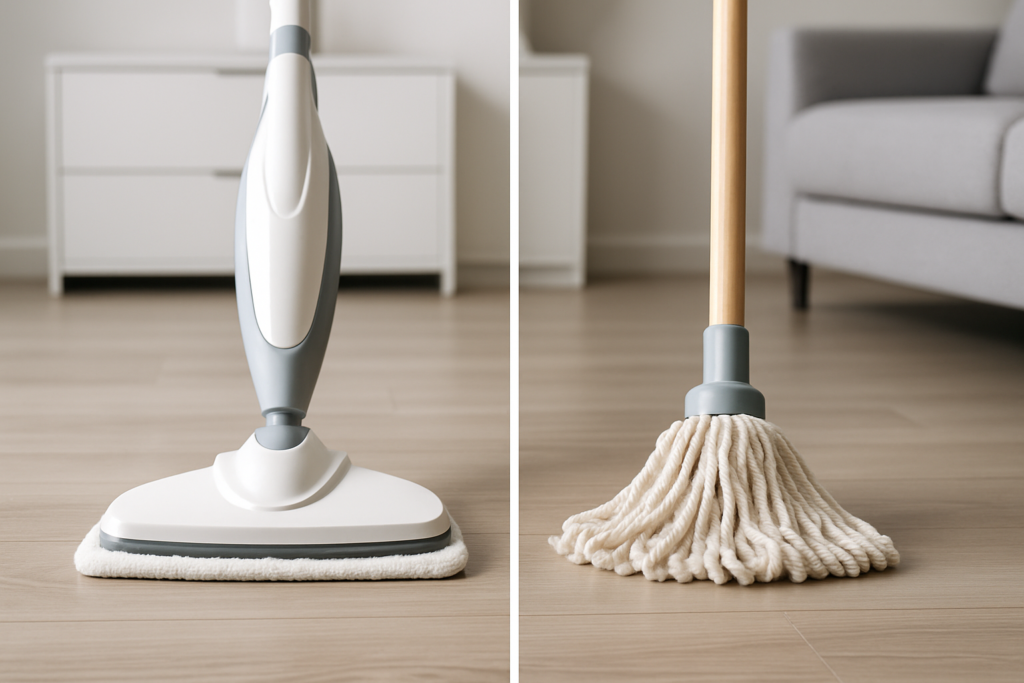
Vinyl’s waterproof construction allows for more aggressive cleaning when needed. You can use steam mops and wet cleaning methods without worry, making vinyl easier to maintain in high-soil areas.
Both materials resist staining better than natural materials like hardwood or stone. However, vinyl’s synthetic nature makes it more resistant to discoloration from spills or UV exposure over time.
Room-by-Room Recommendations
Living Rooms and Bedrooms
For main living areas, laminate often wins due to its authentic wood-like feel and appearance. The solid underfoot sensation and slightly more premium look make it ideal for spaces where you want the hardwood aesthetic without the cost.
Bedrooms benefit from laminate’s temperature characteristics and traditional feel, especially in homes with existing hardwood in other areas where consistency matters.
Kitchens and Dining Rooms
Kitchens present the classic dilemma between appearance and practicality. Vinyl’s complete water resistance makes it the logical choice for busy kitchens where spills happen frequently.
However, some homeowners prefer laminate’s more authentic appearance in open floor plans where the kitchen flows into living areas. Enhanced water-resistant laminate options provide a middle ground, though they still require careful cleanup of spills.
Bathrooms and Laundry Rooms
Vinyl wins decisively in wet areas. Its waterproof construction eliminates concerns about humidity, splashing, and occasional flooding that can occur around washing machines and water heaters.
Laminate should be avoided in full bathrooms and laundry rooms, though some enhanced products might work in powder rooms with good ventilation and minimal moisture exposure.
Basements
Basement installations favor vinyl due to potential moisture issues from concrete subfloors and occasional flooding. Vinyl’s waterproof nature provides protection against humidity and minor water intrusion.
Laminate can work in dry basements with proper moisture barriers, but vinyl offers better long-term security in below-grade installations.
TrafficMASTER Allure Ultra
Popular luxury vinyl plank option that offers realistic wood looks with excellent durability for high-traffic areas.
Pet and Family Considerations
Homes with pets face specific flooring challenges that influence the laminate versus vinyl decision. Pet accidents, scratches from claws, and heavy traffic patterns all impact flooring performance.
Vinyl’s waterproof construction makes it superior for pet accidents. Urine and other liquids can’t penetrate the surface or seams, preventing odors and staining that plague other flooring types.
Scratch resistance varies within both categories based on wear layer thickness and quality. Premium vinyl with thick wear layers often outperforms laminate against pet claws, especially from larger dogs.
For families with young children, vinyl’s softer surface provides better impact protection for falls and dropped toys. The noise dampening qualities also help reduce sound transmission to rooms below.
Environmental and Health Factors
Both laminate and vinyl have improved significantly in terms of environmental impact and indoor air quality. Modern products from reputable manufacturers meet strict emissions standards for formaldehyde and other volatile organic compounds (VOCs).
Laminate’s wood-based core comes from managed forests in most cases, and many products incorporate recycled content. The manufacturing process has become more environmentally friendly over recent years.
Vinyl flooring has addressed earlier concerns about phthalates and other chemicals. Premium products now use phthalate-free formulations and meet rigorous indoor air quality certifications like FloorScore and GREENGUARD.
Both materials are recyclable at the end of their lifecycle, though vinyl recycling programs are more widely available due to the material’s synthetic nature.
Making Your Final Decision
Choose laminate when you prioritize the authentic wood feel and appearance in dry areas of your home. Its firm underfoot sensation and traditional aesthetic work best in living rooms, bedrooms, and dining areas where moisture isn’t a concern.
Choose vinyl when water resistance is important or when you need flooring that can handle wet areas, pets, and heavy use. Its versatility makes it suitable for any room in the house, and the maintenance advantages appeal to busy households.
Consider your long-term plans too. Vinyl’s waterproof nature and repairability might provide better value if you plan to stay in your home for many years. Laminate’s more traditional appearance might offer better resale appeal if you’re planning to sell within a few years.
Shaw Floors Canterbury Hardwood
High-quality laminate option that delivers authentic hardwood appearance with enhanced water resistance for most residential applications.
Frequently Asked Questions
Can you install laminate or vinyl over existing flooring?
Both laminate and vinyl can often be installed over existing hard flooring like tile, hardwood, or previous laminate, provided the surface is level, clean, and structurally sound. You’ll need to check manufacturer specifications and consider door clearance and transitions to other rooms. Carpet and cushioned vinyl typically need removal before installation.
How do laminate and vinyl hold up to furniture indentations?
Both materials can dent from heavy furniture, but vinyl tends to recover better due to its flexibility. Use furniture pads under all heavy pieces to distribute weight and prevent permanent indentations. Moving furniture should be done with dollies or sliders rather than dragging to avoid scratches and gouges.
Which option works better with radiant floor heating?
Both laminate and vinyl work with radiant heating systems, but installation requirements vary by product. Vinyl generally handles temperature changes better due to its flexibility, while some laminate products have specific thermal ratings. Always verify compatibility with your heating system and follow manufacturer guidelines for temperature limits.
How long do laminate and vinyl floors typically last?
Quality laminate flooring can last 15-25 years in residential settings with proper care, while premium vinyl can last 20-30 years or more. The actual lifespan depends on traffic levels, maintenance, and the thickness of the wear layer. Both materials typically come with warranties ranging from 10-25 years depending on the grade and manufacturer.
This article contains affiliate links. We may earn a small commission at no extra cost to you.