Laminate flooring looks amazing when it’s clean and properly maintained, but one wrong move with your mop can leave you with streaks, water damage, or a dull finish that’s hard to fix. Unlike hardwood or tile, laminate requires a specific approach to cleaning that protects its surface while keeping it spotless.
Many homeowners make costly mistakes when cleaning their laminate floors, from using too much water to choosing harsh cleaners that strip away the protective coating. The good news is that once you know the proper techniques, maintaining that showroom shine becomes simple and effective.
This guide covers everything you need to know about cleaning laminate floors the right way, including which products to use, how often to clean based on foot traffic, and the critical mistakes that could damage your investment.
Understanding Your Laminate Floor Surface
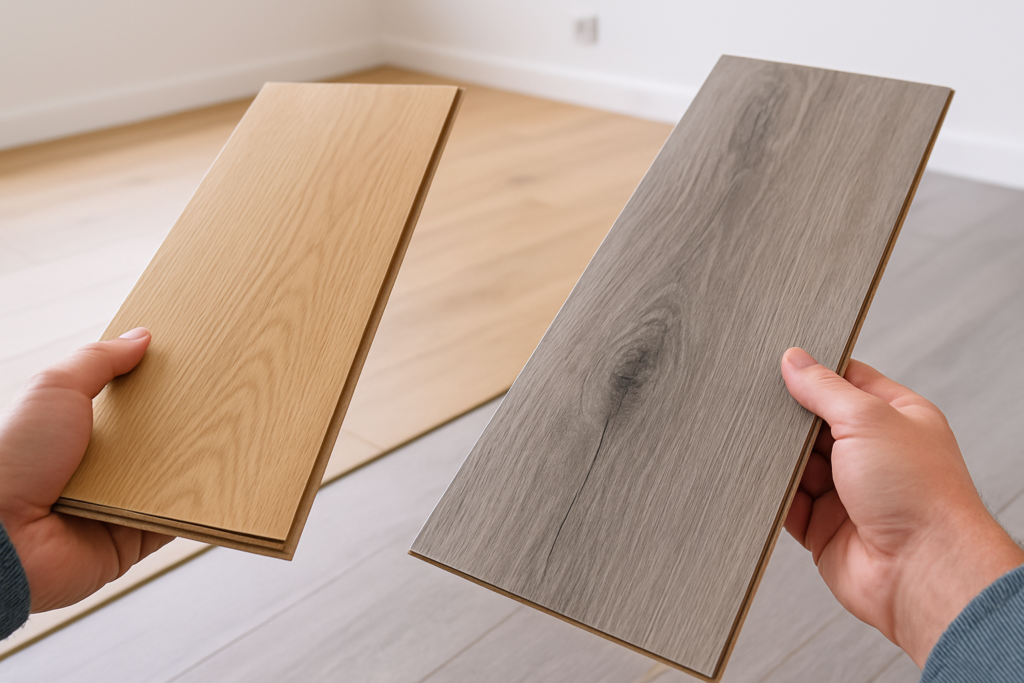
Before diving into cleaning techniques, it’s important to understand what you’re working with. Laminate flooring consists of multiple layers, with a protective wear layer on top that gives it durability and shine. This wear layer is what you’re cleaning, and it’s designed to resist stains and scratches when maintained properly.
Unlike real wood, laminate can’t be refinished if it gets damaged. This means your cleaning approach needs to preserve that top layer rather than risk damaging it with harsh chemicals or excessive moisture. The material is also more susceptible to water damage at the seams, where moisture can seep between planks and cause swelling or warping.
The Essential Do’s for Laminate Floor Cleaning
Start with Regular Dry Cleaning
Your best defense against dirt buildup is consistent dry cleaning. Sweep or vacuum your laminate floors at least twice a week in low-traffic areas and daily in high-traffic zones like entryways and kitchens. This prevents abrasive particles from scratching the surface when you do wet cleaning.
When vacuuming, use the hard floor setting and avoid beater bars that can potentially scratch the surface. A quality microfiber dust mop works exceptionally well for daily maintenance, trapping dust and pet hair without any risk of damage.
Use Damp Mopping, Never Wet Mopping
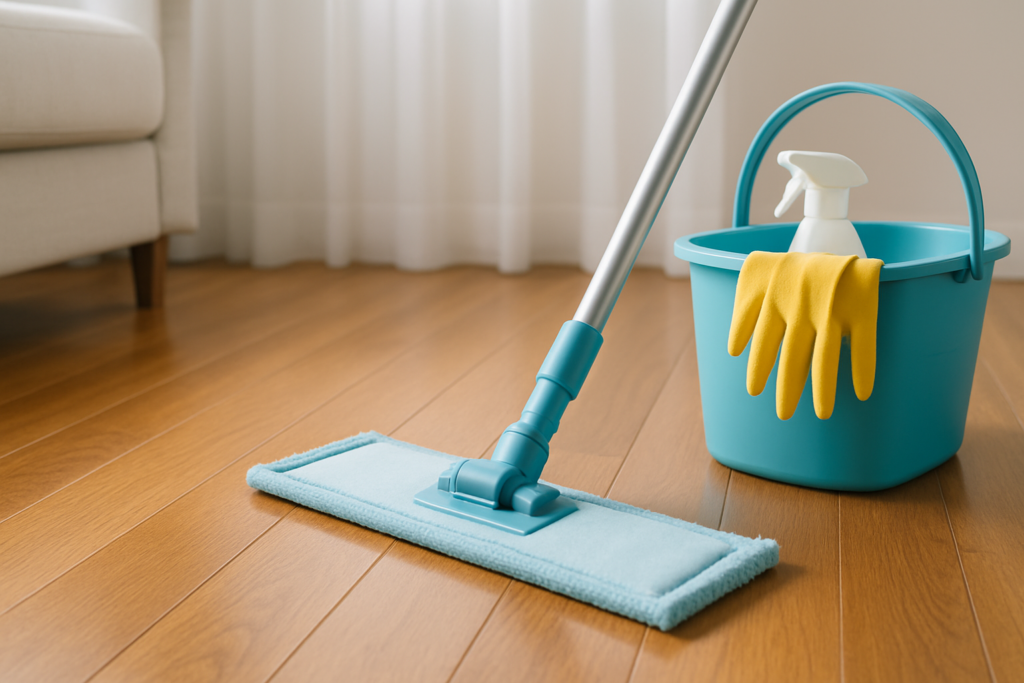
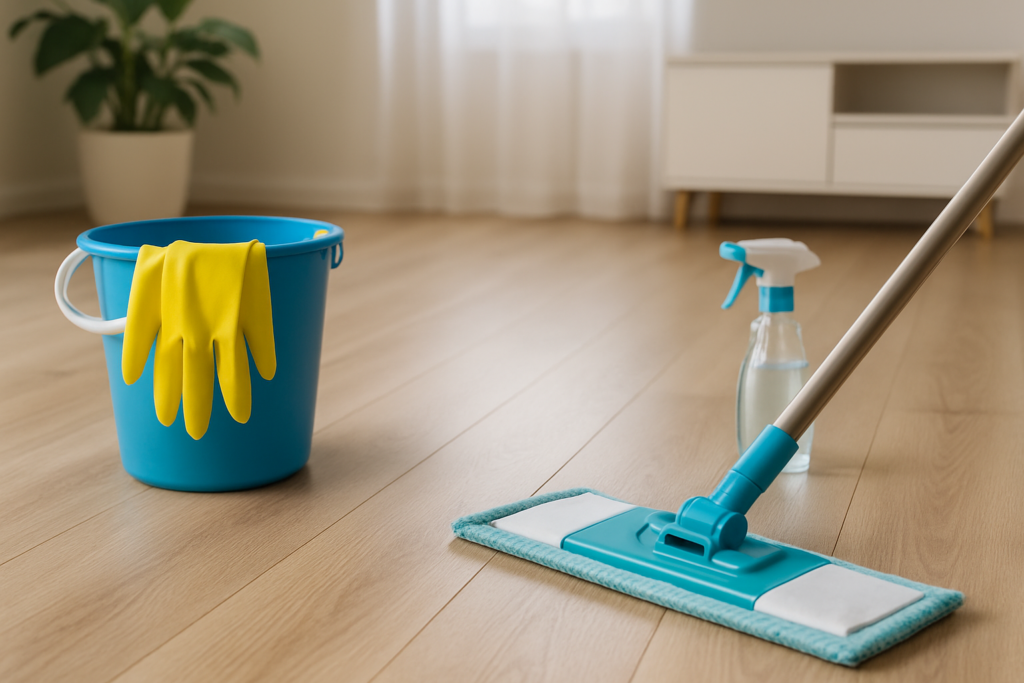
The key to successful laminate cleaning is controlling moisture levels. Your mop should be damp, not soaking wet. Wring out excess water until the mop feels barely moist to the touch. This provides enough moisture to clean effectively while protecting your floors from water damage.
Work in small sections, typically 4×4 foot areas, and dry each section immediately with a clean, dry microfiber cloth. This prevents water from sitting on the surface or seeping into seams where it can cause permanent damage.
Bona Hard-Surface Floor Premium Spray Mop
Features a refillable cartridge system that controls water output perfectly for laminate floors
Choose pH-Neutral Cleaners
Laminate floors perform best with pH-neutral cleaners specifically designed for laminate or hard surfaces. These cleaners won’t strip the protective coating or leave residue that dulls the finish. Avoid anything labeled for wood floors, as these often contain oils or waxes that can create buildup on laminate.
For budget-friendly cleaning, mix 1/2 cup of white vinegar with one gallon of warm water. This creates a gentle, effective cleaner that cuts through dirt without damaging the surface. However, don’t use this mixture more than once a week, as frequent acid exposure can eventually dull the finish.
Critical Don’ts That Damage Laminate Floors
Never Use Steam Cleaners or Excessive Water
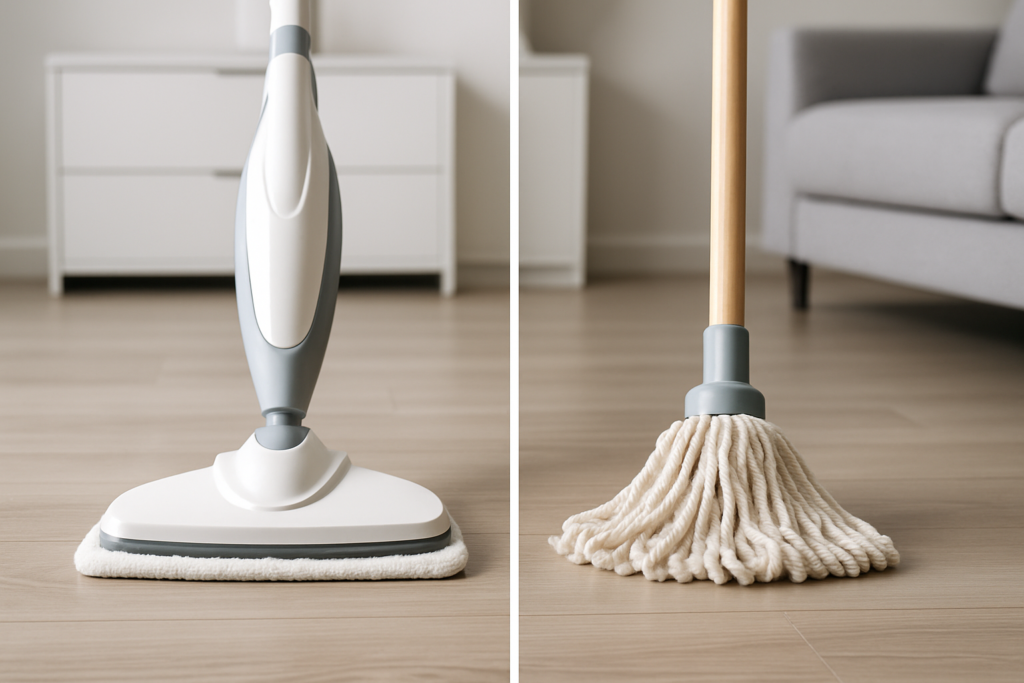
Steam cleaners are one of the fastest ways to ruin laminate flooring. The high heat and moisture can penetrate seams, causing planks to warp, buckle, or separate. Even if your laminate claims to be waterproof, the installation joints rarely are, making steam cleaning a risky choice.
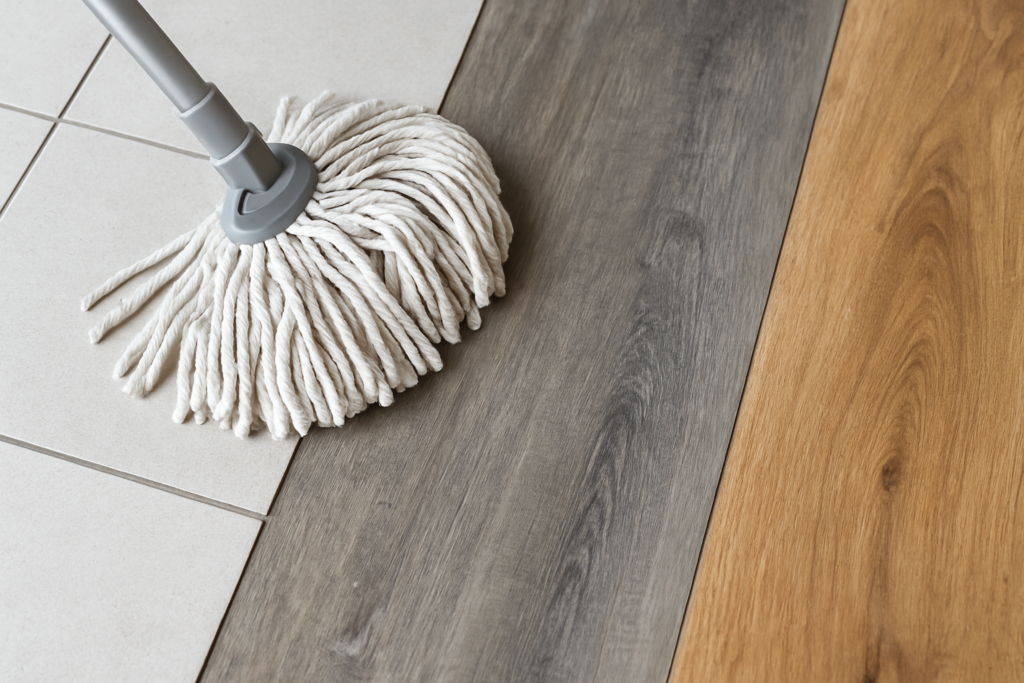
Similarly, avoid string mops or traditional mops that hold large amounts of water. These tools make it nearly impossible to control moisture levels, often leaving puddles that can seep into vulnerable areas of your flooring.
Avoid Harsh Chemicals and Abrasives
Skip bleach, ammonia-based cleaners, and any products containing acids stronger than white vinegar. These chemicals can strip the protective wear layer, leaving your floors vulnerable to stains and scratches. Abrasive cleaners or scrubbing pads can create permanent scratches that catch dirt and make future cleaning more difficult.
Oil-based cleaners, furniture polish, and wax products should never touch laminate floors. These create a slippery residue that attracts dirt and can make your floors look cloudy or streaky over time.

O-Cedar EasyWring RinseClean Microfiber Spin Mop
The dual-chamber bucket system helps you control water levels perfectly for laminate floor safety
Proper Mopping Technique Step by Step
Preparation and Setup
Clear the area of furniture and debris, then perform a thorough dry cleaning with your vacuum or dust mop. This prevents you from pushing dirt around during the wet cleaning process, which can create streaks or scratches.
Prepare your cleaning solution in a clean bucket, mixing according to manufacturer directions or using the vinegar solution mentioned earlier. Have clean, dry microfiber cloths ready for immediate drying of each section.
The Cleaning Process
Dip your mop in the cleaning solution and wring it out thoroughly. The mop should feel damp but not dripping. Start at the farthest corner of the room and work toward the exit, cleaning in smooth, overlapping strokes following the direction of the laminate planks.
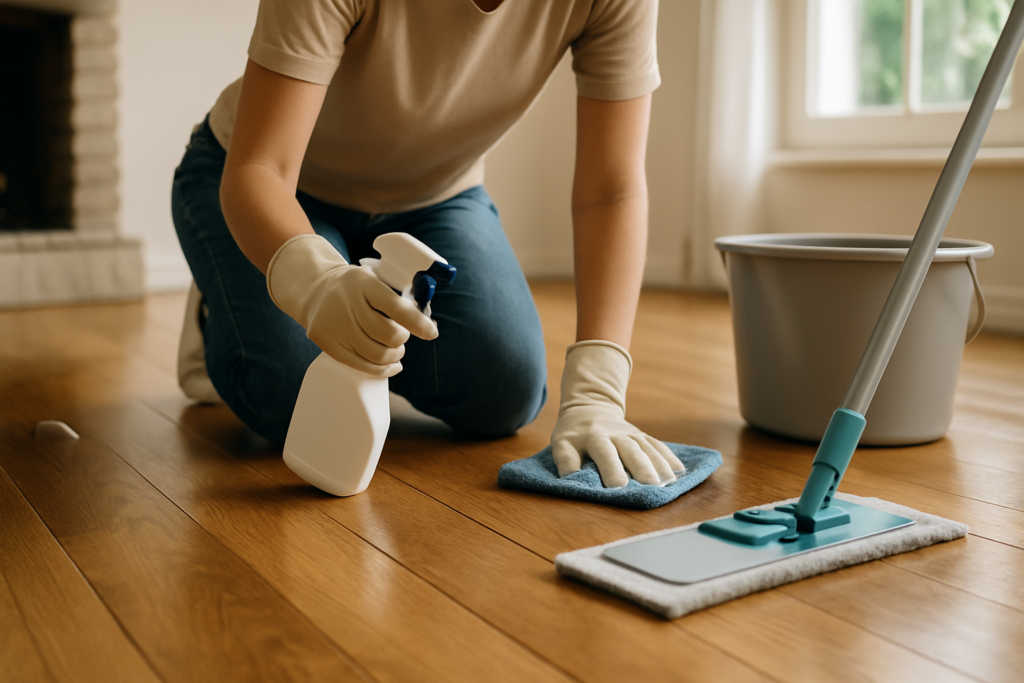
Clean small sections at a time, immediately following with a dry microfiber cloth to remove any remaining moisture. Pay special attention to seams and edges where water might accumulate. Replace your mop water if it becomes visibly dirty to avoid spreading grime around your floors.
Cleaning Frequency Based on Traffic Areas
High-Traffic Zones
Areas like entryways, kitchens, and main hallways need daily dry cleaning and wet cleaning 2-3 times per week. These spaces accumulate dirt, spills, and foot traffic that can quickly dull the laminate surface if not addressed promptly.
Consider placing high-quality doormats at entrances to reduce the amount of dirt and moisture tracked onto your laminate floors. This simple step can significantly reduce your cleaning frequency and extend the life of your flooring.
Moderate and Low-Traffic Areas
Bedrooms, dining rooms, and formal living areas typically need dry cleaning 2-3 times per week and wet cleaning once per week. Home offices or guest rooms with minimal use can often go 10-14 days between wet cleanings, though regular dust mopping remains important.
Adjust your schedule based on household factors like pets, children, or seasonal changes that might increase dirt accumulation. During winter months with salt and snow, you might need to increase cleaning frequency in entryway areas.
Weiman Laminate Floor Cleaner
Specifically formulated for laminate with no residue formula that maintains the original shine
Dealing with Specific Stains and Spills
Immediate Spill Response
Clean spills immediately to prevent staining or water damage. Blot liquids with a clean cloth rather than wiping, which can spread the spill. For sticky substances, use a plastic scraper to gently remove excess material before cleaning with your standard laminate cleaner.
Grease or food spills respond well to a small amount of dish soap mixed with warm water. Apply sparingly, clean the area, then rinse with plain water and dry thoroughly to prevent soap residue buildup.
Stubborn Stains
For tougher stains like marker, crayon, or nail polish, try rubbing alcohol on a clean cloth. Test in an inconspicuous area first to ensure it won’t damage your specific laminate finish. Acetone can work on nail polish but should be used very sparingly and rinsed immediately.
Avoid letting cleaning products sit on laminate surfaces for extended periods. Work quickly and always finish with a clean, damp cloth followed by thorough drying.
Maintaining Your Equipment
Clean microfiber mops and cloths after each use to prevent bacteria growth and maintain their effectiveness. Wash them in hot water without fabric softener, which can reduce their ability to trap dirt and absorb moisture.
Replace mop heads regularly, typically every 3-4 months with regular use. Worn mop heads don’t clean as effectively and can potentially scratch your floors. Keep multiple microfiber cloths on hand so you always have clean, dry ones available for the drying step.
Frequently Asked Questions
Can I use a robot vacuum on laminate floors?
Yes, most robot vacuums work well on laminate floors when set to hard floor mode. Make sure the brushes are clean and in good condition to avoid scratching. Some models like the iRobot Roomba series have specific hard floor settings that work excellently on laminate surfaces.
How do I remove scuff marks from laminate floors?
Try rubbing scuff marks with a clean tennis ball or pencil eraser first. For stubborn marks, apply a small amount of baking soda paste (baking soda mixed with water) and gently rub with a soft cloth. Rinse thoroughly and dry immediately. Avoid abrasive scrubbing that could damage the surface.
What should I do if water gets between the planks?
Act quickly to dry the area completely. Use towels to absorb standing water and run fans to increase air circulation. If planks have already started to swell or buckle, you may need professional assessment, as water damage to laminate flooring often requires plank replacement.
Is it safe to use vinegar on all types of laminate flooring?
While diluted white vinegar (1/2 cup per gallon of water) is generally safe for most laminate floors, check your manufacturer’s recommendations first. Some newer laminate products have specific care instructions that may recommend against acidic cleaners. When in doubt, stick to pH-neutral cleaners designed specifically for laminate surfaces.
Proper laminate floor care isn’t complicated, but it does require attention to detail and the right techniques. By following these guidelines and avoiding common mistakes, you’ll keep your floors looking beautiful for years to come. Remember that consistency in your cleaning routine is more important than intensive deep cleaning, and always prioritize protecting your floors from excess moisture and harsh chemicals.
This article contains affiliate links. We may earn a small commission at no extra cost to you.