The sound of a constantly running toilet isn’t just annoying. It’s literally money going down the drain. A running toilet can waste hundreds of gallons of water per day, turning your bathroom into the most expensive room in your house.
But here’s what most homeowners don’t realize: fixing a running toilet is usually much simpler than calling a plumber. Most toilet problems stem from just three common issues, and you can diagnose and fix them with basic tools you probably already have.
This guide will walk you through identifying exactly what’s causing your toilet to run and fixing it quickly. No plumbing experience required.
Tools You’ll Need
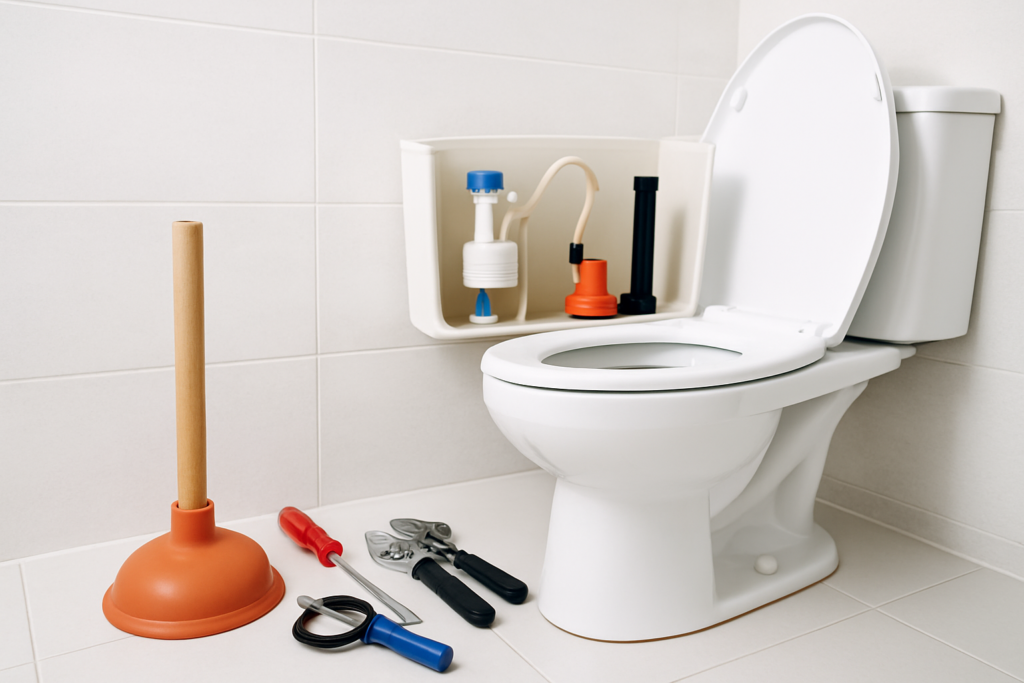
Before you start, gather these basic supplies:
- Adjustable wrench or pliers
- Rubber gloves (optional but recommended)
- Flashlight or phone light
- Towel for cleanup
Most repairs won’t require new parts, but if you need replacements, having a toilet repair kit on hand can save you multiple trips to the hardware store.
Understanding Your Toilet’s Anatomy
Inside your toilet tank, you’ll find several key components working together:
- Flapper: The rubber seal at the bottom of the tank that lifts when you flush
- Chain: Connects the flush handle to the flapper
- Fill valve: Controls water entering the tank (often called a ballcock)
- Float: Rises with water level to signal when to stop filling
- Overflow tube: Prevents tank overflow and helps with flushing
When any of these parts malfunction, your toilet keeps running. Let’s diagnose which one is causing your problem.
Quick Diagnosis: What’s Making Your Toilet Run?
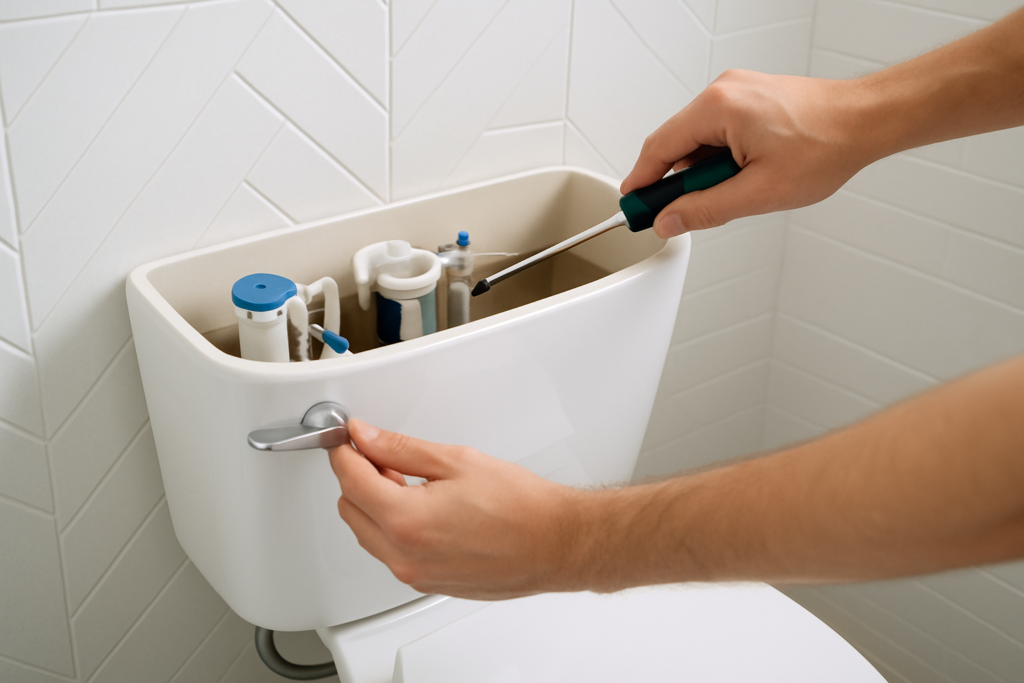
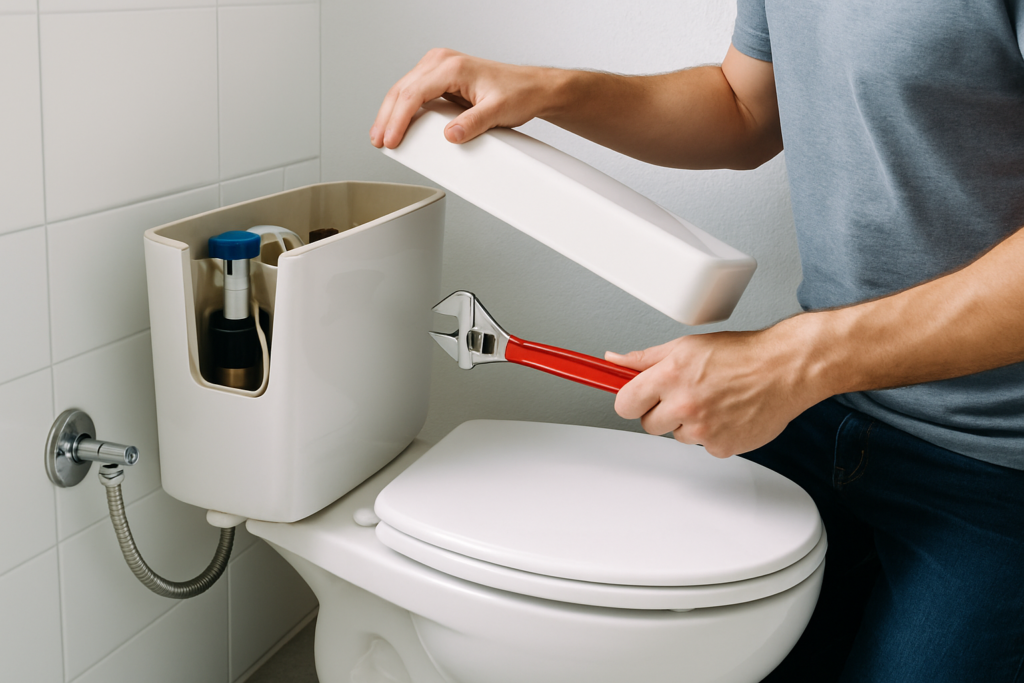
Remove your toilet tank lid and set it aside carefully (it’s heavy and can crack easily). Look inside while the toilet is running and check these three things in order:
Check 1: Is the Flapper Sealing Properly?
Look at the rubber flapper at the bottom of the tank. It should be sitting flat against the valve seat, creating a watertight seal. If water is trickling past it, you’ve found your culprit.
Check 2: Is the Chain the Right Length?
The chain connecting the flush handle to the flapper should have slight slack when the flapper is closed. If it’s too tight, it prevents the flapper from sealing. If it’s too loose, the flapper won’t lift when you flush.
Check 3: Is Water Continuously Entering the Tank?
If the fill valve keeps running, water continuously enters the tank. You’ll hear it running and see ripples in the tank water. This usually means the fill valve needs adjustment or replacement.
Fix #1: Flapper Problems (Most Common Issue)
Flapper issues cause about 80% of running toilet problems. Here’s how to fix the most common flapper problems:
Warped or Cracked Flapper
Turn off water to the toilet using the shut-off valve behind the toilet (turn clockwise). Flush to empty the tank. Remove the old flapper by unhooking it from the flush chain and lifting it off the mounting ears.
Take the old flapper to your hardware store for an exact match, or measure the diameter (usually 2 or 3 inches). Install the new flapper by reversing the removal process.
Korky 2021BP Universal Toilet Flapper
This universal flapper fits most toilet models and provides an excellent seal.
Flapper Not Seating Properly
Sometimes the flapper is fine but isn’t sitting correctly. Check if anything is preventing it from closing completely:
- Clean around the valve seat where the flapper sits
- Make sure the chain isn’t caught under the flapper
- Adjust the flapper position so it centers over the valve seat
- Check that the mounting ears are properly positioned
Mineral Buildup
Hard water can cause mineral deposits that prevent proper sealing. Gently clean the flapper and valve seat with a pumice stone or fine steel wool. Be careful not to damage the rubber.
Fix #2: Chain Length Issues
The chain length is critical for proper toilet function. Here’s how to get it right:
Chain Too Long
If the chain has too much slack, the flapper won’t lift fully when you flush, causing weak flushes. Shorten the chain by moving the connection point closer to the flush lever or removing excess links.
Chain Too Short
A chain that’s too tight prevents the flapper from sealing completely. You’ll have about 1/2 inch of slack when the flapper is closed. Lengthen the chain by moving the connection point or adding links if needed.
Broken Chain
If the chain breaks, you can temporarily use a piece of wire or fishing line. For a permanent fix, replace it with a proper toilet chain from any hardware store.
Fix #3: Fill Valve Problems
If the flapper and chain are working correctly but water keeps running, the fill valve is likely the issue.
Adjusting the Float
The float tells the fill valve when to stop filling the tank. Water level should be about 1 inch below the rim of the overflow tube. If it’s too high, the excess water runs into the overflow tube.
For a ball float: Gently bend the metal arm downward to lower the water level, or upward to raise it.
For a cup float: Look for an adjustment screw or clip that moves the float up or down the fill valve shaft.
Replacing a Fill Valve
If adjustments don’t work, you may need to replace the entire fill valve. This sounds intimidating but takes about 15 minutes:
- Turn off water and flush to empty the tank
- Disconnect the water supply line under the tank
- Remove the old fill valve by unscrewing the nut underneath
- Install the new fill valve according to manufacturer instructions
- Reconnect everything and test
Fluidmaster 400AH PerforMAX Universal Toilet Fill Valve
This reliable fill valve works with most toilets and includes clear installation instructions.
Testing Your Repair
After making any repair, test your work:
- Turn the water back on
- Let the tank fill completely
- Listen for any continued running
- Flush several times to ensure proper operation
- Check that the water level stops at the correct height
If the toilet still runs, double-check your work or try the next most likely cause from your diagnosis.
When to Call a Professional
Most toilet running issues are DIY-friendly, but call a plumber if you encounter:
- Cracks in the tank or bowl
- Problems with the toilet mounting or floor flange
- Multiple toilets having the same issue (suggests a larger plumbing problem)
- Any repair that requires removing the entire toilet
Preventing Future Problems
Keep your toilet running smoothly with these simple maintenance tips:
- Replace flappers every 3-4 years, even if they seem fine
- Clean mineral deposits monthly in hard water areas
- Avoid using drop-in toilet bowl cleaners that can damage rubber parts
- Check all components during your regular bathroom cleaning
Money-Saving Tips
A quality universal toilet repair kit contains multiple flappers, chains, and other common parts. Having one on hand means you can fix problems immediately instead of making emergency hardware store runs.
Fluidmaster Complete Toilet Repair Kit
This complete kit has everything you need for most toilet repairs and pays for itself with just one fix.
Buy parts in bulk if you have multiple toilets. Flappers and chains are inexpensive when purchased together, and you’ll always have spares when needed.
Frequently Asked Questions
Why does my toilet only run sometimes?
Intermittent running usually indicates a flapper that seals most of the time but occasionally gets stuck or warped. The flapper may be slightly warped and only leaks when water pressure or temperature changes affect its shape. Replace the flapper even if it looks okay.
How much water does a running toilet waste?
A continuously running toilet can waste 200 gallons per day or more. That’s equivalent to taking four 50-gallon baths daily. Even a small leak wastes 30-50 gallons per day, which adds up quickly on your water bill.
Can I use any flapper for my toilet?
While universal flappers work for most toilets, getting the exact size ensures the best seal. Measure your current flapper’s diameter, or bring it to the hardware store. Most residential toilets use either 2-inch or 3-inch flappers.
What if my toilet keeps running after I’ve tried everything?
If you’ve checked the flapper, chain, and fill valve without success, the problem might be a warped flush seat (where the flapper sits) or internal damage to the flush valve. These issues typically require professional repair or toilet replacement.
Remember, most running toilet problems have simple solutions. Take your time, work methodically through the diagnostic steps, and you’ll likely have your toilet working perfectly in just a few minutes.
This article contains affiliate links. We may earn a small commission at no extra cost to you.