There’s nothing quite as frustrating as turning on your shower only to be greeted by a pathetic trickle of water. Low water pressure throughout your entire house can turn simple daily tasks into time-consuming ordeals. Whether you’re trying to rinse shampoo from your hair, fill a pot for cooking, or run the washing machine efficiently, inadequate water pressure affects every aspect of your home life.
The causes of whole-house low water pressure range from simple fixes you can tackle in minutes to complex issues requiring professional intervention. Some problems stem from your home’s internal plumbing system, while others originate from municipal supply issues or aging infrastructure. Understanding the systematic approach to diagnosing these problems will save you time, money, and frustration.
This guide walks you through a methodical diagnostic process, starting with the quickest solutions and progressing to more involved repairs. You’ll learn when to grab your wrench and when to call a professional plumber.
Start with the Simplest Checks First
Before diving into complex diagnostics, verify that your water pressure issue affects the entire house. Test multiple fixtures on different floors, including faucets, showers, and outdoor spigots. If only one or two fixtures have low pressure, you’re dealing with localized blockages rather than a whole-house problem.
Check your water meter and main shutoff valve first. These valves can gradually close over time due to vibration or accidental bumping. The main shutoff valve should be fully open, typically requiring several complete turns counterclockwise. Many homeowners discover their pressure problems stem from a partially closed valve after utility work or home repairs.
Examine any inline water filters in your system. Whole-house filters, refrigerator filters, and point-of-use systems can become clogged with sediment and debris. Replace or clean these filters according to manufacturer recommendations. A severely blocked filter can reduce water pressure throughout your entire home.
Test and Measure Your Water Pressure
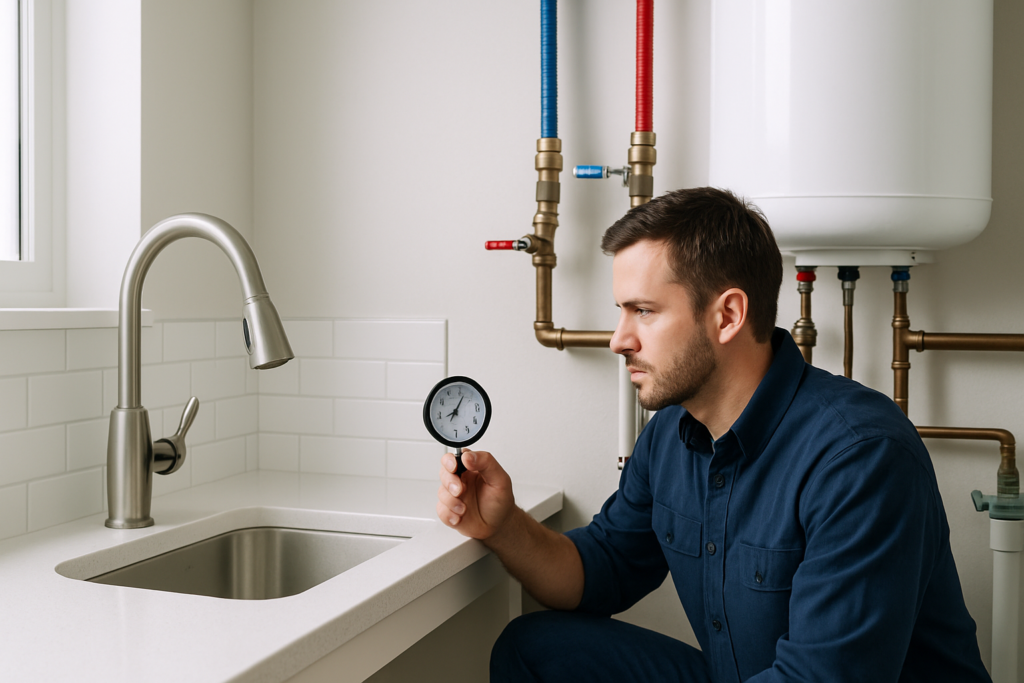
Accurate pressure measurement forms the foundation of proper diagnosis. Purchase or borrow a water pressure gauge to get concrete numbers rather than relying on subjective assessments. Normal residential water pressure ranges from 45 to 60 PSI, with 50-55 PSI being ideal for most homes.
Water Pressure Test Gauge
Essential tool for accurately measuring your home’s water pressure at various points
Connect the gauge to an outdoor spigot or washing machine connection for the most accurate reading. These connections typically provide the most direct path from your main water line. Test at different times of day, as municipal pressure can fluctuate during peak usage hours.
Document your readings at multiple locations throughout your house. Significant pressure drops between the main line and upper floors might indicate pipe sizing issues or internal blockages. A pressure reading below 40 PSI indicates a definite problem requiring attention.
Inspect Your Pressure Regulator
Most homes built after 1960 include a pressure regulator (also called a pressure reducing valve) where the main water line enters the house. This bell-shaped device protects your plumbing from excessive municipal water pressure, but it can fail over time and cause low pressure issues.
Locate your pressure regulator near the water meter or main shutoff valve. It typically has an adjustment screw on top and may show signs of age like corrosion, mineral buildup, or physical damage. A failing regulator often produces inconsistent pressure or gradually decreasing performance over months or years.
Testing the regulator requires measuring pressure on both sides of the device. Municipal pressure (before the regulator) typically ranges from 80-120 PSI, while house pressure (after the regulator) should read 45-60 PSI. If municipal pressure is adequate but house pressure is low, the regulator likely needs adjustment or replacement.
Water Pressure Regulator
Reliable replacement option for failed pressure regulators with adjustable settings
Adjusting a pressure regulator involves turning the adjustment screw clockwise to increase pressure or counterclockwise to decrease it. Make small quarter-turn adjustments and test the pressure after each change. However, if the regulator is more than 10-15 years old or shows signs of corrosion, replacement often proves more reliable than adjustment.
Examine Your Pipes for Corrosion and Blockages
Aging pipes represent one of the most common causes of declining water pressure in older homes. Galvanized steel pipes, popular from the 1930s through 1960s, gradually accumulate mineral deposits and rust that severely restrict water flow. Homes with original galvanized plumbing often experience progressively worsening pressure over decades.
Inspect visible pipes in your basement, crawl space, or utility areas for signs of corrosion. Look for rust stains, white mineral deposits, or actual flaking of pipe surfaces. If you can access pipe joints, examine them for buildup that might indicate internal corrosion.
The hot water side often shows problems first because heat accelerates corrosion and mineral buildup. If your hot water pressure is noticeably lower than cold water pressure throughout the house, focus on the hot water distribution system and water heater connections.
Professional pipe inspection using cameras can reveal internal conditions without destructive testing. This service costs significantly less than exploratory demolition and provides definitive answers about pipe condition. Many plumbing companies offer video inspection services that can identify blockages, corrosion, and structural problems.
Check Municipal Water Supply Issues
Sometimes low pressure originates from problems beyond your property. Municipal supply issues, water main breaks, or system maintenance can affect entire neighborhoods. Contact your water utility to ask about known pressure problems in your area or recent work that might impact service.
Peak usage times often reveal municipal supply limitations. Many areas experience lower pressure during morning and evening hours when demand spikes. If your pressure problems occur predictably at certain times, municipal supply capacity might be the culprit rather than your home’s plumbing.
Water main sizing can also create pressure problems, particularly in older neighborhoods where infrastructure hasn’t been upgraded to meet increased demand. Homes at the end of water lines or on hills often experience the most severe municipal pressure problems.
Consider Water Pressure Booster Systems
When municipal pressure is inadequate or your home sits at a higher elevation than optimal for good pressure, a booster system can provide a permanent solution. These systems use pumps and pressure tanks to increase and maintain water pressure throughout your house.
Booster systems work best when municipal pressure is low but consistent, typically in the 25-40 PSI range. They’re less effective when municipal pressure fluctuates wildly or drops to extremely low levels. A professional evaluation can determine whether your situation is suitable for a booster system.
Water Pressure Booster Pump
Effective solution for homes with consistently low municipal water pressure
Installation requires electrical connections, pressure switches, and integration with your existing plumbing system. While some handy homeowners can install smaller booster systems, larger installations typically require professional installation to ensure proper operation and code compliance.
Address Water Heater and Hot Water Issues
Water heaters can significantly impact hot water pressure through several mechanisms. Sediment buildup in tank-style water heaters creates blockages and reduces effective tank capacity. Mineral deposits on heating elements or heat exchangers can also restrict flow.
Inspect connections to and from your water heater for signs of corrosion or mineral buildup. The dip tube, which carries cold water to the bottom of tank heaters, can deteriorate and create pressure problems. This plastic tube is rarely visible but often causes mysterious hot water pressure issues when it fails.
Tankless water heaters have their own pressure-related challenges. Undersized units or inadequate gas supply can create pressure drops during high-demand situations. Flow restrictors and filters in tankless units require regular maintenance to prevent pressure loss.
Flushing your water heater annually removes sediment and mineral buildup that can affect pressure. This maintenance task is particularly important in areas with hard water or high mineral content.
When to Call Professional Help
Certain water pressure problems require professional expertise and specialized tools. If your diagnostic efforts reveal municipal supply issues, major pipe replacement needs, or complex regulator problems, professional help will save time and prevent costly mistakes.
Call a plumber immediately if you discover any of these conditions: water pressure below 20 PSI throughout the house, visible pipe damage or major leaks, pressure regulator problems combined with very high municipal pressure, or signs of major pipe corrosion in multiple locations.
Professional diagnosis becomes valuable when your testing reveals inconsistent results or problems that seem to have multiple causes. Experienced plumbers have specialized equipment for testing internal pipe conditions, measuring flow rates, and identifying hidden problems.
Permit requirements often mandate professional installation for major pressure system modifications. Booster pumps, pressure tank installations, and main line modifications typically require permits and professional installation to meet local codes.
Prevention and Maintenance Tips
Regular maintenance prevents many water pressure problems from developing. Test your water pressure quarterly using a gauge, and keep records of your readings. Gradual pressure decline often indicates developing problems that are easier and less expensive to address early.
Replace water filters on schedule and inspect visible pipes annually for signs of corrosion or damage. Pay attention to pressure changes after utility work, home renovations, or seasonal weather changes that might affect your plumbing system.
Consider water treatment options if you have hard water or high mineral content. Water softeners and filtration systems can significantly reduce the rate of mineral buildup in pipes and fixtures. While these systems represent an upfront investment, they often pay for themselves through reduced maintenance and longer pipe life.
Keep your main shutoff valve and pressure regulator accessible and clearly marked. Many pressure emergencies result from inability to quickly locate and operate these critical components during problems.
Frequently Asked Questions
What water pressure is too low for a house?
Water pressure below 40 PSI is generally considered too low for comfortable daily use. Most fixtures and appliances work best with pressure between 45-60 PSI. Pressure below 30 PSI makes tasks like showering and dishwashing frustratingly slow, while pressure below 20 PSI indicates a serious problem requiring immediate attention.
Can I adjust my water pressure regulator myself?
You can safely make minor adjustments to most pressure regulators by turning the adjustment screw in quarter-turn increments. However, if the regulator is old, corroded, or if adjustments don’t produce stable results, replacement by a professional is usually necessary. Never attempt to bypass or remove a pressure regulator without professional guidance, as excessive pressure can damage pipes and fixtures.
How much does it cost to fix whole house low water pressure?
Simple fixes like filter replacement or valve adjustments might cost under fifty dollars in materials. Pressure regulator replacement typically runs several hundred dollars including professional installation. Major pipe replacement projects can cost thousands depending on accessibility and extent of work needed. Getting multiple quotes from licensed plumbers helps establish realistic cost expectations for your specific situation.
Why is my water pressure low only on the second floor?
Upper floor pressure problems often result from inadequate pipe sizing, partially closed valves, or insufficient municipal pressure to overcome gravity effectively. The vertical distance requires additional pressure to maintain adequate flow. Sometimes the solution involves installing a booster pump, upgrading pipe sizes, or addressing pressure regulator settings that don’t account for multi-story pressure needs.
This article contains affiliate links. We may earn a small commission at no extra cost to you.