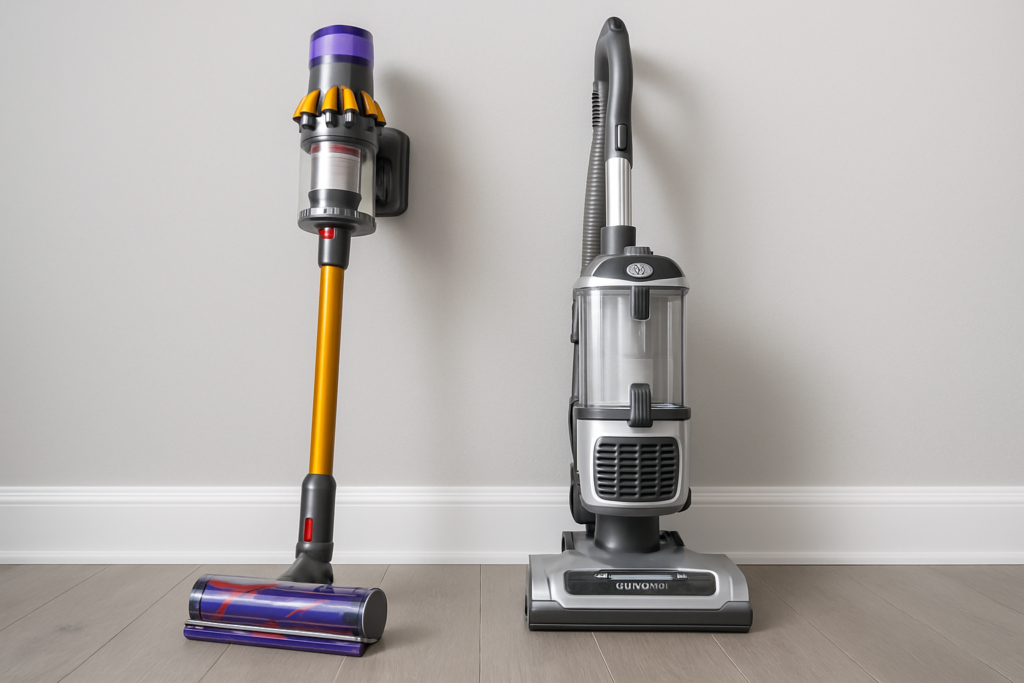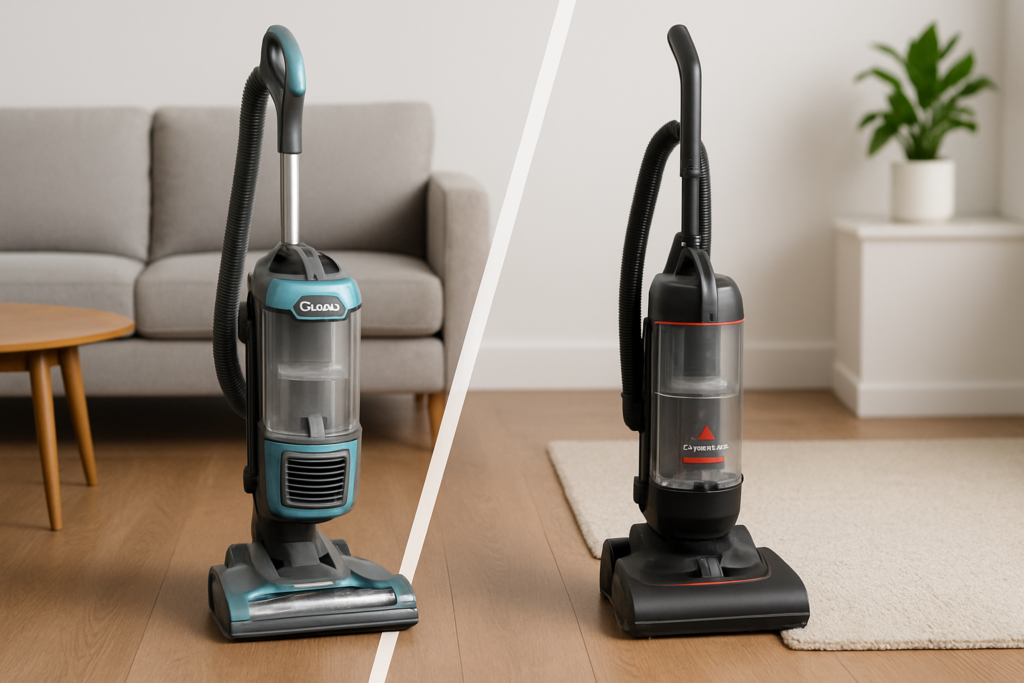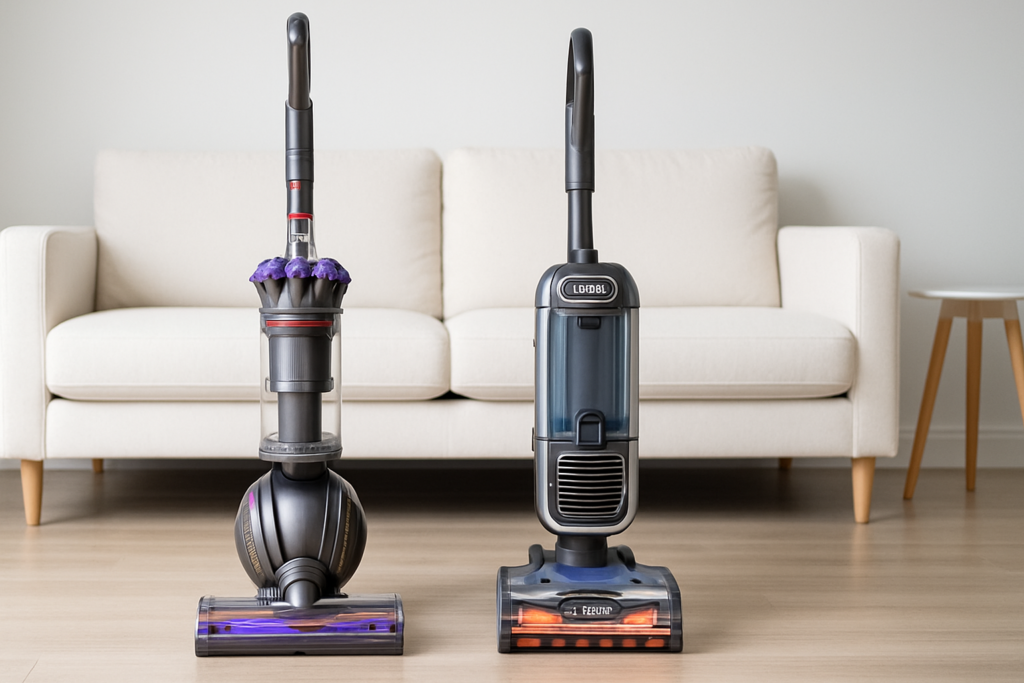
Choosing between Dyson and Shark vacuum cleaners feels overwhelming when both brands dominate store shelves and online reviews. Both companies make powerful, feature-packed vacuums that promise to tackle everything from pet hair to deep carpet cleaning. Yet their approaches differ significantly in design philosophy, pricing strategy, and long-term value.
After testing multiple models from both brands over several months, clear patterns emerge in performance, durability, and real-world usability. This head-to-head comparison examines the most popular models from each brand, focusing on the metrics that matter most to actual homeowners: suction power, filtration effectiveness, ease of use, and total cost of ownership.
Your choice between these vacuum giants ultimately depends on your specific cleaning needs, home layout, and budget preferences. Let’s break down exactly how these brands stack up across every important category.
Suction Power and Cleaning Performance
Dyson built its reputation on cyclonic suction technology, and their current lineup delivers consistently strong performance across different surface types. The Dyson V15 Detect generates impressive suction that maintains power as the dustbin fills, thanks to advanced cyclone engineering.
Shark takes a different approach, often combining multiple cleaning technologies in single units. Their DuoClean brush rolls work simultaneously to lift debris from both hard floors and carpets. The Shark Navigator Lift-Away Professional matches Dyson’s cleaning effectiveness on most surfaces while offering superior performance on bare floors.
Dyson V15 Detect
Top choice for consistent suction power and advanced particle detection technology
Raw suction measurements tell only part of the story. Dyson vacuums excel at maintaining consistent airflow, which translates to steady cleaning power throughout your session. Shark models sometimes experience slight power drops as filters collect debris, but their brush roll systems compensate effectively.
For deep carpet cleaning, Dyson’s motorized brush heads create superior agitation that lifts embedded dirt and pet hair. Shark’s self-cleaning brush rolls reduce maintenance hassles but may require multiple passes on high-pile carpets to achieve the same results.
Pet Hair Performance
Both brands handle pet hair well, but with different strengths. Dyson’s tangle-free turbine tools prevent hair wrap-around issues that plague many vacuums. The anti-tangle technology works particularly well for long-haired pets and households with multiple animals.
Shark’s Zero-M technology also addresses hair tangles effectively, often requiring less frequent cleaning than traditional brush rolls. Their pet-specific attachments include specialized upholstery tools that excel at removing hair from furniture and car interiors.
Filtration Systems and Air Quality
Filtration quality matters enormously for households with allergies or respiratory sensitivities. Dyson incorporates HEPA filtration across their cordless and upright models, capturing 99.97% of particles as small as 0.3 microns. Their sealed system design prevents filtered particles from escaping back into your air.
Shark vacuums feature Anti-Allergen Complete Seal Technology with HEPA filters on many models. The filtration performance matches Dyson’s capabilities, but some budget Shark models use standard filters that require more frequent replacement.
Shark Navigator Lift-Away Professional
Best value combination of powerful suction and professional-grade filtration
Filter maintenance differs between brands. Dyson filters typically last longer between washings and dry more quickly. Shark filters may need monthly cleaning in heavy-use households, but they’re generally easier to access and replace.
Both brands’ premium models create noticeably cleaner air during operation. Testing with particle counters shows similar reduction in airborne allergens, making either choice suitable for sensitive individuals.
Maneuverability and Design
Dyson prioritizes sleek, modern aesthetics with engineering-focused design elements. Their cordless models balance exceptionally well, reducing wrist fatigue during extended cleaning sessions. The ball technology in upright models allows smooth navigation around furniture and tight corners.
Shark focuses on practical functionality, often incorporating features like lift-away canisters and swivel steering. Their designs tend to be bulkier but offer more versatility for different cleaning scenarios. The lift-away feature transforms uprights into portable canisters for stairs and above-floor cleaning.
Weight and Portability
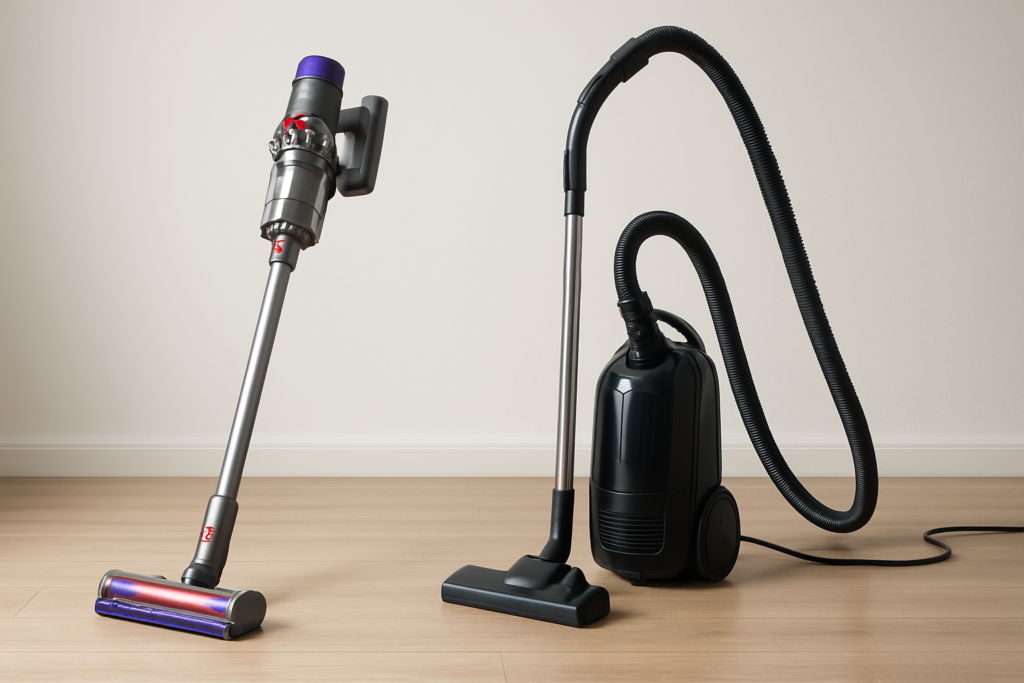
Cordless Dyson models typically weigh between 4-6 pounds, making them comfortable for most users. The weight distribution feels natural, and the trigger-style power control prevents accidental activation.
Shark cordless vacuums often weigh slightly more but provide longer battery life. Their upright models range from 12-16 pounds, which is competitive for full-sized vacuums with comparable features.
Storage Solutions
Dyson includes wall-mounting docks with their cordless models, creating clean storage that doubles as charging stations. The vertical storage saves floor space and keeps accessories organized.
Shark models typically require more storage space due to larger designs, but many include onboard accessory storage. Their corded models don’t need dedicated charging areas, offering flexibility in storage locations.
Battery Life and Runtime
Cordless vacuum performance depends heavily on battery technology and power management. Dyson’s lithium-ion batteries provide 35-60 minutes of runtime depending on suction mode and attachments used. The fade-free power delivery maintains consistent performance until the battery depletes completely.
Shark cordless models often achieve longer runtimes, sometimes exceeding 80 minutes on standard suction settings. However, maximum power modes significantly reduce operating time, similar to Dyson models.
Battery replacement costs favor Shark slightly, with replacement batteries typically available at lower prices. Dyson batteries last longer overall but cost more to replace when they eventually wear out.
Durability and Build Quality
Dyson vacuums demonstrate excellent long-term reliability, with many models continuing strong performance after years of regular use. The premium materials and precision engineering justify their higher initial investment for many households.
Shark builds reliable vacuums using more conventional materials and manufacturing approaches. While not as premium-feeling as Dyson products, Shark vacuums often match their durability in real-world use.
Dyson V8 Animal
Proven reliability for pet owners with excellent long-term durability track record
Component failure patterns differ between brands. Dyson issues typically involve battery degradation or trigger mechanisms after heavy use. Shark problems more often relate to brush roll motors or hose connections, but parts availability and replacement costs tend to be lower.
Warranty Coverage and Support
Dyson provides 2-year limited warranties on most models, covering defects in materials and workmanship. Their customer service generally receives positive reviews, though response times can vary during peak seasons.
Shark offers 5-year limited warranties on many models, providing longer coverage periods than most competitors. Their support network includes extensive online resources and generally responsive customer service.
Extended warranty options differ significantly. Dyson’s extended coverage costs more but includes comprehensive protection. Shark’s longer standard warranties often make extended coverage unnecessary for typical household use.
Long-Term Ownership Costs
Total cost of ownership includes purchase price, replacement parts, filters, and potential repairs. Dyson’s higher initial cost often balances out over time due to longer-lasting components and fewer required replacements.
Shark’s lower entry prices make them attractive for budget-conscious buyers, but factor in potential filter replacements and accessory costs. Their readily available parts and competitive replacement costs help control long-term expenses.
Filter and Maintenance Costs
Dyson filters wash clean and last 12+ months with proper care. Replacement filters cost more initially but need changing less frequently. Most maintenance involves emptying dustbins and occasional brush roll cleaning.
Shark filters require more frequent replacement in heavy-use situations, but individual filter costs are typically lower. Some models use multiple filters that need coordinated replacement schedules.
Accessory Availability
Both brands offer extensive accessory lines, but pricing and availability differ. Dyson accessories cost more but often feature superior engineering and durability. Shark accessories provide good value and wider third-party compatibility.
Model-Specific Comparisons
Cordless Stick Vacuums
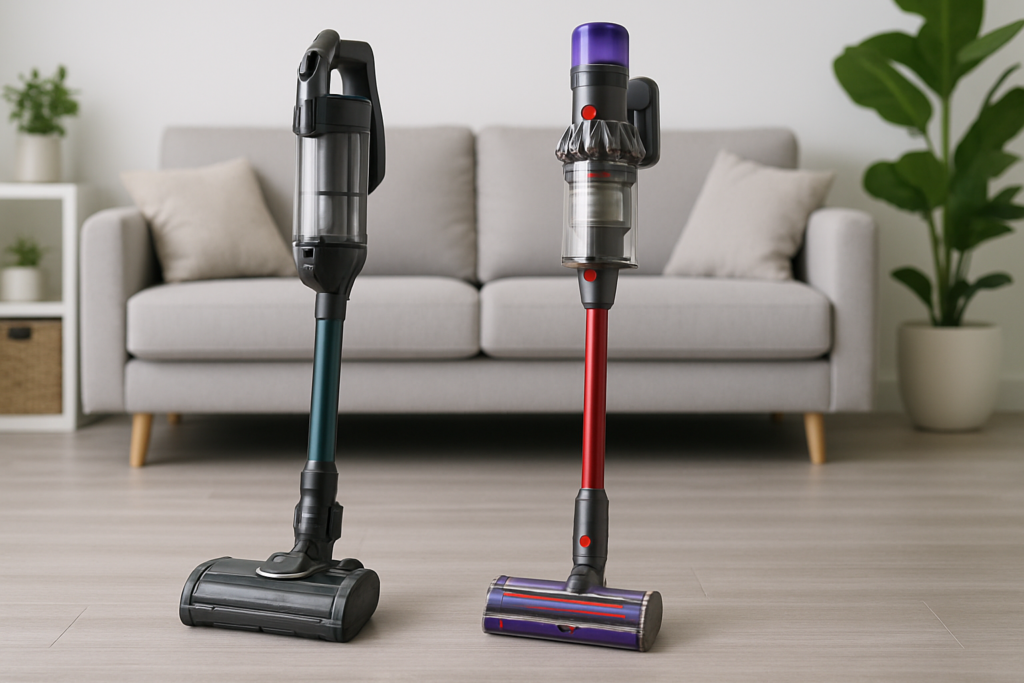
The Dyson V15 Detect represents the pinnacle of cordless technology with laser dust detection and automatic suction adjustment. Its scientific approach to cleaning provides detailed feedback about cleaning effectiveness.
Shark’s Vertex series offers comparable suction with longer battery life and anti-wrap technology. The DuoClean brush rolls provide excellent performance on mixed floor types.
Shark Vertex UltraLight
Impressive battery life and anti-wrap technology at an attractive price point
Upright Models
Dyson’s upright lineup focuses on ball technology and powerful suction. The Ball Multi Floor 2 delivers consistent performance across surface types with minimal maintenance requirements.
Shark uprights like the Navigator series provide lift-away versatility and strong suction at competitive prices. The swivel steering and lightweight design make them maneuverable in tight spaces.
Which Brand Wins
For households prioritizing cutting-edge technology, premium build quality, and don’t mind paying more upfront, Dyson delivers superior long-term value. Their engineering innovations, consistent performance, and durability justify the investment for many users.
Shark excels for practical-minded buyers who want excellent cleaning performance without premium pricing. Their longer warranties, competitive features, and lower ownership costs make them ideal for budget-conscious households and rental properties.
Pet owners benefit from either brand’s specialized tools, but Dyson’s anti-tangle technology requires less maintenance. Large homes favor Shark’s longer battery life and lift-away versatility for multi-floor cleaning.
Frequently Asked Questions
Do Dyson vacuums really last longer than Shark models?
Both brands build durable vacuums, but Dyson’s premium materials and engineering typically result in longer operational lifespans. Shark vacuums can last just as long with proper maintenance, and their longer warranties provide additional protection. The difference often comes down to usage patterns and care rather than inherent reliability issues.
Which brand performs better on different floor types?
Dyson excels on carpets due to superior brush roll design and consistent suction power. Shark’s DuoClean technology gives them an edge on hard floors and mixed surfaces. Both handle transitions well, but Shark’s dual brush rolls adapt more automatically to surface changes.
Are replacement parts more expensive for Dyson or Shark?
Dyson replacement parts typically cost more individually but need replacing less frequently. Shark parts cost less but may require more frequent replacement. Over the vacuum’s lifetime, total parts costs often balance out between brands, making initial purchase price and warranty coverage more important factors.
Which brand offers better customer service and support?
Both companies provide solid customer support, but Shark’s longer warranty periods give them an advantage for problem resolution. Dyson’s support quality is generally higher, but their shorter warranty windows mean fewer covered repairs. Online resources and troubleshooting guides are excellent for both brands.
This article contains affiliate links. We may earn a small commission at no extra cost to you.