Commercial all-purpose cleaners promise to tackle every mess in your home, but they often fall short while costing a fortune. The average household spends over competitively priced annually on cleaning supplies, yet many of these products contain harsh chemicals that leave behind residues, strong odors, and potential health concerns.
Making your own all-purpose cleaners isn’t just about saving money. It’s about knowing exactly what you’re spraying on the surfaces your family touches daily. With just a few simple ingredients, you can create powerful cleaning solutions that outperform many store-bought alternatives while costing pennies per bottle.
I’ve tested dozens of DIY cleaner recipes over the years, and I’ll share the ones that actually deliver results. These aren’t Pinterest-pretty recipes that sound good but don’t work. These are battle-tested formulas that handle real messes in real homes.
The Science Behind Effective DIY Cleaners
Understanding why these cleaners work helps you use them more effectively. Most household dirt and grime falls into two categories: acidic messes like soap scum and mineral deposits, and alkaline messes like grease and food residue.
White vinegar, with its 5% acetic acid content, excels at breaking down alkaline soils. It dissolves soap scum, cuts through mineral buildup, and neutralizes odors. Baking soda works from the opposite direction, providing gentle alkalinity that tackles acidic stains and provides mild abrasive action.
Dish soap acts as a surfactant, reducing water’s surface tension so it can penetrate and lift away dirt. When combined strategically, these ingredients create cleaning solutions that handle almost any household mess.
Basic All-Purpose Cleaner Recipe
This is your go-to formula for daily cleaning tasks. It works on countertops, appliances, light switches, door handles, and most hard surfaces.
Ingredients:
- 2 cups warm water
- 1/2 cup white vinegar
- 1/4 cup rubbing alcohol (70% isopropyl)
- 1-2 drops liquid dish soap
- 15-20 drops essential oil (optional)
Mix ingredients in a spray bottle and shake gently before each use. The alcohol helps the solution dry faster and provides additional disinfecting power. Don’t add more dish soap than recommended, as excess soap creates streaks and attracts more dirt.
This recipe costs roughly 15 cents per bottle to make, compared to several dollars for commercial equivalents. It cleans just as effectively without leaving behind chemical residues.
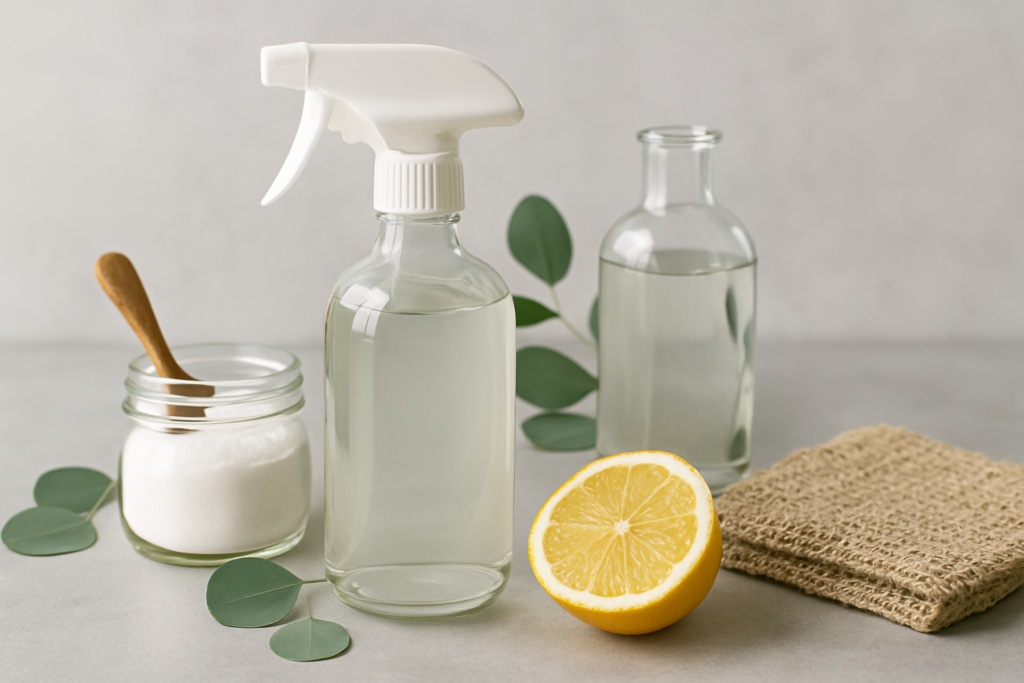
Glass Spray Bottles for Cleaning Solutions
Glass bottles prevent plastic degradation from acidic ingredients and last for years.
Heavy-Duty Degreaser
When you need extra cleaning power for kitchen messes, stovetops, and greasy surfaces, this formula delivers impressive results.
Ingredients:
- 1 cup warm water
- 1 cup white vinegar
- 2 tablespoons baking soda (add slowly to prevent fizzing)
- 1 tablespoon liquid castile soap
Add the baking soda slowly while stirring to minimize fizzing. The reaction between vinegar and baking soda creates initial bubbling, but the mixture stabilizes into an effective cleaning solution. This combination tackles baked-on grease and food residue that stumps weaker cleaners.
Use this formula on oven interiors, range hoods, and stubborn kitchen messes. Let it sit for 5-10 minutes on tough stains before wiping clean.
Bathroom Surface Cleaner
Bathrooms require specialized attention due to soap scum, hard water deposits, and mildew concerns. This formula addresses these specific challenges.
Ingredients:
- 1 cup white vinegar
- 1 cup water
- 2 tablespoons liquid dish soap
- 1 tablespoon hydrogen peroxide
- Tea tree oil (10-15 drops)
The hydrogen peroxide provides additional stain-fighting power and helps prevent mold growth. Tea tree oil offers natural antimicrobial properties particularly effective in humid bathroom environments.
This cleaner excels on shower doors, tile, fixtures, and mirrors. The vinegar dissolves soap scum and mineral deposits, while the soap helps lift away body oils and product residue.
Pure Tea Tree Essential Oil
A little goes a long way for antimicrobial cleaning power and fresh scent.
Wood-Safe All-Purpose Cleaner
Regular vinegar-based cleaners can damage wood finishes over time. This gentler formula cleans effectively while protecting wood surfaces.
Ingredients:
- 2 cups warm water
- 1/4 cup rubbing alcohol
- 2 tablespoons liquid castile soap
- 1 tablespoon olive oil
- Lemon essential oil (10-15 drops)
The olive oil provides conditioning properties that help maintain wood finishes. Use this formula on wood furniture, cabinets, and hardwood floors. Always test in an inconspicuous area first, and avoid oversaturating wood surfaces.
This recipe works particularly well for dusting and light cleaning of furniture. The oil content helps repel dust and adds subtle shine without building up sticky residue.
Glass and Mirror Cleaner
Streak-free windows and mirrors require the right balance of ingredients. This formula rivals expensive commercial glass cleaners.
Ingredients:
- 2 cups water
- 1/2 cup white vinegar
- 1/4 cup rubbing alcohol
- 1 tablespoon cornstarch
Dissolve the cornstarch completely in a small amount of warm water before adding to the mixture. The cornstarch provides gentle abrasive action and helps prevent streaking. Shake well before each use since cornstarch settles.
Use microfiber cloths or newspaper for best results. Spray lightly and wipe in circular motions, finishing with vertical strokes for a streak-free shine.
Storage and Safety Guidelines
Proper storage ensures your cleaners remain effective and safe. Label all bottles clearly with contents and date made. Most DIY cleaners stay fresh for 3-6 months when stored properly.
Store cleaners in cool, dark locations away from direct sunlight. Heat and light can degrade active ingredients and reduce effectiveness. Avoid storing cleaners in extremely hot areas like car trunks or garage shelves in summer.
Important Safety Considerations:
- Never mix bleach with vinegar or ammonia-based cleaners
- Test new recipes on inconspicuous areas first
- Avoid using vinegar-based cleaners on natural stone like marble or granite
- Keep all cleaners away from children and pets
- Use adequate ventilation when cleaning with any products
Essential oils aren’t just for scent. Many provide genuine antimicrobial benefits. However, some people and pets are sensitive to certain oils. Start with small amounts and discontinue use if irritation occurs.
Microfiber Cleaning Cloths Set
These make any cleaner work better and eliminate the need for paper towels on most surfaces.
Cost Analysis: DIY vs Commercial Cleaners
The financial benefits of DIY cleaners become clear when you break down the numbers. A typical bottle of commercial all-purpose cleaner costs between competitively priced-8, depending on the brand. The basic DIY recipe above costs approximately 15 cents per bottle.
Even factoring in the initial investment for ingredients and quality spray bottles, most households save 70-80% on cleaning supplies by switching to homemade alternatives.
Beyond direct cost savings, DIY cleaners eliminate the need for multiple specialized products. One or two recipes can replace separate cleaners for glass, bathrooms, kitchens, and general surfaces.
Effectiveness Compared to Commercial Products
Independent testing consistently shows that well-formulated DIY cleaners match or exceed the performance of commercial alternatives. The basic all-purpose recipe above scores comparably to leading brands in dirt removal and surface cleaning.
Where DIY cleaners particularly excel is in residue reduction. Commercial cleaners often contain additives that leave behind films or attract dirt faster. Homemade versions typically rinse cleaner and keep surfaces cleaner longer.
The main area where commercial products may have an edge is in specialized disinfection. While DIY cleaners with alcohol and hydrogen peroxide provide significant antimicrobial action, they may not meet hospital-grade disinfection standards required in certain situations.
Troubleshooting Common Issues
If your DIY cleaner leaves streaks, reduce the soap content or add more alcohol to speed drying. Streaking often occurs when cleaners dry too slowly or contain excess surfactants.
Cloudy solutions usually indicate ingredient incompatibility or water quality issues. Try using distilled water instead of tap water, especially in areas with hard water.
Weak cleaning performance often results from incorrect ratios or old ingredients. White vinegar loses potency over time, and baking soda can absorb odors that affect performance. Replace ingredients every 12-18 months for best results.
Customizing Recipes for Your Needs
Adjust essential oil types based on cleaning location and personal preferences. Lemon and orange oils provide natural degreasing properties perfect for kitchens. Lavender and eucalyptus work well in bedrooms and living areas. Tea tree oil excels in bathrooms and areas prone to mold.
For homes with hard water, increase vinegar content slightly to combat mineral deposits. In areas with high humidity, add extra alcohol to speed drying and prevent mold growth.
Pets and small children may require fragrance-free formulations. Simply omit essential oils, and the cleaners remain just as effective.
Frequently Asked Questions
Can I use apple cider vinegar instead of white vinegar?
White vinegar is preferred for cleaning because it’s colorless and has consistent acidity. Apple cider vinegar can leave stains on light surfaces and costs significantly more without providing better cleaning performance.
How long do homemade cleaners last?
Most DIY cleaners stay effective for 3-6 months when stored properly in cool, dark locations. Solutions containing fresh ingredients like lemon juice have shorter shelf lives of 2-4 weeks. Always label bottles with creation dates.
Are DIY cleaners safe for septic systems?
Yes, these cleaners are generally safer for septic systems than commercial alternatives. Vinegar, baking soda, and castile soap break down naturally without disrupting beneficial bacteria. Avoid recipes with antibacterial agents if you have septic concerns.
Can I make larger batches to save time?
Make only what you’ll use within 3-6 months. Larger batches may seem efficient, but ingredients can separate or degrade over time. Mixing fresh batches ensures maximum effectiveness and prevents waste.
This article contains affiliate links. We may earn a small commission at no extra cost to you.