Your closet doesn’t have to look like a disaster zone just because you’re on a tight budget. I’ve spent countless hours researching and testing affordable organization systems, and I’m here to tell you that transforming your storage space is absolutely doable without breaking the bank.
The key is knowing which budget-friendly solutions actually work and which ones will leave you frustrated six months down the line. From wire shelving that maximizes vertical space to clever hanging systems that double your storage capacity, there are plenty of options that deliver real results for under competitively priced.
Let me walk you through eight proven organization systems that I’ve personally used or extensively researched. Each option includes space calculations, honest assessments of installation difficulty, and real talk about how long they’ll actually last.
1. Wire Shelving Systems: The Reliable Workhorse
Wire shelving remains one of the most versatile and durable closet organization solutions available. These systems typically include adjustable shelves, hanging rods, and various accessories that can accommodate different clothing types and storage needs.
Installation difficulty rates as moderate. You’ll need a drill, level, and about 2-3 hours for a standard 6-foot closet. Most systems come with detailed instructions and mounting hardware, though you might need to purchase wall anchors separately depending on your wall type.
For space calculations, a typical wire shelving unit measuring 72 inches wide can provide approximately 24 linear feet of shelf space across four levels. Add two hanging rods, and you’re looking at space for roughly 100-120 garments depending on thickness.
ClosetMaid SuperSlide Wire Shelving Kit
This complete kit includes everything needed for a 6-foot closet installation and offers excellent adjustability.
Durability is where wire shelving really shines. Quality systems can easily last 10-15 years with normal use. The powder-coated finish resists scratches and humidity, making it ideal for various climates. I’ve seen wire shelving systems installed in the early 2000s that still look and function perfectly today.
The main drawback is the wire surface itself. Small items can fall through, and some clothing materials may develop impressions from the wire pattern. Consider adding shelf liners or using wire shelving primarily for folded items and boxes rather than delicate fabrics.
2. Cube Organizers: Modular Storage Magic
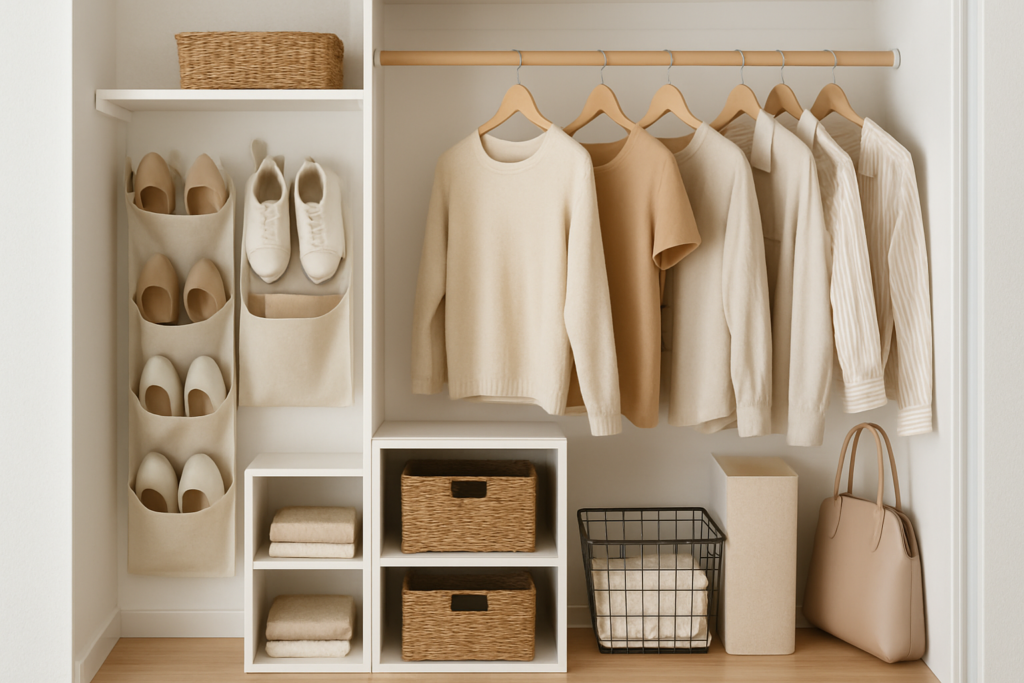
Cube organizers offer incredible flexibility for closet organization. These modular systems typically feature square compartments that can be arranged vertically or horizontally, with optional fabric bins and hanging accessories.
Installation is refreshingly simple. Most cube organizers are freestanding and require only basic assembly with the included hardware. Expect to spend 1-2 hours putting together a 9-cube unit, and you won’t need to drill into walls unless you want to anchor for safety.
Space efficiency varies by configuration. A 3×3 cube organizer measuring roughly 36×36 inches provides nine individual compartments, each capable of holding about 8-10 folded t-shirts or equivalent volume. Stack two units, and you’ve got storage for approximately 144-180 folded garments.
These systems work particularly well for people who prefer folded storage over hanging. Each cube can be customized with fabric bins for underwear and socks, or left open for easy access to frequently used items. The visual organization helps you see everything at a glance.
SONGMICS 9-Cube Storage Organizer
Sturdy construction with multiple configuration options makes this perfect for versatile closet storage needs.
Durability depends heavily on the specific product and how you use it. Higher-quality cube organizers with reinforced joints can last 5-8 years. Avoid overloading individual cubes beyond their weight capacity, typically around 20-30 pounds per compartment.
3. Over-the-Door Hanging Systems: Maximizing Dead Space
Over-the-door organizers transform unused vertical space into valuable storage real estate. These systems range from simple shoe racks to complex multi-pocket organizers that can hold accessories, cleaning supplies, or seasonal items.
Installation couldn’t be easier. Most over-the-door systems simply hook over the top of your closet door with no tools required. Installation time is typically under 5 minutes, making this the most beginner-friendly option on our list.
Space calculations for door organizers depend on your door height and the specific product. A standard 80-inch closet door can accommodate organizers with 12-24 pockets, providing storage for 24-48 pairs of shoes or equivalent items. Some systems offer up to 36 pockets for smaller accessories.
The weight capacity varies significantly between products. Basic fabric organizers typically handle 2-3 pounds per pocket, while reinforced versions can support 5-8 pounds. Always check the total weight limit, which usually ranges from 30-60 pounds for the entire unit.
These systems excel for accessories, shoes, cleaning supplies, and seasonal items you don’t access daily. They keep frequently forgotten items visible and accessible, reducing the chances you’ll purchase duplicates.
Consider the door clearance in your space. Over-the-door organizers add 4-6 inches of depth, which might interfere with shelving or hanging clothes on the opposite wall in narrow closets.
4. Tension Rod Systems: No-Commitment Organization
Tension rods create instant hanging space without permanent installation. These adjustable rods use spring-loaded mechanisms to stay in place between walls or inside closet frames, making them perfect for renters or anyone wanting flexible storage solutions.
Installation is instantaneous. Extend the rod to the appropriate length, position it where you want additional hanging space, and twist to create tension against the walls. No drilling, no brackets, no tools required.
A single tension rod typically supports 20-40 pounds, depending on the length and quality. For space planning, figure each rod can hold about 20-30 garments of average weight. You can install multiple rods at different heights to create layered hanging zones.
These systems work exceptionally well for creating double-hanging areas. Install one rod at standard height for long items, then add a second rod halfway down for shirts and pants. This approach can nearly double your hanging capacity in the same footprint.
Quality varies dramatically between brands. Cheap tension rods may slip or bend under moderate weight, while heavy-duty versions maintain their position reliably. Look for rods with rubber end caps to prevent wall damage and better grip.
The temporary nature is both a benefit and limitation. While you can easily reconfigure or remove tension rods, they’re not suitable for heavy coats or items that require absolute stability.
5. Fabric Hanging Organizers: Soft Storage Solutions
Fabric hanging organizers suspend from closet rods and provide multiple compartments for folded clothes, shoes, or accessories. These soft-sided storage solutions offer flexibility and gentle organization for delicate items.
Installation requires only hanging the organizer from your existing closet rod, similar to hanging a garment. Most units include sturdy hooks or loops designed to slide easily along standard rods. Total setup time is under a minute.
Typical hanging organizers feature 5-10 compartments, each measuring approximately 12x12x6 inches. This provides storage for roughly 40-60 folded t-shirts or equivalent items. Some models include additional side pockets for smaller accessories.
These organizers excel for seasonal storage, travel preparation, or items you want to keep separate from your main wardrobe. They’re particularly useful for storing workout clothes, undergarments, or children’s clothing in an organized, visible way.
Simple Houseware 5-Shelf Hanging Closet Organizer
Durable fabric construction with reinforced shelves makes this ideal for everyday closet storage.
The fabric construction means these organizers won’t damage delicate clothing, but it also limits their durability compared to rigid systems. Expect 2-4 years of regular use before the fabric shows significant wear or the structure begins to sag.
6. DIY Pegboard Systems: Customizable Wall Storage
Pegboard systems offer unlimited customization potential for closet organization. With various hooks, baskets, and accessories, you can create a storage solution tailored exactly to your specific needs and space constraints.
Installation difficulty is moderate to high. You’ll need to locate wall studs, cut the pegboard to size, and mount it securely. Plan for 3-4 hours of work including measuring, cutting, and installation. Basic carpentry skills and tools are essential.
A 4×4 foot pegboard section provides approximately 16 square feet of storage surface. With proper hook placement, this can accommodate 30-50 accessories, multiple baskets, or various combinations of storage accessories.
The beauty of pegboard lies in its adaptability. Rearrange hooks and accessories as your storage needs change. Add baskets for small items, hooks for jewelry, or specialized holders for belts and ties. The system grows and changes with you.
Durability is excellent when properly installed. Quality pegboard and hardware can last decades with minimal maintenance. The modular nature means you can replace individual accessories without replacing the entire system.
Consider painting the pegboard to match your closet’s color scheme. White or light colors help reflect light and make the space feel larger, while darker colors can provide dramatic contrast for displayed accessories.
7. Stackable Storage Bins: Simple and Effective
Clear, stackable storage bins provide straightforward organization for seasonal clothes, linens, or items you don’t access frequently. These bins maximize vertical space while keeping contents visible and protected from dust.
Installation is non-existent since these are standalone storage containers. Simply fill them with your items and stack as needed. The only consideration is ensuring your closet shelving can support the stacked weight.
Standard storage bins measure approximately 16x12x6 inches and hold about 15-20 folded garments. Stack four bins high, and you’ve got storage for 60-80 items in a footprint of just 16×12 inches.
These bins work particularly well for seasonal rotation. Store off-season clothes in labeled bins on high shelves, then swap them out as weather changes. The clear plastic lets you identify contents without opening each container.
Choose bins with secure, tight-fitting lids to protect against moisture and pests. Avoid bins with flimsy construction that might crack under stacking weight. Quality bins can last 8-12 years with normal use.
Label each bin clearly with contents and date stored. This simple step saves countless hours of searching and helps you remember what you own. Consider using a label maker for a professional appearance.
8. Closet Rod Doublers: Instant Hanging Space
Closet rod doublers hang from your existing rod and provide a second hanging level below, effectively doubling your hanging capacity without permanent installation. These simple devices work particularly well for shorter garments.
Installation takes seconds. Simply hang the doubler from your existing rod like you would a garment, then hang clothes from both the original rod and the new lower rod. No tools or permanent changes required.
Each doubler typically adds space for 15-25 additional garments, depending on the specific product and garment thickness. Multiple doublers can be used along a single rod for maximum capacity increase.
These systems work best for shirts, blouses, pants, and other garments shorter than 40 inches. The lower rod typically hangs 20-24 inches below the original, so measure your longest garments to ensure adequate clearance from the closet floor.
HOUSE DAY Magic Hangers Space Saving
These sturdy doublers can support significant weight while creating instant double-hanging zones.
Quality varies significantly between products. Look for doublers with reinforced hooks and sturdy construction that won’t bend under the weight of hung garments. Metal versions typically outlast plastic alternatives.
Space Planning Tips for Maximum Efficiency
Before implementing any organization system, measure your closet dimensions carefully. Width, depth, and height all impact which solutions will work effectively in your space. Don’t forget to account for door swing clearance and existing fixtures.
Calculate your storage needs by counting current items in each category. How many hanging garments do you have? How many folded items? This inventory helps determine which organization approach makes the most sense.
Consider your daily habits when planning organization. Frequently used items should be easily accessible at eye level, while seasonal or occasional items can occupy higher or lower spaces.
Leave room for growth in your system. Organization solutions work best when they’re not packed to maximum capacity. Plan for about 80% capacity to maintain functionality and allow for new additions.
Installation and Maintenance Considerations
Most budget-friendly organization systems require basic tools and skills. A drill, level, stud finder, and measuring tape handle the majority of installations. If you’re not comfortable with basic carpentry, consider hiring help for wall-mounted systems.
Read installation instructions completely before starting. Many organization system failures result from skipped steps or improper mounting. Take time to locate wall studs for any system that will hold significant weight.
Regular maintenance keeps organization systems functioning properly. Tighten loose screws quarterly, check for wear on moving parts, and replace damaged components promptly to prevent system failure.
Keep installation hardware and instructions even after setup. You may need to disassemble and relocate systems when moving or reconfiguring your space.
Frequently Asked Questions
How much weight can budget closet organization systems typically handle?
Weight capacity varies significantly by system type and quality. Wire shelving systems typically support 40-60 pounds per shelf when properly mounted to wall studs. Tension rods handle 20-40 pounds depending on length and construction. Always check manufacturer specifications and don’t exceed stated limits, as overloading can cause sudden failure and damage your belongings.
Can these organization systems work in small or oddly shaped closets?
Absolutely. Many budget systems are specifically designed for challenging spaces. Tension rods work in narrow areas where traditional mounting isn’t possible. Over-the-door organizers utilize vertical space without reducing floor area. Modular cube systems can be configured to fit unusual dimensions. Measure your space carefully and choose systems that offer adjustability or modular components.
How long do budget closet organization systems typically last?
Durability varies by system type and usage. Wire shelving can last 10-15 years with proper installation and care. Fabric organizers typically last 2-4 years before showing wear. Plastic storage bins can last 8-12 years if not overloaded. The key is choosing appropriate systems for your specific needs and not exceeding weight limits. Quality construction usually justifies slightly higher costs through extended lifespan.
Should I install one comprehensive system or mix different organization solutions?
Mixing different systems often provides the best results and stays within budget constraints. Use wire shelving for the main structure, add over-the-door organizers for accessories, and incorporate tension rods for flexible hanging space. This approach lets you customize organization for different item types while keeping costs reasonable. Start with one primary system, then add complementary solutions as needed.
This article contains affiliate links. We may earn a small commission at no extra cost to you.