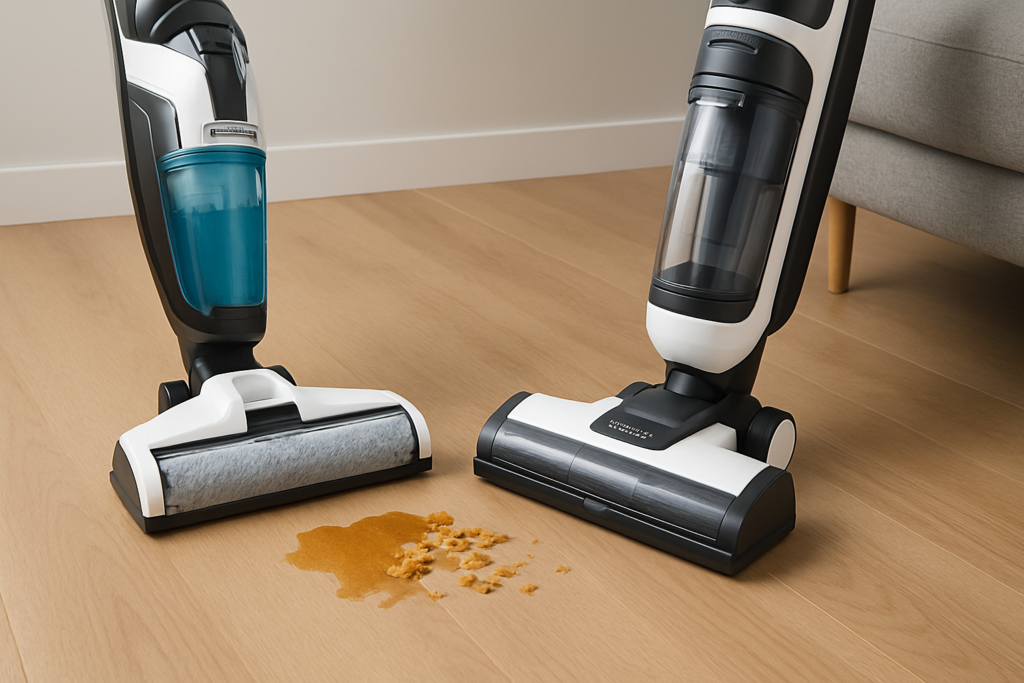
Tired of switching between a vacuum and a mop every time your floors need attention? All-in-one floor cleaners promise to handle both jobs simultaneously, but not all of them deliver on that promise. Two models consistently rise to the top of shopping lists: the trusted BISSELL CrossWave and the newer Tineco Floor One.
I’ve spent weeks putting both machines through their paces on everything from sticky kitchen spills to muddy entryway disasters. While both promise to vacuum and wash your floors at the same time, they take surprisingly different approaches to the job. One excels at deep cleaning but demands more maintenance, while the other offers convenience features that actually work.
Here’s what you need to know about each machine, including which floors they handle best and which one deserves a spot in your cleaning closet.
How These All-in-One Systems Work
Both the BISSELL CrossWave and Tineco Floor One use similar basic principles. They spray cleaning solution onto your floor while a rotating brush agitates dirt and debris. A powerful suction system then pulls the dirty water into a separate tank, leaving your floors clean and relatively dry.
The magic happens in the brush roll design and water management system. Unlike traditional mops that just push dirt around, these machines continuously rinse the brush with fresh solution while sucking up the contaminated water. You’re essentially using a clean brush for every square foot of floor.
Both systems require two tanks: one for clean water and cleaning solution, another for dirty water and debris. This separation prevents you from spreading dirty water back onto your floors, which is a common problem with traditional mopping.
BISSELL CrossWave: The Established Choice
The CrossWave has been around longer and shows its maturity in build quality. The machine feels substantial in your hands, with a robust motor that provides strong suction across all floor types. BISSELL offers several models in the CrossWave line, but the Pet Pro version handles the widest range of cleaning challenges.
The brush roll design deserves special mention. BISSELL uses a dual-action brush with both microfiber and bristles. The microfiber picks up fine debris and polishes hard surfaces, while the bristles work into grout lines and textured flooring. This combination works particularly well on tile floors where dirt tends to settle into the grout.
Water flow control is manual on most CrossWave models. You pull a trigger to release cleaning solution, which gives you precise control over how much moisture goes onto your floors. This proves especially useful on hardwood floors where too much water can cause damage.
BISSELL CrossWave Pet Pro
Best overall performance with excellent build quality and superior cleaning on all floor types
The CrossWave struggles with self-cleaning features. After each use, you need to manually clean the brush roll and rinse out both tanks. The process isn’t difficult, but it adds several minutes to your cleaning routine. Skip this maintenance, and you’ll notice reduced suction and cleaning performance.
Tineco Floor One: The Smart Upgrade
Tineco took a different approach with the Floor One series, focusing heavily on user convenience and smart features. The most obvious difference is the LED display that shows cleaning mode, battery life, and maintenance reminders. While this might seem gimmicky, the real-time feedback actually helps you clean more effectively.
The self-cleaning function sets the Floor One apart from most competitors. After cleaning your floors, you place the machine on its charging dock and press the self-clean button. The system automatically rinses the brush roll and internal pathways with clean water, then runs a drying cycle to prevent odors and bacterial growth.
Tineco’s brush roll uses a softer design that’s gentler on delicate floors like luxury vinyl plank. The trade-off is slightly less aggressive cleaning power on heavily soiled areas. You might need multiple passes where the CrossWave would handle the mess in one go.
The water management system automatically adjusts flow based on the mess level. Sensors detect how dirty your floors are and release more cleaning solution when needed. This works well in practice, though you can’t override the system if you want more control over moisture levels.
Tineco Floor One S3
Excellent convenience features with automatic self-cleaning and smart controls that actually work
Floor Type Performance Comparison
Hardwood Floors
Both machines handle hardwood well, but with different strengths. The CrossWave’s trigger control lets you use minimal water, which is crucial for protecting wood floors from moisture damage. The dual-action brush effectively captures fine dust and pet hair without scratching the surface.
The Floor One’s automatic water control works reasonably well on hardwood, though it sometimes applies more moisture than necessary. The gentler brush roll provides excellent results on engineered hardwood and prevents the micro-scratching that can dull your floor’s finish over time.
Tile and Grout
The CrossWave dominates on tile floors. The bristle portion of its brush roll works into grout lines effectively, pulling out embedded dirt that other cleaning methods miss. The strong suction ensures dirty water doesn’t settle back into the grout, leaving everything genuinely clean.
Tineco’s Floor One handles surface dirt on tile well but struggles with deep grout cleaning. The softer brush doesn’t agitate grout lines as effectively, and you may need to follow up with a dedicated grout brush for heavily soiled areas.
Laminate and Vinyl
Both machines excel on laminate and luxury vinyl plank flooring. These surfaces don’t require aggressive brushing, so the Floor One’s gentler approach works perfectly. The automatic water control prevents over-wetting, which can cause laminate to warp or vinyl planks to curl at the edges.
The CrossWave performs equally well on these surfaces, though you need to be more careful with the trigger control to avoid applying too much cleaning solution.
Maintenance and Long-term Use
Daily maintenance differs significantly between these machines. The CrossWave requires manual cleaning of the brush roll, both water tanks, and the suction pathway. This takes about five minutes after each use, but skipping it leads to odors and reduced performance.
The Floor One’s self-cleaning cycle handles most daily maintenance automatically. You still need to empty and rinse the dirty water tank, but the machine takes care of brush roll cleaning and pathway rinsing. The entire process takes about two minutes of hands-on time.
Long-term maintenance costs favor the CrossWave. Replacement brush rolls and filters are widely available and reasonably priced. BISSELL’s established service network means parts will likely remain available for years.
Tineco’s newer presence in the market creates some uncertainty about long-term parts availability. Current replacement costs are competitive, but the company’s smaller service network could become an issue if you need repairs outside the warranty period.
Cleaning Solution Options
BISSELL offers a wide range of cleaning solutions formulated specifically for the CrossWave. Options include formulas for pet messes, wood floors, and general multi-surface cleaning. You can also use other cleaning solutions, though BISSELL recommends their formulations for optimal performance.
Tineco provides fewer cleaning solution options, focusing primarily on their proprietary formula. The Floor One works best with Tineco’s solution, and using other cleaners may affect the automatic sensors that control water flow.
Value and Performance Verdict
The CrossWave offers better overall cleaning performance, especially on challenging surfaces like tile and grout. Its manual controls provide more flexibility, and the established parts network ensures long-term reliability. Choose this option if deep cleaning power matters more than convenience features.
The Floor One excels in user convenience with its self-cleaning function and automatic controls. It’s gentler on delicate floors and requires less hands-on maintenance. This machine works best for people who prioritize ease of use over maximum cleaning power.
For homes with mostly hard surfaces and heavy foot traffic, the CrossWave’s superior cleaning ability justifies the extra maintenance time. Families with pets or children will appreciate its ability to handle tough messes in a single pass.
The Floor One suits households with newer flooring like luxury vinyl plank or anyone who values convenience over maximum cleaning power. The self-cleaning feature alone saves considerable time over the machine’s lifespan.
Frequently Asked Questions
Can these machines replace both a vacuum and mop completely?
For hard floors, yes. Both machines effectively vacuum up debris while washing the floor simultaneously. However, you’ll still need a traditional vacuum for carpets, rugs, and above-floor surfaces like furniture and stairs. Think of these as replacements for your stick vacuum and mop combination on hard floors only.
How do they perform on pet hair and litter?
Both handle pet hair well, though the CrossWave has a slight edge due to its stronger suction. Cat litter presents challenges for both machines. Large pieces get picked up effectively, but fine litter particles can clog the systems. Pre-sweeping heavy litter areas helps both machines perform better.
Are the cleaning solutions necessary or can I use regular floor cleaners?
Manufacturer-specific solutions work best but aren’t absolutely required. The CrossWave tolerates other cleaning solutions better than the Floor One, whose sensors are calibrated for Tineco’s formula. Avoid using too much of any cleaning solution, as excess suds can reduce suction performance and damage the motor.
How long do these machines typically last with regular use?
Both machines should provide 3-5 years of regular use with proper maintenance. The CrossWave’s longer market presence gives it a slight reliability edge, while the Floor One’s newer technology may prove more durable over time. Regular cleaning and using manufacturer-recommended solutions significantly extend lifespan for both models.
This article contains affiliate links. We may earn a small commission at no extra cost to you.