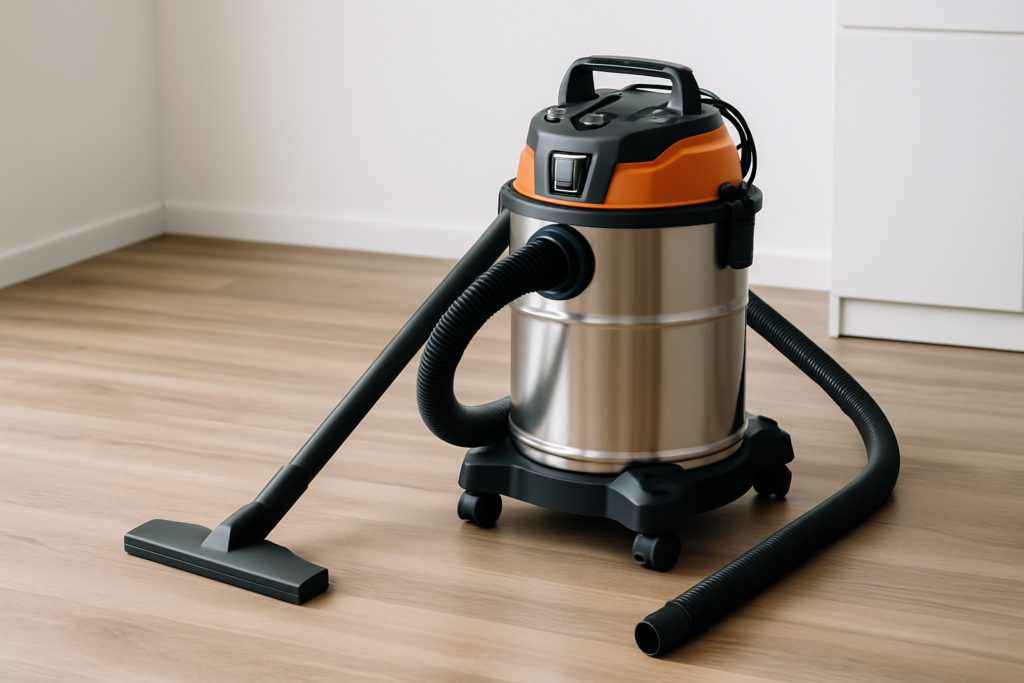
Your trusty household vacuum works fine for carpets and hardwood floors, but when your basement floods or you need to clean up sawdust from a DIY project, you quickly realize its limitations. That’s where a shop vacuum comes in. These versatile machines handle both wet spills and dry debris that would destroy a regular vacuum cleaner.
Shop vacuums have evolved far beyond the loud, bulky units that contractors haul around job sites. Today’s models designed for home use offer impressive suction power in compact packages, with features like wall mounts, multiple attachments, and surprisingly quiet operation. The challenge lies in finding the right balance of power, capacity, and convenience for your specific needs.
After testing dozens of wet/dry vacuums in real-world scenarios, from basement cleanups to garage workshops, we’ve identified the standout performers that deliver professional-grade results without the professional price tag or storage requirements.
Understanding Shop Vacuum Specifications
Before diving into specific models, you need to understand what the numbers actually mean. Peak horsepower ratings can be misleading since they represent theoretical maximum power rather than sustained performance. A 6.5 HP rating might sound impressive, but it’s often just a marketing number that doesn’t reflect real-world suction.
Airflow, measured in cubic feet per minute (CFM), tells you how much air the vacuum moves. This directly impacts how well it picks up debris. Water lift, measured in inches, indicates suction strength for lifting heavier materials. For home use, look for at least 150 CFM airflow and 60+ inches of water lift.
Tank capacity ranges from 2.5 gallons for compact models up to 16+ gallons for larger units. Consider your storage space and typical cleanup tasks. A 6-gallon capacity handles most home projects without becoming unwieldy.
Top Shop Vacuums for Home Use
Best Overall: Ridgid WD0970 9-Gallon
The Ridgid WD0970 strikes an ideal balance between power and practicality for home users. Its 4.25 peak HP motor generates 169 CFM airflow and 64 inches of water lift, providing enough suction to handle everything from pet hair to standing water.
The 9-gallon capacity means fewer trips to empty the tank during larger cleanups, while the compact design still fits in most storage areas. The built-in accessory storage keeps attachments organized and easily accessible. Ridgid’s lifetime service agreement adds tremendous value, covering parts, service, and labor for life with user registration.
Ridgid WD0970 9-Gallon Wet/Dry Vacuum
Our top pick for balanced power and home-friendly features with lifetime warranty coverage.
The unit includes a 7-foot locking hose, extension wands, and multiple attachments for different surfaces and debris types. The drain plug makes emptying liquids simple, and the large rear wheels handle stairs and rough surfaces with ease.
Best Compact Option: Craftsman CMXEVBE17590
Small spaces and light-duty tasks call for a more compact approach. The Craftsman CMXEVBE17590 packs surprising power into a 3-gallon package that stores easily in closets or on garage shelves.
Despite its size, this model produces 155 CFM airflow and 65 inches of water lift. That’s enough to clean up workshop debris, tackle car detailing, or handle minor water incidents. The unit weighs just 13 pounds empty, making it easy to carry upstairs or move between locations.
The top-handle design and built-in cord wrap add to its convenience factor. While the 3-gallon capacity means more frequent emptying during larger jobs, the trade-off in portability makes sense for many homeowners.
Craftsman CMXEVBE17590 3-Gallon Wet/Dry Vacuum
Perfect compact option that doesn’t sacrifice performance for size.
Best Power: Shop-Vac 5979403 8-Gallon
When you need maximum suction power, the Shop-Vac 5979403 delivers. This 8-gallon model generates an impressive 185 CFM airflow with 68 inches of water lift, making it capable of handling heavy debris and thick liquids that challenge smaller units.
The extra power proves its worth when cleaning up construction debris, dealing with clogged drains, or tackling outdoor cleanup projects. The large wheels and pull handle make transport manageable despite the substantial motor.
Shop-Vac includes a comprehensive attachment set with this model, featuring specialized tools for different cleaning scenarios. The detachable blower function adds versatility for outdoor cleanup tasks like clearing leaves or debris from driveways.
Best Wall-Mount: Vacmaster VWM510
Garage and workshop owners appreciate the space-saving design of the Vacmaster VWM510. This wall-mounted unit keeps floor space clear while remaining readily accessible for quick cleanups.
The 5-gallon capacity handles most typical tasks without becoming too heavy when mounted. The unit produces 140 CFM airflow and 57 inches of water lift, sufficient for general home use. The mounting bracket allows easy removal when you need portable operation.
Integrated storage for attachments and power cord keeps everything organized and prevents lost accessories. The compact footprint makes this an excellent choice for smaller workshops or garages where floor space is at a premium.
Vacmaster VWM510 5-Gallon Wall-Mount Wet/Dry Vacuum
Space-saving wall-mount design ideal for workshops and garages.
Key Features to Consider
Filtration Systems
Standard paper filters work fine for dry debris but can’t handle liquids. Most quality shop vacuums include foam filters for wet pickup and pleated filters for fine dust. Some models feature washable filters that reduce long-term operating costs.
HEPA filtration makes sense if you’re dealing with fine particles or have allergy concerns. However, HEPA filters can restrict airflow and aren’t necessary for typical home cleanup tasks.
Hose and Attachments
Hose diameter affects suction efficiency. Most home-use models come with 2.25-inch hoses, which provide good suction while remaining flexible enough for detailed work. Professional units often use 2.5-inch hoses, but these can be unwieldy for home tasks.
Essential attachments include a crevice tool for tight spaces, a wide floor nozzle for large areas, and a brush attachment for upholstery or delicate surfaces. Extension wands help reach high areas without strain.
Noise Levels
Shop vacuums are inherently louder than household vacuums, but some models are significantly quieter than others. Units with better motor isolation and sound dampening operate at more tolerable noise levels, important if you’re working in attached garages or basements.
Wet vs. Dry Performance Differences
Wet pickup requires different considerations than dry debris collection. You’ll need to remove paper filters and install foam filters before vacuuming liquids. Most units handle water pickup effectively, but performance varies with thicker liquids like paint or mud.
Dry performance depends on airflow and filtration. Fine particles like sawdust or drywall dust require good filtration to prevent clogging and maintain suction. Larger debris like wood chips or leaves is easier on the system but requires adequate airflow to lift materials through the hose.
Many homeowners find they use their shop vacuum primarily for dry applications, with occasional wet cleanup duty. Consider your expected usage pattern when evaluating different models.
Shop-Vac 5979403 8-Gallon Heavy-Duty Wet/Dry Vacuum
Maximum suction power for demanding cleanup tasks and heavy debris.
Maintenance and Storage Tips
Regular maintenance keeps your shop vacuum performing at its best. Empty the tank after each use to prevent odors and bacterial growth. Clean or replace filters based on usage frequency and debris type.
Store the unit in a dry location to prevent rust and motor damage. Hang the hose to prevent kinks and cracks. Check the power cord regularly for damage, especially near the plug and motor housing.
Keep spare filters on hand, particularly if you frequently switch between wet and dry applications. Having both foam and paper filters readily available prevents delays during cleanup projects.
Common Applications and Use Cases
Basement flooding represents one of the most critical applications for wet/dry vacuums. A quality shop vacuum can remove standing water quickly, preventing further damage to flooring and belongings. The ability to handle both water extraction and subsequent debris cleanup makes these tools invaluable during emergencies.
Workshop and garage cleaning becomes much more efficient with a shop vacuum. These spaces accumulate debris that household vacuums can’t handle, from metal shavings to tracked-in dirt and leaves. The powerful suction handles materials that would clog or damage regular vacuum cleaners.
Car detailing enthusiasts find shop vacuums essential for thorough interior cleaning. The strong suction removes embedded dirt from upholstery and carpets, while various attachments reach into tight spaces around seats and consoles.
Frequently Asked Questions
Can I use my shop vacuum for regular household cleaning?
Yes, but with limitations. Shop vacuums work well on hard floors and can handle area rugs, but they’re typically too powerful and lack the gentle brush action needed for wall-to-wall carpeting. The larger hose diameter and stronger suction can actually make it harder to clean carpets effectively compared to a traditional vacuum.
How do I know when to change between wet and dry filters?
Always change to a foam filter before vacuuming any liquids. Paper filters will disintegrate when wet and can damage the motor. For dry applications, use pleated paper filters for better filtration of fine particles. Keep both types on hand and switch based on your cleaning task.
What’s the difference between peak HP and actual motor performance?
Peak horsepower ratings represent theoretical maximum power output, often achieved for just seconds during startup. These numbers are largely marketing tools and don’t reflect sustained performance. Focus instead on CFM airflow and water lift specifications, which better indicate real-world cleaning ability.
Do I need a large tank capacity for home use?
Tank size depends on your typical projects. For quick cleanups and small spills, 3-6 gallons is sufficient and easier to maneuver. Larger tanks (8+ gallons) make sense if you regularly handle big cleanup jobs or want to minimize emptying frequency during extended use.
This article contains affiliate links. We may earn a small commission at no extra cost to you.