
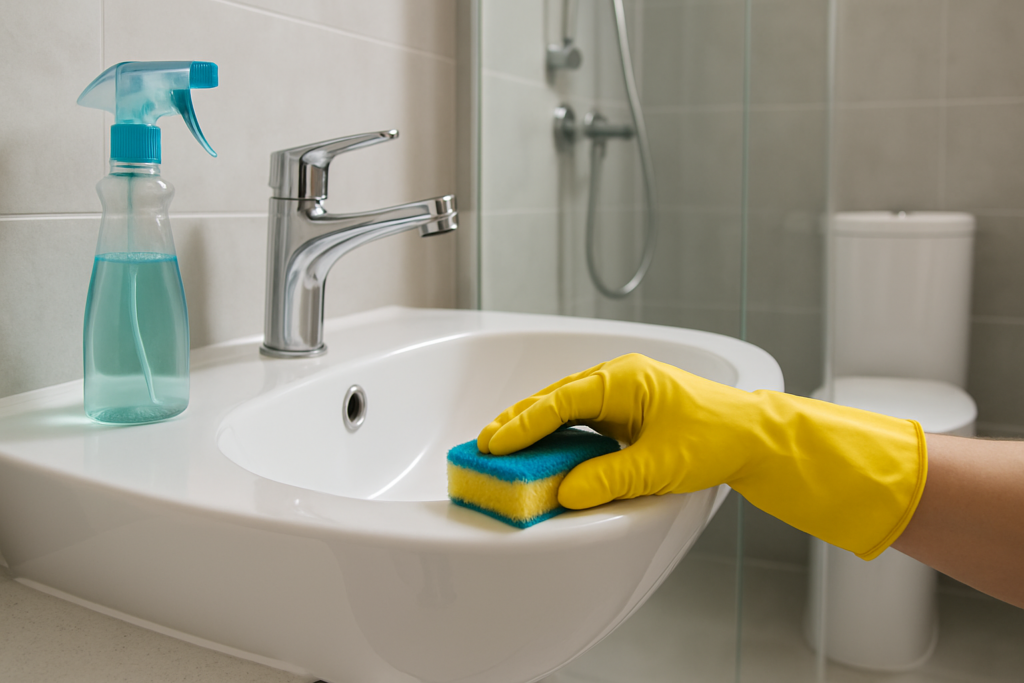
Nobody looks forward to deep cleaning their bathroom, but it doesn’t have to consume your entire weekend. With the right approach, you can achieve professional-level results in just two hours. The key lies in using an efficient cleaning sequence that tackles the toughest problems first while your products do the heavy lifting.
Most people make the mistake of starting with quick tasks like wiping counters, then running out of steam when they hit the real challenges like soap scum and mildew. We’re flipping that approach. You’ll start with the most demanding areas, apply your cleaning products, then work systematically through the space while those chemicals break down years of buildup.
This method transforms what feels like an overwhelming chore into a manageable, two-hour project that delivers results you’d expect from a professional cleaning service.
Safety First: Ventilation and Chemical Guidelines
Before you touch a single cleaning product, open every window and turn on your exhaust fan. Bathroom cleaning involves strong chemicals that need proper ventilation to be safe and effective.
Never mix cleaning products. This isn’t just good advice, it’s potentially life-saving. Mixing bleach with ammonia-based cleaners creates toxic chloramine gas. Even combining different brands of the same type of cleaner can cause dangerous reactions.
Wear rubber gloves throughout the entire process. Your hands will thank you, and you’ll avoid transferring skin oils that can interfere with cleaning products. Keep a box of disposable gloves handy for quick touch-ups later.
Stock up on microfiber cloths before you start. You’ll need at least six clean ones for different surfaces. Using the same cloth on your toilet and then your mirror defeats the purpose of deep cleaning.
The Strategic 15-Minute Setup
Your first quarter-hour sets the stage for everything that follows. Remove every item from your bathroom. Shampoo bottles, decorative items, bath mats, shower curtains, everything goes out. This isn’t optional if you want professional results.
Sweep or vacuum the floor thoroughly. You’d be surprised how much hair and debris hides behind the toilet and in corners. Getting this up front prevents you from spreading dirt around later.
Fill a bucket with hot water and add a few drops of dish soap. This becomes your rinse bucket for cleaning cloths throughout the process. Change the water when it gets murky.
Tackle Soap Scum and Hard Water Stains First
Soap scum and hard water stains are your biggest enemies, so attack them while you have fresh energy. These problems need time and the right products to break down properly.
For soap scum, nothing beats a dedicated soap scum remover with surfactants designed specifically for this job. Apply it generously to all glass surfaces, shower walls, and fixtures. Don’t be stingy. The product needs to stay wet on the surface to work effectively.
CLR Bathroom & Kitchen Cleaner
Dissolves soap scum and hard water stains without harsh scrubbing on multiple surfaces.
Hard water stains require a different approach. White vinegar works, but commercial lime and calcium removers work faster and more thoroughly. Look for products containing citric acid or hydrochloric acid for stubborn mineral deposits.
Apply these products and let them work for at least 10 minutes while you move on to other tasks. The chemical action saves you from aggressive scrubbing that can damage surfaces.
Mildew and Mold Elimination Strategy
Mildew and mold need immediate attention, both for appearance and health reasons. The most effective approach combines the right products with proper technique.
Bleach-based cleaners kill mold and mildew on contact, but they only work on non-porous surfaces. For grout and other porous materials, you need a penetrating mold remover that gets deep into the material.
Spray mold and mildew areas thoroughly and let the product sit for the full recommended time. Most people spray and wipe immediately, which removes the cleaner before it can kill the organisms completely.
Tilex Mold and Mildew Remover
Penetrates grout and kills mold at the source with minimal scrubbing required.
Pay special attention to grout lines, shower corners, and areas around faucets. These spots trap moisture and provide perfect breeding conditions for mold and mildew.
The 45-Minute Power Cleaning Sequence
With your heavy-duty products working, you can tackle the systematic cleaning that transforms your bathroom. Work from top to bottom and from cleanest to dirtiest surfaces.
Ceiling and Light Fixtures (10 minutes)
Start with the ceiling and work your way down. Use a microfiber duster with an extension handle to remove cobwebs and dust from corners and light fixtures. Wipe down exhaust fan covers if you can reach them safely.
Clean light fixtures with a damp microfiber cloth. Replace any burned-out bulbs now while you’re thinking about it.
Mirrors and Glass Surfaces (10 minutes)
Your soap scum remover has been working on mirrors and shower glass. Use a plastic scraper to remove the loosened buildup, then follow with glass cleaner for streak-free results.
The trick to perfect mirrors is using the right cloth. Microfiber works well, but newspaper actually gives the best streak-free finish if you have it available.
Shower and Bathtub Deep Clean (15 minutes)
Return to your shower walls where the cleaning products have been working. Most of the soap scum should wipe away easily now. For stubborn spots, use a non-abrasive scrubbing pad.
Clean your showerhead by unscrewing it and soaking it in white vinegar for a few minutes. This removes mineral deposits that reduce water pressure. If you can’t remove it easily, fill a plastic bag with vinegar, secure it around the showerhead with a rubber band, and let it soak.
Scrub the bathtub with a dedicated tub and tile cleaner. Pay attention to the area around the drain and the corners where grime accumulates.
Fixtures and Hardware (10 minutes)
Polish all metal fixtures with a appropriate metal cleaner or a mixture of baking soda and water for a natural approach. Chrome, brass, and nickel each have specific care requirements, but most bathroom fixtures are chrome or chrome-finished.
Replace old caulk if it’s discolored or pulling away from surfaces. Fresh caulk makes a dramatic difference in how clean your bathroom looks.
Toilet Deep Clean Protocol
The toilet deserves its own focused attention. Use a toilet bowl cleaner with hydrochloric acid for mineral stains and a separate disinfectant for the exterior surfaces.
Apply toilet bowl cleaner under the rim and let it work while you clean the exterior. Use disinfectant wipes or spray on all exterior surfaces, including the base, handle, and seat hinges.
Don’t forget the area behind the toilet and around the base. This zone collects dust, hair, and moisture that can create odors and stains over time.
Lysol Toilet Bowl Cleaner with Bleach
Angled bottle reaches under the rim to eliminate stains and kill bacteria effectively.
Scrub the bowl thoroughly with a toilet brush, paying attention to the water line where mineral deposits accumulate. Replace your toilet brush if the bristles are worn or discolored.
Floor and Finishing Touches
Save the floor for last since debris from other cleaning tasks will end up there. Sweep again to pick up any cleaning residue, then mop with a disinfectant floor cleaner.
Pay attention to the corners and the area around the toilet base. Use an old toothbrush to scrub grout lines and tight spaces where the mop can’t reach effectively.
Replace all items you removed at the beginning, but take this opportunity to declutter. Throw away empty bottles, expired medications, and products you don’t use.
Product Recommendations for Professional Results
The right products make the difference between amateur and professional results. Invest in quality cleaners designed for specific problems rather than trying to make one product do everything.
For daily maintenance, keep daily shower spray and disinfecting wipes easily accessible. These prevent major buildup between deep cleaning sessions.
Stock up on microfiber cloths in different colors for different areas. Use blue for mirrors and glass, yellow for surfaces, and white for the toilet area. This prevents cross-contamination between surfaces.

Amazon Basics Microfiber Cleaning Cloths
Pack of 24 cloths in multiple colors for organizing your cleaning routine effectively.
Time-Saving Maintenance Tips
Your two-hour deep clean will last much longer with simple daily habits. Squeegee shower walls after each use to prevent water spots and soap scum buildup.
Run your exhaust fan for 30 minutes after showers to reduce moisture that feeds mold and mildew growth. Many people turn it off immediately, which doesn’t give it enough time to remove the humid air.
Wipe down surfaces weekly with appropriate cleaners. This prevents the heavy buildup that requires intensive deep cleaning sessions.
Replace shower curtains or clean shower doors monthly. These areas trap soap residue and moisture that create cleaning challenges over time.
Frequently Asked Questions
How often should I do a complete bathroom deep clean?
Plan on a full deep clean every 4-6 weeks for most households. High-use bathrooms or homes with hard water may need attention every 3-4 weeks. Regular weekly cleaning extends the time between deep cleaning sessions.
Can I use the same products on all bathroom surfaces?
No, different surfaces need specific products for best results and to prevent damage. Natural stone requires pH-neutral cleaners, while porcelain and ceramic can handle stronger acids. Always check manufacturer recommendations for expensive fixtures.
What’s the best way to prevent soap scum buildup?
Switch to liquid body wash instead of bar soap, which creates more scum. Squeegee or wipe down shower walls after use, and apply a daily shower spray that prevents minerals and soap from bonding to surfaces.
How do I know if I need to replace grout or just clean it?
If grout is cracked, crumbling, or remains discolored after thorough cleaning with bleach-based products, it needs replacement. Healthy grout should return to its original color after proper cleaning.
This article contains affiliate links. We may earn a small commission at no extra cost to you.