Basements have this reputation as forgotten spaces where holiday decorations go to die and mystery boxes accumulate dust. But your basement could actually be one of your home’s most valuable storage areas if you know how to work with its unique quirks. Unlike your bright, temperature-controlled living spaces, basements come with their own set of challenges that require specific solutions.
The key to successful basement organization isn’t fighting against these challenges but working with them. Moisture, temperature swings, poor lighting, and odd layouts don’t have to be deal-breakers. With the right approach and materials, you can turn that underground space into an organized, functional extension of your home.
Let’s explore practical strategies that address the real issues basements present while maximizing every square foot of storage potential.
Understanding Your Basement’s Unique Environment
Before you start buying storage solutions, take time to assess what you’re working with. Basements operate differently than the rest of your house, and ignoring these differences leads to ruined belongings and wasted effort.
Moisture Control Comes First
Even basements that don’t flood deal with higher humidity levels than upstairs rooms. This excess moisture can damage cardboard boxes, create mold growth, and ruin fabric items. Check your basement’s humidity levels with a simple hygrometer and aim to keep them below 50%.
Running a dehumidifier isn’t just about comfort. It’s essential for protecting stored items. Look for units with automatic shutoff and continuous drain options so you’re not constantly emptying water tanks.
hOmeLabs 4500 Sq Ft Energy Star Dehumidifier
Covers large basement spaces effectively with auto-shutoff and continuous drain features
Temperature Fluctuations Matter
Basements experience more dramatic temperature changes than climate-controlled areas. These fluctuations can cause condensation inside storage containers and damage sensitive items like photographs, electronics, or important documents.
Avoid storing temperature-sensitive items directly against exterior walls where temperature changes are most extreme. Create a buffer zone of at least six inches between storage and walls.
Choosing the Right Storage Materials
Your choice of storage containers and shelving makes or breaks basement organization. Traditional cardboard boxes and particle board shelving won’t survive long in basement conditions.
Moisture-Resistant Containers
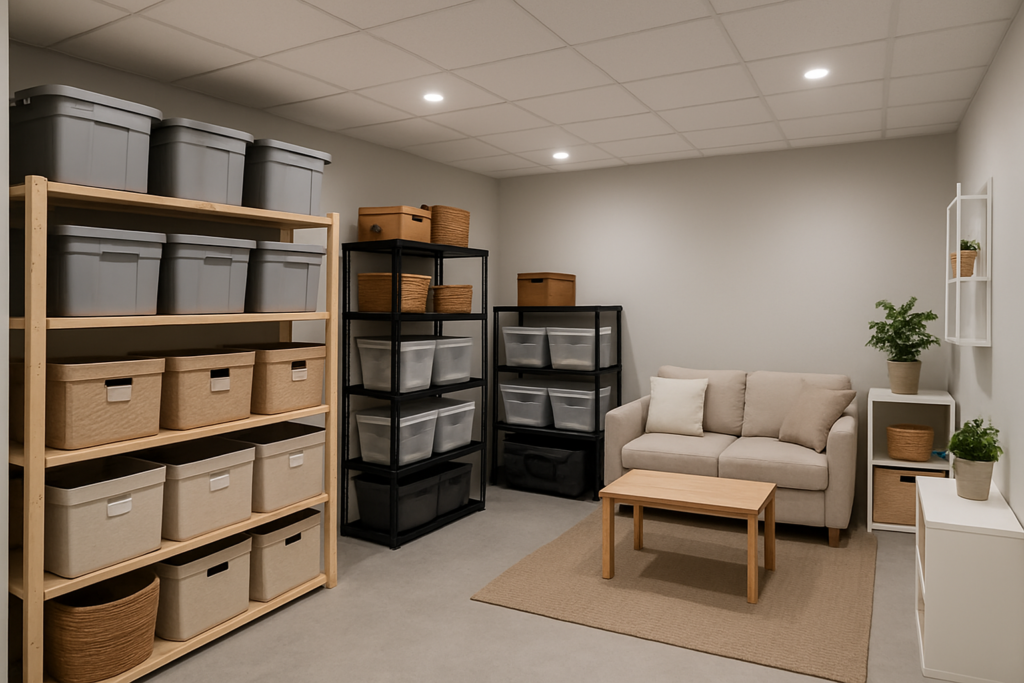
Plastic storage bins with tight-fitting lids are your best friends in basement storage. Look for containers made from heavy-duty materials that won’t crack in temperature changes. Clear bins let you see contents without opening them, reducing moisture exposure.
For items that need extra protection, consider waterproof storage containers with gasket seals. These provide an extra layer of security against humidity and potential water intrusion.
Shelving That Lasts
Metal wire shelving works better in basements than solid shelving because it allows air circulation around stored items. This airflow helps prevent moisture buildup and mold growth.
Powder-coated steel shelving resists rust better than chrome-plated options. Look for adjustable shelf heights to accommodate different container sizes as your storage needs change.
Amazon Basics 5-Shelf Adjustable Heavy Duty Storage Shelving Unit
Solid powder-coated steel construction with excellent weight capacity for basement conditions
Zone-Based Organization Strategies
Effective basement organization relies on creating distinct zones for different types of items. This approach makes finding things easier and helps protect items by grouping them with appropriate storage methods.
Create Seasonal Storage Zones
Dedicate specific areas for seasonal items like holiday decorations, summer sports equipment, or winter clothing. Place frequently accessed seasonal items near the stairs or main walkway. Store off-season items in less accessible areas.
Use a rotation system where you move seasonal items to convenient locations as their time approaches. This prevents the frustration of digging through stored items to reach what you need.
Archive and Document Storage
Important documents and archives need extra protection from moisture and temperature changes. Create a climate-controlled zone using sealed containers with desiccant packets.
Consider digitizing important documents before storing physical copies. This gives you backup access while reducing the volume of paper storage needed.
Store archived items in the most stable temperature zone of your basement, typically away from exterior walls and heating/cooling equipment.
Workshop and Tool Storage
Many basements double as workshop spaces. Create clear boundaries between storage and work areas to maintain organization and safety.
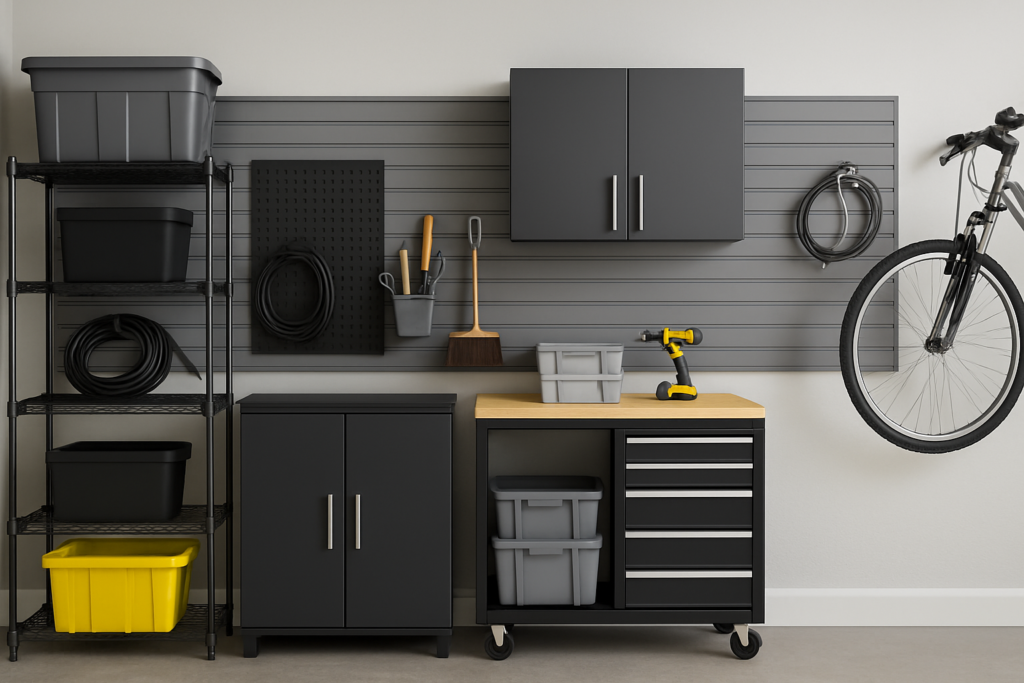
Install pegboards or tool storage systems on walls to keep frequently used items accessible while freeing up shelf space for other storage needs.
Wall Control 30-WRK-400 BB Pegboard Tool Organizer
Durable metal pegboard system that handles basement humidity better than wooden alternatives
Safety Considerations for Basement Storage
Basement organization isn’t just about efficiency. Safety considerations become more critical in underground spaces with limited exits and potential hazards.
Maintain Clear Pathways
Always keep clear pathways to exits, utility shutoffs, and electrical panels. Store items so that these critical areas remain easily accessible in emergencies.
Mark pathways with reflective tape or battery-powered LED strips if lighting is limited. This helps during power outages or emergency situations.
Weight Distribution and Structural Limits
Basement floors can handle significant weight, but don’t overload small areas. Distribute heavy storage across floor space rather than concentrating it in one spot.
Check weight limits on shelving units and don’t exceed them. Overloaded shelves can collapse, causing injury and damage to stored items.
Fire Safety and Chemical Storage
Store flammable materials away from heat sources like water heaters, furnaces, or electrical panels. Use appropriate containers designed for chemical storage.
Install smoke detectors in basement storage areas and check batteries regularly. Consider adding a small fire extinguisher in workshop or utility areas.
Lighting Solutions for Better Organization
Poor lighting makes basement organization frustrating and potentially dangerous. Good lighting transforms how you use and maintain your basement storage.
Overhead Lighting Improvements
Replace dim incandescent bulbs with bright LED fixtures. LED bulbs produce less heat and last longer, making them ideal for basement conditions.
Add motion-activated lights in frequently accessed areas. These provide automatic illumination when your hands are full of storage containers.
Task Lighting for Storage Areas
Install under-shelf lighting or battery-powered LED strips inside storage areas. This targeted lighting makes finding specific items much easier.
Rechargeable LED lanterns provide portable lighting for deep storage areas or when rearranging items.
Dealing with Irregular Basement Layouts
Most basements feature odd angles, low ceilings, support posts, and utility equipment that complicate organization. Work with these features instead of fighting them.
Maximizing Low-Ceiling Areas
Use the space under stairs or low-ceiling areas for flat storage items like seasonal clothing or linens. Build custom shelving that fits these spaces exactly.
Rolling storage carts work well in areas where standing height is limited. You can pull items out to access them without crawling into tight spaces.
Working Around Support Posts and Utilities
Turn support posts into organization features by building storage around them. Corner shelving units can transform awkward spaces into useful storage areas.
Maintain required clearances around utility equipment while using nearby wall space for storage. Check local codes for specific clearance requirements around furnaces, water heaters, and electrical panels.
Honey-Can-Do 3-Tier Corner Storage Shelf
Perfect for utilizing awkward corner spaces around basement obstacles
Inventory Management and Labeling
The best organizational system falls apart without proper labeling and inventory tracking. Basement storage particularly benefits from detailed labeling because items are accessed less frequently.
Labeling Systems That Last
Use waterproof labels that can handle basement humidity. Laminated labels or weatherproof label makers prevent fading and peeling over time.
Label multiple sides of containers since you might approach storage from different angles in cramped basement spaces.
Digital Inventory Tracking
Take photos of container contents before sealing them. Store these photos on your phone with location notes for quick reference.
Create a simple spreadsheet listing what’s stored where. Update it when you add or remove items to maintain accuracy.
Maintenance and Long-Term Success
Organized basements require ongoing maintenance to stay functional. Build maintenance routines into your organization system.
Regular Inspection Schedule
Check stored items quarterly for signs of moisture damage, pest activity, or container deterioration. Early detection prevents small problems from becoming major issues.
Clean and vacuum storage areas regularly to prevent dust accumulation and pest habitats.
Seasonal Organization Reviews
Use seasonal transitions as opportunities to reassess your organization system. Move frequently needed items to accessible locations and relocate off-season storage.
Purge items you haven’t used in over two years. Basement storage shouldn’t become a permanent home for items you’ll never use again.
Common Basement Organization Questions
How do I prevent mold growth in basement storage areas?
Control humidity levels below 50% using dehumidifiers, ensure good air circulation with fans or ventilation, and avoid storing damp items. Use moisture-resistant containers and check stored items regularly for early signs of mold growth.
What items should never be stored in basements?
Avoid storing photographs, important documents (unless in climate-controlled containers), electronics, musical instruments, artwork, or anything irreplaceable in basements. These items are too sensitive to humidity and temperature changes for typical basement storage.
How can I make basement storage more accessible?
Install adequate lighting throughout storage areas, create wide pathways between storage zones, use clear storage containers for easy identification, and store frequently accessed items at eye level near the stairs. Consider installing handrails on stairs for safety when carrying items.
Should I insulate my basement walls before organizing storage?
Proper insulation helps control temperature and humidity, making storage conditions more stable. However, ensure your basement has proper moisture barriers before insulating, as trapped moisture can cause serious problems. Consult a professional if you’re unsure about your basement’s moisture management.
This article contains affiliate links. We may earn a small commission at no extra cost to you.