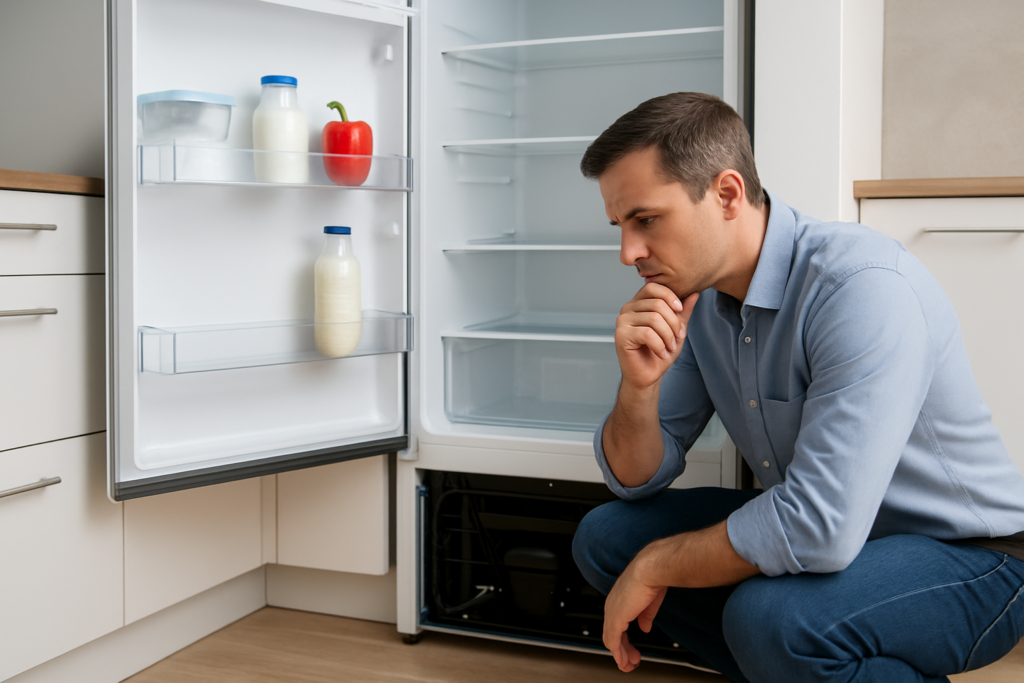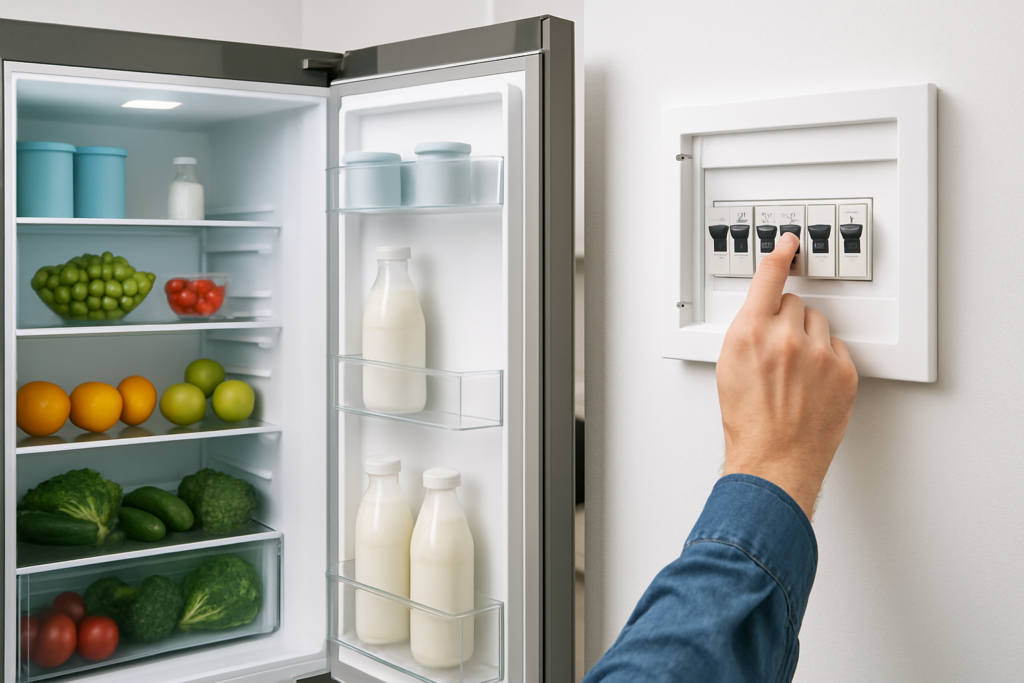
There’s nothing quite like the panic of hearing your kitchen breaker trip, especially when you realize your refrigerator is the culprit. One minute everything’s humming along normally, and the next, your food is sitting in a warming appliance and you’re standing in front of your electrical panel wondering what went wrong.
A refrigerator that keeps tripping the breaker isn’t just annoying. It’s a sign that something’s pulling too much power, creating a dangerous electrical situation, or both. The good news is that most causes are fixable once you understand what’s happening behind that innocent-looking appliance.
Understanding Electrical Loads and Why Refrigerators Trip Breakers
Your refrigerator doesn’t use a constant amount of electricity. Instead, it cycles through different power demands as the compressor kicks on, fans spin up, and defrost cycles run. These power surges can exceed what your circuit breaker is designed to handle.
Most modern refrigerators need a dedicated 15 or 20-amp circuit. When you plug other appliances into the same circuit, or when the refrigerator itself starts drawing excessive current, the breaker does exactly what it’s designed to do. It trips to prevent overheating and potential fire hazards.
The tricky part is figuring out whether your breaker is tripping because it’s doing its job correctly (responding to an overload or short circuit), or because the breaker itself has weakened over time. Breakers don’t last forever, and an older one might trip at lower currents than it should.
Common Culprits: Faulty Motors and Components
The compressor motor is usually the first suspect when a refrigerator trips breakers repeatedly. This motor works hard to keep your food cold, and when it starts to fail, it draws excessive current during startup. A compressor on its last legs might pull two or three times the normal amperage, instantly overwhelming your circuit.
The condenser fan motor is another frequent troublemaker. Located near the compressor at the back or bottom of your fridge, this fan helps dissipate heat. When the motor bearings wear out or the fan blade gets obstructed, the motor works harder and draws more power. You might notice the fan running louder than usual before it starts tripping breakers.
Don’t overlook the evaporator fan inside the freezer compartment. When this evaporator fan motor fails or its blades ice up, it can create enough electrical resistance to trip your breaker.

Digital Multimeter
Essential for testing electrical continuity and diagnosing motor problems in your refrigerator.
The Defrost System and Electrical Problems
Your refrigerator’s automatic defrost system includes a heating element that melts accumulated frost. When this defrost heater develops a short circuit or ground fault, it’ll trip your breaker almost immediately when the defrost cycle begins.
The defrost timer or control board that manages this cycle can also malfunction. A faulty timer might trigger the defrost heater at the wrong times or fail to shut it off, causing extended periods of high power draw. This is particularly common in refrigerators that are 8-10 years old or older.
Test your defrost system by manually advancing the defrost timer (usually located behind the kickplate or inside the control panel). If the breaker trips when you do this, you’ve found your problem. The defrost heater or its wiring needs attention.
Wiring Issues and Connection Problems
Damaged wiring inside your refrigerator creates resistance, heat, and excessive current draw. Years of vibration from the compressor and fans can loosen wire connections or cause insulation to crack and expose bare wires.
Check the power cord first. Look for any dark spots, melted areas, or damage where the cord plugs into the wall outlet. A worn power cord is easier and cheaper to replace than you might think. Just make sure you get one rated for your refrigerator’s amp requirements.
The outlet itself matters too. A loose outlet creates resistance at the connection point, which generates heat and can fool the breaker into thinking there’s an overload. If your plug feels loose in the outlet, or if the outlet face shows any discoloration, replace it with a properly rated outlet.
Internal wiring problems require more investigation. You’ll need to pull the refrigerator away from the wall, unplug it, and remove access panels to inspect wire harnesses. Look for wires that are touching the compressor or other hot components, as these can melt through insulation and short out.
How to Fix the Problem
Start with the simple stuff. Unplug everything else from the same circuit as your refrigerator. If the breaker stops tripping, you had an overload issue. Get an electrician to install a dedicated circuit for your fridge.
Listen to your refrigerator carefully. If you hear the compressor struggling to start (a clicking sound followed by silence), the compressor itself might be failing. This typically means replacing the entire fridge unless it’s a high-end model worth repairing.
Clean the condenser coils at the back or bottom of your fridge. Dust and pet hair act like insulation, forcing the compressor to work harder and longer. Use a coil cleaning brush to remove debris, then vacuum thoroughly.

Clamp Ammeter
Allows you to measure the actual current draw without disconnecting wires, perfect for diagnosing refrigerator electrical problems.
Test the defrost system by unplugging the fridge and using a multimeter to check the defrost heater for continuity. A reading of 10-50 ohms is normal. Infinite resistance means the heater is open and needs replacement. Zero resistance suggests a short circuit.
Consider the age of your refrigerator. If it’s more than 12-15 years old and having repeated electrical problems, repair costs might exceed half the price of a new unit. Modern refrigerators are also considerably more energy-efficient.
When to Call a Professional
Electricity isn’t something to mess with if you’re not confident. If you’ve checked the obvious problems and your refrigerator still trips the breaker, call an appliance repair technician or electrician.
Also call a pro if you smell burning plastic, see sparks, or notice the breaker panel itself feels hot. These indicate serious electrical hazards that need immediate attention.
An electrician should definitely handle anything involving your home’s wiring or circuit breaker panel. Appliance repair techs focus on the refrigerator itself. Sometimes you need both to fully solve the problem.
Frequently Asked Questions
Can I just keep resetting the breaker when my fridge trips it?
Absolutely not. Circuit breakers trip to protect your home from electrical fires. Every time you reset a breaker that keeps tripping, you’re allowing a dangerous condition to continue. The breaker is telling you something’s wrong, and ignoring it could result in a fire or complete electrical failure. Fix the underlying problem instead of overriding the safety system.
How much does it cost to fix a refrigerator that trips breakers?
The cost varies wildly depending on the cause. Replacing a power cord might run you under fifty dollars in parts if you do it yourself. A new compressor or sealed system repair can cost several hundred dollars in parts and labor. Rewiring issues inside the fridge typically fall in the middle range. Get a diagnosis from a qualified technician before committing to repairs, especially on older units.
Will a surge protector prevent my refrigerator from tripping the breaker?
A surge protector won’t stop your fridge from tripping breakers due to overload or component failure. Surge protectors guard against voltage spikes from power surges and lightning, but they can’t reduce the current your refrigerator draws during normal operation. In fact, many refrigerator manufacturers advise against using surge protectors or extension cords because they can create additional resistance and heat in the circuit.
This article contains affiliate links. We may earn a small commission at no extra cost to you.