
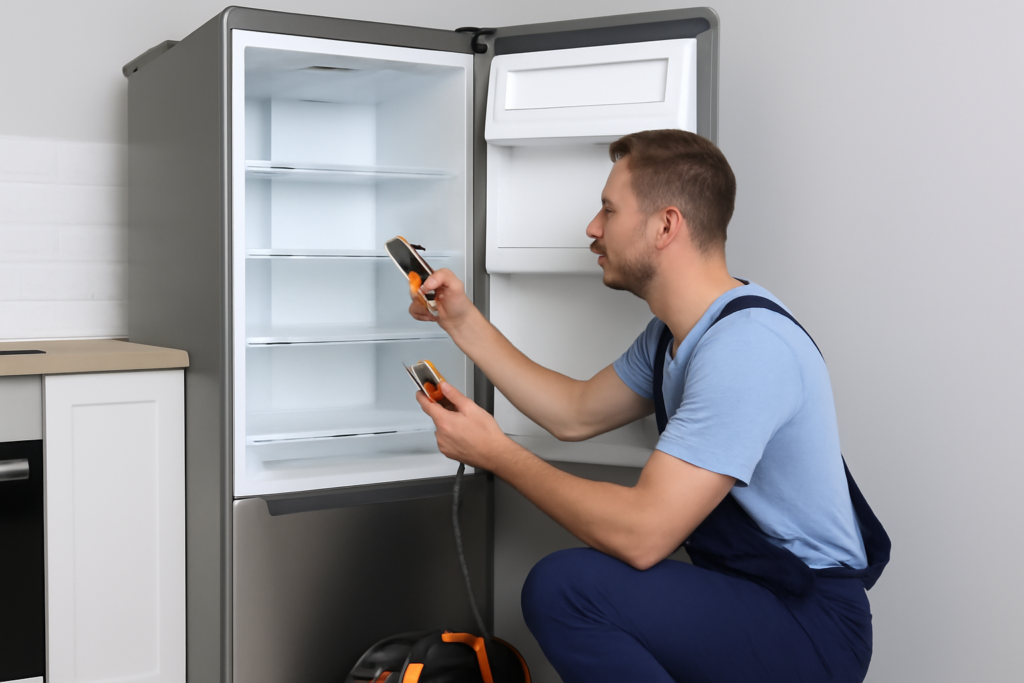
Few things are more frustrating than discovering your refrigerator won’t turn on, especially when you’ve got a fridge full of food that needs to stay cold. Whether it’s completely dead or showing no signs of life, a non-functioning refrigerator can quickly turn from an inconvenience into a costly emergency.
The good news is that many refrigerator startup issues have simple solutions you can try before calling a repair technician. From power supply problems to failed components, understanding the most common causes can save you time, money, and potentially a lot of spoiled groceries.
Check the Power Supply First
Before assuming your refrigerator has a serious mechanical problem, start with the basics. Power supply issues account for roughly 30% of all “dead” refrigerator cases, and they’re often the easiest to fix.
Verify that your refrigerator is actually plugged in securely. This might sound obvious, but plugs can work loose over time, especially if your refrigerator gets moved for cleaning. Check that the outlet itself is working by plugging in another appliance or using a outlet tester.
Examine the power cord for any visible damage like cuts, burns, or bent prongs. A damaged cord not only prevents your refrigerator from starting but can also be a fire hazard. If you find damage, stop using the appliance immediately and have the cord replaced by a qualified technician.
Check your home’s electrical panel for tripped circuit breakers or blown fuses. Refrigerators typically draw 6-8 amps during normal operation but can pull 15-20 amps on startup. If other high-draw appliances are on the same circuit, they might cause the breaker to trip.
Understanding Refrigerator Reset Procedures
Modern refrigerators have built-in safety systems that can shut down the unit if they detect problems. Sometimes these systems get triggered by power surges, brief outages, or even normal wear and tear.
Try unplugging your refrigerator for at least 5 minutes, then plug it back in. This allows the control board to reset and can clear temporary error codes. Some manufacturers recommend waiting up to 24 hours before determining if the reset worked, since refrigerators don’t start cooling immediately.
Many newer models have a specific reset button or sequence. Check your owner’s manual for model-specific instructions. For example, some Whirlpool models require holding the temperature controls for 10 seconds, while certain GE models need a specific button combination.

Digital Multimeter
Essential tool for safely testing electrical components in your refrigerator.
Don’t confuse a reset with normal startup behavior. Even after a successful reset, your refrigerator might take 4-6 hours to reach proper temperatures, and the compressor might not kick in immediately.
Blown Fuses and Electrical Component Failures
Internal fuses protect your refrigerator’s electrical components from power surges and short circuits. When these fuses blow, your refrigerator will appear completely dead even though it’s receiving power.
Most refrigerators have fuses located on the main control board, usually behind the temperature control panel or in the machine compartment. These fuses typically range from 3 to 15 amps and look similar to automotive fuses.
You’ll need a multimeter to test fuses properly. Set it to continuity mode and touch the probes to each end of the fuse. A blown fuse will show no continuity (infinite resistance), while a good fuse will beep or show near-zero resistance.
Replace blown fuses with identical amp ratings. Using a higher-rated fuse might allow your refrigerator to start, but it won’t protect other components from damage. Always disconnect power before replacing fuses, and consider what caused the original fuse to blow.
Common Part Failures That Prevent Startup
Several key components can fail and prevent your refrigerator from turning on. Understanding these failures helps you decide whether to attempt repairs or call a professional.
Control Board Problems
The main control board acts as your refrigerator’s brain, managing everything from temperature control to defrost cycles. Control board failures often show specific symptoms like partial functionality, error codes, or complete shutdown.
Signs of control board failure include lights that work but no cooling, displays that show error codes, or components that run continuously. Control boards are sensitive to power surges and humidity, making them one of the more common failure points in older refrigerators.

Refrigerator Control Board
Replacement control boards for most major refrigerator brands with clear installation instructions.
Testing control boards requires specific knowledge of your model’s wiring diagram. If you suspect control board failure, note your refrigerator’s exact model number and any error codes before shopping for replacements.
Compressor Start Components
The compressor is your refrigerator’s heart, but it needs help getting started. Start relays and capacitors provide the initial power boost needed to get the compressor running.
A failed start relay often makes a clicking sound every few minutes as the control board tries repeatedly to start the compressor. You might also notice the refrigerator getting warm but the lights and fans still working.
Start capacitors store electrical energy to help the compressor motor start under load. When capacitors fail, they might bulge, leak, or show burn marks. Bad capacitors can cause the compressor to hum loudly but not start.
Both components are relatively inexpensive and located near the compressor. However, accessing them usually requires removing panels and working around refrigerant lines, making this a job for experienced DIYers only.
Temperature Control and Thermostat Issues
Temperature controls tell your refrigerator when to run and when to stop. When these components fail, your refrigerator might not start at all or might run continuously without cycling off.
Test your temperature control by turning it from the lowest to highest setting while listening for clicks. You should hear definitive clicking sounds as the control switches positions. No clicks usually indicates a failed control.
Some refrigerators use electronic temperature sensors instead of mechanical thermostats. These sensors rarely fail completely but can drift out of calibration, causing unusual behavior. Electronic controls typically require specific diagnostic procedures outlined in service manuals.
When to Call a Professional
While many refrigerator startup issues have simple solutions, some problems require professional expertise and specialized tools. Knowing when to stop DIY troubleshooting can prevent costly damage and safety hazards.
Call a technician immediately if you smell gas (from propane models), see sparks, or notice any refrigerant leaks. These situations present serious safety risks that require professional handling.
Compressor problems, sealed system leaks, and complex electronic diagnostics typically exceed most homeowners’ skill levels. Professional repair costs vary widely, but getting a diagnosis often costs less than buying the wrong replacement parts.
Consider your refrigerator’s age when deciding on repairs. Units over 10-12 years old might not justify expensive repairs, especially for major components like compressors or control boards.

Appliance Thermometer
Monitor your refrigerator’s temperature during troubleshooting to ensure food safety.
Prevention and Maintenance Tips
Regular maintenance can prevent many startup problems and extend your refrigerator’s life. Simple preventive measures often cost less than a single service call.
Keep your refrigerator’s coils clean by vacuuming them every 6 months. Dirty coils force the compressor to work harder, leading to premature failure of electrical components. Coils are usually located on the back or underneath the unit.
Check door seals regularly for gaps or tears. Poor seals make your refrigerator work constantly, stressing electrical components. Clean seals with warm soapy water and replace them if they won’t seal properly when closed.
Avoid overloading your refrigerator, which restricts airflow and forces components to run longer cycles. Maintain proper spacing around air vents and don’t block the condenser fan.
Use a surge protector designed for large appliances. Power surges from storms or electrical grid issues can damage sensitive electronic components instantly.
Frequently Asked Questions
Why does my refrigerator work sometimes but not others?
Intermittent operation usually indicates failing electrical components like start relays, capacitors, or loose connections. Temperature-sensitive failures might work when cool but fail as components heat up during operation. Check all electrical connections and test start components with a multimeter.
How long should I wait after plugging in my refrigerator?
Wait at least 4 hours before expecting normal temperatures, and up to 24 hours for full operation. The compressor might not start immediately due to built-in delay timers that protect the system. Don’t assume failure if cooling doesn’t begin within the first hour.
Can a power outage damage my refrigerator?
Brief outages rarely cause damage, but voltage fluctuations during power restoration can harm electronic components. Unplug your refrigerator during extended outages and wait 5 minutes after power returns before plugging it back in. This prevents damage from voltage spikes.
Is it worth repairing an old refrigerator that won’t start?
Consider repair costs versus replacement value. For refrigerators under 8 years old, most repairs make financial sense. Units over 12 years old with major component failures (compressor, sealed system) typically aren’t worth repairing unless the fix costs under competitively priced.
This article contains affiliate links. We may earn a small commission at no extra cost to you.