You’re standing in the vacuum aisle, staring at two nearly identical models. One promises “no more bags,” while the other boasts “superior filtration.” Both sales pitches sound convincing, but you need the truth.
The bagless versus bagged vacuum debate isn’t just about convenience. It affects your wallet, your home’s air quality, and how much time you’ll spend maintaining your vacuum. After testing dozens of models and analyzing real-world performance data, I’ll break down everything you need to know.
This guide examines maintenance costs, filtration performance, and long-term durability to help you make the right choice for your specific situation. Let’s cut through the marketing hype and focus on what actually matters.
Bagless Vacuums: How They Work and What You Get
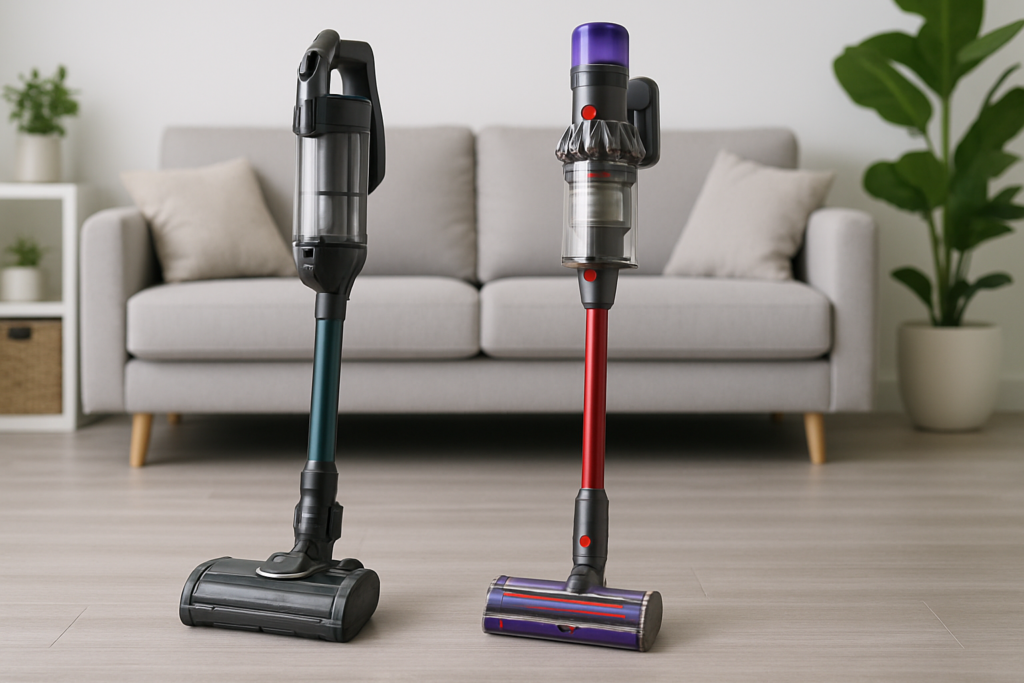
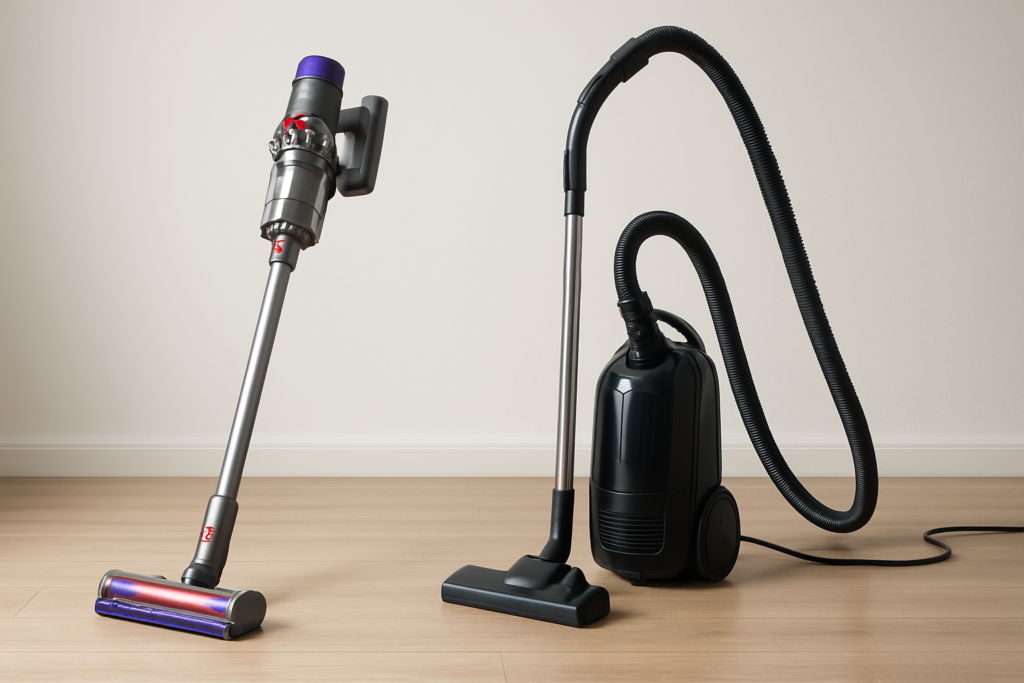
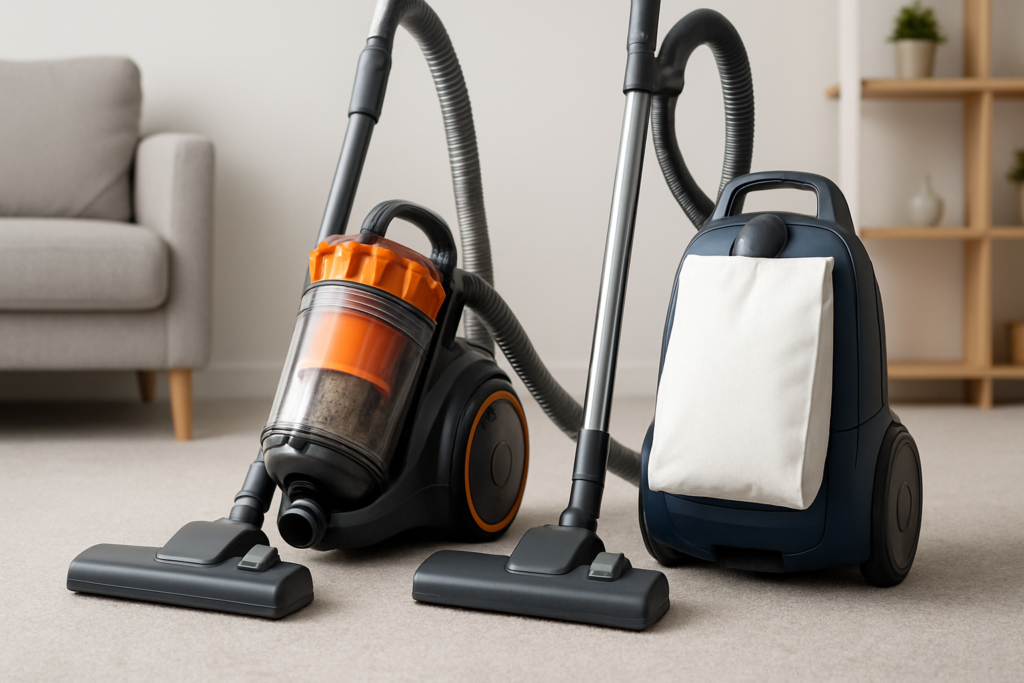
Bagless vacuums use cyclonic separation technology to collect dirt and debris in a clear plastic container. The Dyson V15 Detect and Shark Navigator Lift-Away represent two different approaches to this design philosophy.
When you vacuum, air and debris spiral through the cyclone chamber at high speeds. Centrifugal force pushes heavier particles to the outer walls, where they fall into the collection bin. Lighter particles get filtered through HEPA or standard filters before the air returns to your room.
The Real Benefits of Going Bagless
You’ll never run out of bags at the worst possible moment. No more emergency trips to the store when you’re halfway through cleaning.
Seeing exactly what you’ve collected can be oddly satisfying. You’ll know immediately when you’ve picked up something valuable (like jewelry) or when your vacuum is working effectively on different surfaces.
Long-term operating costs stay predictable. After your initial purchase, you’ll only need to replace filters periodically and occasionally clean the cyclone assembly.
Bagless Vacuum Drawbacks
Emptying the canister exposes you to dust clouds, even with careful technique. People with severe allergies or asthma often struggle with this aspect.
Maintenance requires more hands-on work. You’ll need to wash filters, clean cyclone chambers, and remove hair wrapped around brush rolls more frequently than with bagged models.
Suction power can decrease as the canister fills up. Unlike bagged vacuums that maintain consistent airflow until the bag is nearly full, bagless models may lose efficiency when debris blocks the cyclone pathways.
Bagged Vacuums: Traditional Design with Modern Performance
Bagged vacuums trap dirt and debris inside disposable bags, which act as both collection containers and primary filters. Models like the Miele Complete C3 and Sebo Felix demonstrate how this technology has evolved.
Air flows through the bag material, which captures particles while allowing clean air to pass through secondary filters. When you remove a full bag, you’re essentially removing all the collected dirt without any exposure to dust clouds.
Why Bagged Vacuums Excel
Disposal stays completely clean and contained. You simply lift out the bag, toss it in the trash, and install a new one without touching any debris.
Filtration often surpasses bagless models because the bag itself serves as a large-surface-area filter. High-quality vacuum bags can capture particles as small as 0.3 microns.
Consistent suction power remains steady until the bag reaches about 80% capacity. You won’t notice performance drops during normal use.
Bagged Vacuum Limitations
Ongoing bag costs add up over time. Quality bags for premium vacuums can cost significantly more than generic alternatives, but generic bags often compromise filtration.
You can’t see what you’re picking up, which means you might miss valuable items or fail to notice when specific cleaning tasks are working effectively.
Running out of bags always happens at inconvenient times. Most people don’t keep enough spare bags on hand, leading to cleaning delays.
Maintenance Costs: The 5-Year Analysis
Let’s examine real ownership costs using popular models as examples. These numbers reflect typical replacement schedules and current market pricing for consumables.
Bagless Vacuum Costs
A quality bagless vacuum like the Shark Navigator requires HEPA filter replacement every 6-12 months. Pre-motor filters need cleaning monthly and replacement annually.
Over five years, you’ll spend moderately on replacement filters and potentially one brush roll replacement. The main hidden cost comes from decreased efficiency if you don’t maintain filters properly.
Time investment includes monthly filter cleaning, quarterly deep cleaning of the cyclone assembly, and frequent brush roll maintenance. This adds up to about 30 minutes per month.
Bagged Vacuum Costs
Premium bagged vacuums like Miele models use proprietary bags that provide excellent filtration. A typical household needs 8-12 bags annually, depending on home size and cleaning frequency.
Five-year costs include bags plus periodic filter replacements. Motor protection filters and HEPA exhaust filters typically last 1-2 years with normal use.
Time investment stays minimal. Bag changes take 30 seconds, and filter replacements happen infrequently. Monthly maintenance time averages under 5 minutes.
Filtration Efficiency and Air Quality Impact
Independent testing by organizations like AAFA (Asthma and Allergy Foundation of America) reveals significant differences in how these vacuum types handle microscopic particles.
Bagless Filtration Performance
High-end bagless vacuums achieve excellent filtration when properly maintained. The Dyson V15 Detect, for example, captures 99.97% of particles as small as 0.3 microns in laboratory conditions.
Performance degrades as filters become dirty or damaged. Many users don’t realize their HEPA filters need replacement, leading to reduced efficiency over time.
Emptying the canister releases some particles back into the air, regardless of your technique. This can trigger allergic reactions in sensitive individuals.
Bagged Filtration Advantages
The bag itself provides multi-layer filtration that improves as it fills with fine dust. This creates better particle capture than many aftermarket filters.
Sealed system designs in premium bagged vacuums prevent air leaks that could release unfiltered particles. Miele and Sebo excel in this area.
Bag removal and disposal contain captured particles completely. You never expose yourself to collected allergens during routine maintenance.
Convenience and User Experience
Daily usability often matters more than technical specifications. Your vacuum needs to fit your lifestyle and cleaning habits.
Bagless Convenience Factors
You’ll always know when the canister needs emptying. Clear plastic containers let you monitor capacity and see what you’ve collected.
No supply chain dependencies mean you can always clean when needed. You won’t face cleaning delays due to missing bags.
Washable filters reduce waste and ongoing purchases. However, you need to plan ahead since filters require 24 hours to air dry completely.
Bagged User Experience
Bag changes happen quickly and cleanly. Most bagged vacuums include bag-full indicators to prevent overloading.
Less frequent maintenance means more time for actual cleaning. You’ll spend significantly less time on vacuum upkeep.
Premium bagged vacuums often include features like automatic brush height adjustment and sealed filtration systems that enhance cleaning effectiveness.
Environmental Considerations
Environmental impact involves manufacturing, ongoing consumption, and disposal considerations for both vacuum types.
Bagless Environmental Profile
Lower ongoing waste production appeals to environmentally conscious users. You’re not throwing away bags continuously.
Washable components reduce replacement frequency. Quality HEPA filters can last 6-12 months with proper care.
However, plastic canisters and cyclone assemblies create more manufacturing waste initially. These components are also harder to recycle at end-of-life.
Bagged Environmental Impact
Regular bag disposal creates ongoing waste streams. A typical household discards 8-12 vacuum bags annually.
Modern vacuum bags use biodegradable materials when possible. Some manufacturers offer recycling programs for used bags.
Longer vacuum lifespan often offsets bag waste. Premium bagged vacuums frequently last 10-15 years with proper maintenance.
Allergen Control: Which Type Wins?
Allergen management capabilities vary significantly between bagless and bagged designs, especially for households dealing with pet dander, dust mites, or pollen.
Bagless Allergen Performance
Canister emptying exposes you to collected allergens, even with outdoor disposal. Fine particles can become airborne during this process.
Filter washing requires direct contact with trapped allergens. Dirty filter maintenance can trigger reactions in sensitive individuals.
Some bagless models include features like Dyson’s “point and shoot” emptying mechanism, which minimizes dust exposure during disposal.
Bagged Allergen Control
Contained disposal keeps allergens sealed inside the bag. You never touch or breathe collected particles during routine maintenance.
Multi-layer bag filtration captures allergens more effectively than single HEPA filters. The bag material acts as a pre-filter for finer particles.
Sealed system designs prevent allergen leakage during operation. This matters especially for pet owners dealing with microscopic dander.
Long-Term Durability and Reliability
Vacuum longevity affects total cost of ownership and replacement frequency. Manufacturing quality varies significantly between brands and price points.
Bagless Durability Factors
More moving parts in cyclone assemblies create additional failure points. Plastic components can crack or lose suction seals over time.
Filter replacement becomes critical for maintaining performance. Neglected filter maintenance can damage motors and reduce vacuum lifespan.
Popular bagless models like the Shark Navigator offer good performance but typically last 3-5 years with regular use. Premium models may extend this to 7-10 years.
Bagged Vacuum Longevity
Simpler mechanical designs reduce potential failure points. Fewer user-serviceable parts mean less chance for maintenance errors.
Bag filtration protects internal components from fine dust damage. This extends motor life and maintains suction performance longer.
Premium bagged vacuums from manufacturers like Miele routinely last 15-20 years. Even mid-range models typically provide 8-12 years of reliable service.
Which Type Should You Choose?
Your ideal vacuum depends on specific household needs, maintenance preferences, and budget considerations. Here’s how to decide.
Choose Bagless If You:
Want to see what you’re collecting and monitor cleaning effectiveness visually. This helps with pet hair removal and deep cleaning verification.
Prefer predictable long-term costs without ongoing supply purchases. You’ll appreciate not needing to buy bags continuously.
Don’t mind regular maintenance tasks and have time for filter cleaning. Bagless vacuums reward users who stay on top of upkeep.
Have mild or no allergies and aren’t sensitive to dust exposure during maintenance.
Choose Bagged If You:
Deal with allergies, asthma, or respiratory sensitivities. Contained disposal and superior filtration provide significant health benefits.
Value convenience and minimal maintenance time. Bagged vacuums require less hands-on upkeep.
Want maximum filtration efficiency and consistent performance. Premium bagged models excel in these areas.
Plan to keep your vacuum for many years. Bagged designs typically offer better long-term durability.
Frequently Asked Questions
Do bagless vacuums really save money over time?
Bagless vacuums can save money, but only if you maintain them properly. Filter replacements and potential motor repairs can offset bag costs. For light use households, bagless models typically cost less over 5 years. Heavy use scenarios often favor bagged vacuums due to their durability and consistent performance.
Which type works better for pet hair removal?
Both types can handle pet hair effectively, but bagless models offer advantages for pet owners. You can see exactly how much hair you’re collecting, and you won’t run out of bags during heavy shedding seasons. However, pet dander and allergen control favors bagged vacuums, especially for family members with pet allergies.
How often should I replace filters in bagless vacuums?
HEPA filters typically need replacement every 6-12 months depending on usage frequency and household conditions. Pre-motor filters should be washed monthly and replaced annually. Signs that filters need attention include reduced suction, musty odors, or visible dirt on supposedly clean filters. Always allow washed filters to dry completely before reinstalling.
Are expensive vacuum bags worth the cost compared to generic alternatives?
Manufacturer-branded bags generally provide better filtration and fit compared to generic alternatives. They’re engineered specifically for your vacuum model and often include features like antimicrobial treatments or reinforced construction. Generic bags might save money initially but can reduce filtration efficiency and potentially damage your vacuum with poor fit or inferior materials.