You’ve probably seen those satisfying before-and-after photos on social media. You know the ones: cluttered spaces transformed into minimalist havens where every item has its designated place. Behind many of these transformations lies one of two distinct philosophies: the Marie Kondo method or traditional organization approaches.
The KonMari method took the world by storm when Marie Kondo’s book became a bestseller and her Netflix show launched millions of decluttering projects. But traditional organization systems have been helping people manage their belongings for decades. Each approach has its devoted followers who swear by their chosen method.
The question isn’t whether you need to get organized. The question is which method will actually stick in your life, with your personality, and in your living situation.
Understanding the Marie Kondo Method
The KonMari method centers around one core principle: keep only items that “spark joy.” This means holding each possession in your hands and deciding whether it brings you happiness. If it doesn’t, you thank the item for its service and let it go.
The process follows a specific category order, not room by room. You start with clothes, then move to books, papers, komono (miscellaneous items), and finally sentimental items. Within each category, you gather everything you own and make decisions about each piece.
This method emphasizes a dramatic, short-term commitment. Kondo suggests completing the entire process within six months rather than spreading it out over years. The goal is a complete lifestyle transformation, not just a tidy home.
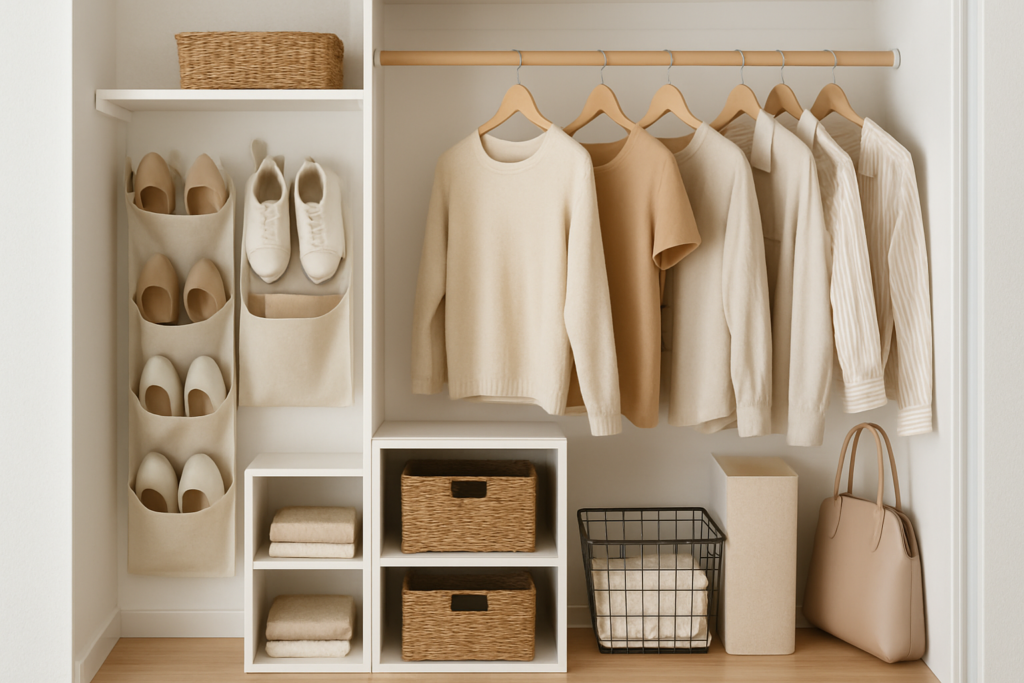
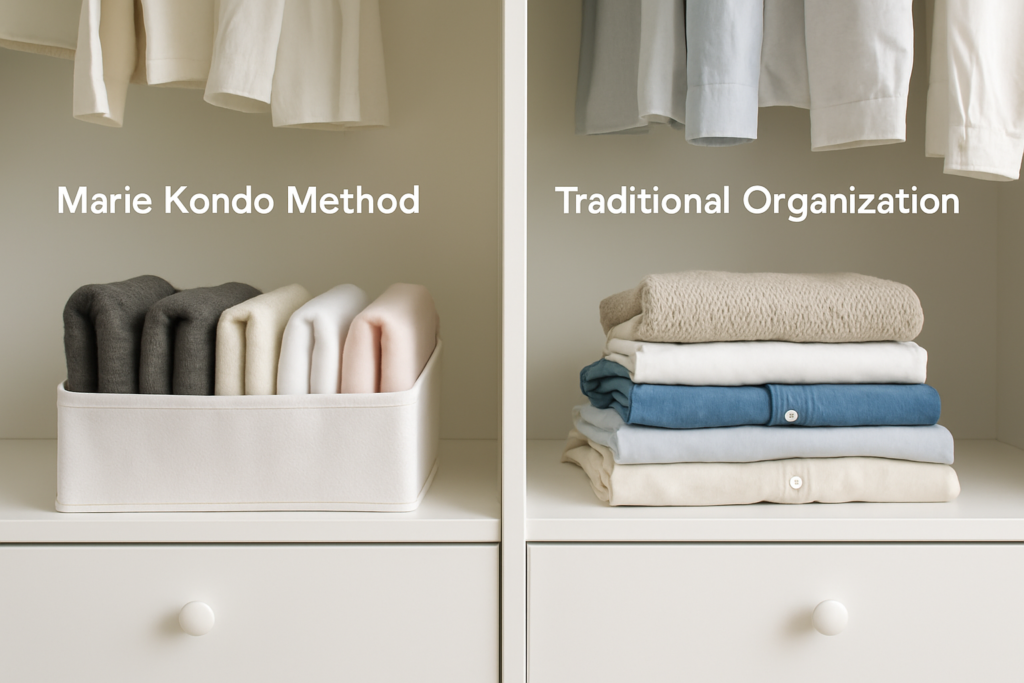
The method also includes specific techniques for storing and organizing what remains. Clothes should be folded vertically so you can see everything at once. Items should have designated homes where they’re easily accessible.
Traditional Organization Methods Explained
Traditional organization takes a more systematic, room-by-room approach. Instead of focusing on emotional connections to objects, these methods prioritize functionality, efficiency, and logical storage solutions.
Most traditional systems start by sorting items into categories: keep, donate, sell, and trash. The decision-making process relies on practical questions: When did you last use this? Do you have duplicates? Is it broken or outdated?
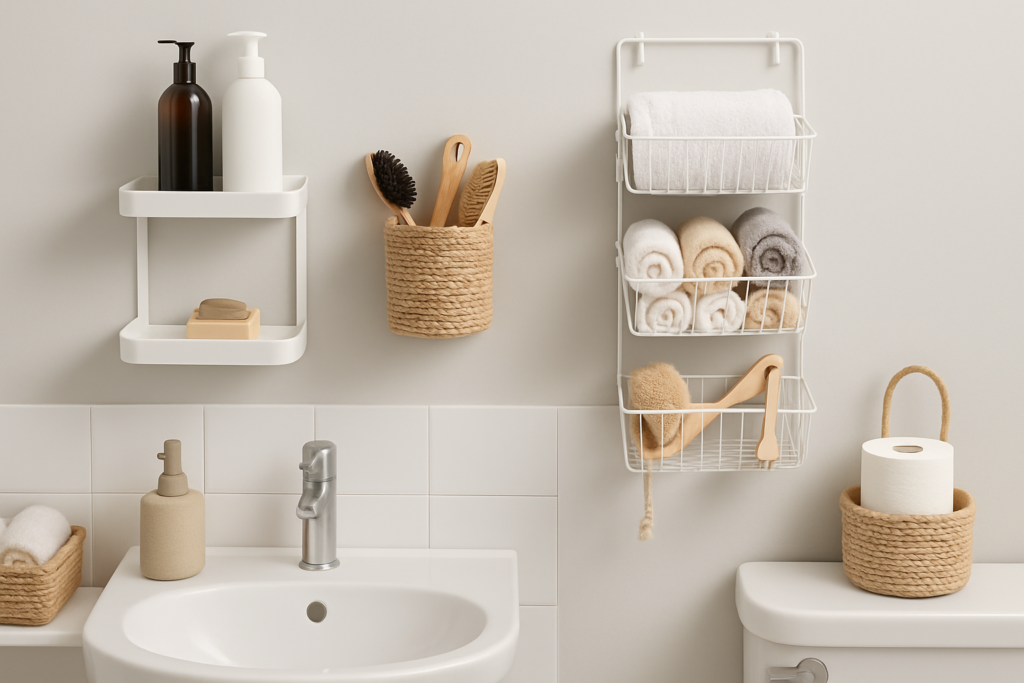
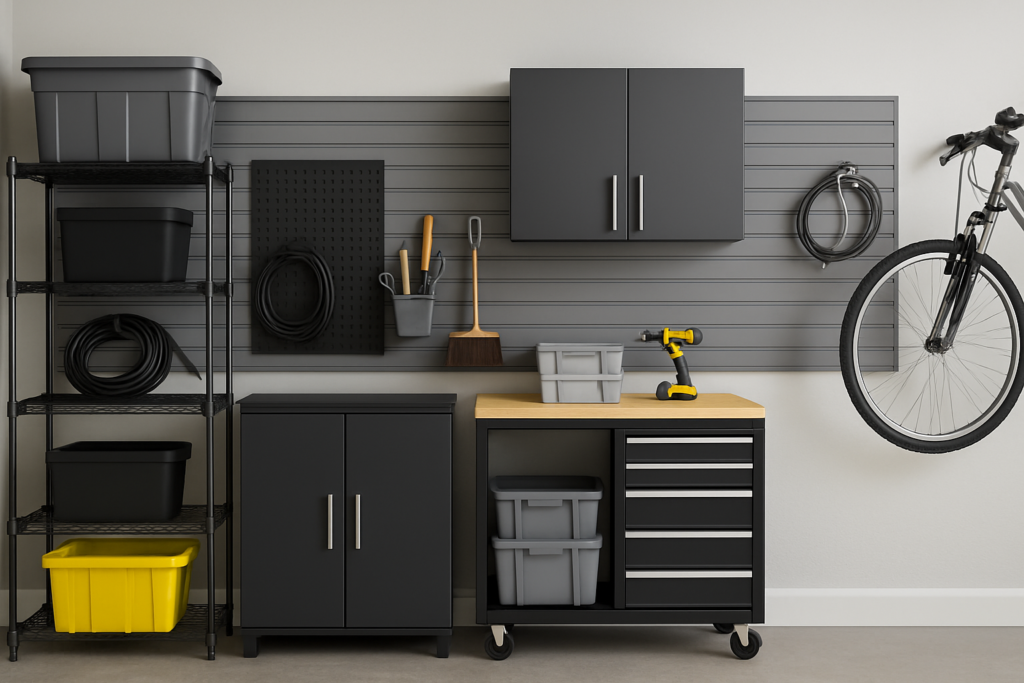
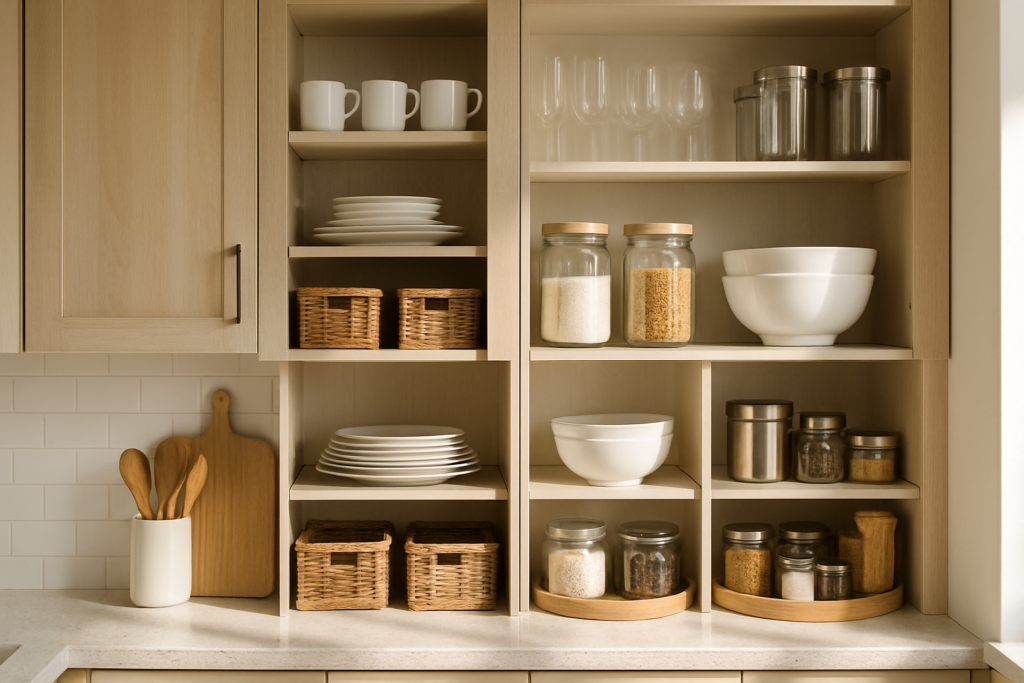
These approaches often involve purchasing organizational products like bins, labels, and storage systems. Professional organizers typically recommend the “one in, one out” rule and regular maintenance schedules to prevent clutter from building up again.
Traditional methods usually happen gradually. You might tackle one closet this weekend, a bathroom drawer next week, and the garage over a holiday break. This slower pace feels more manageable for many people but can also lead to projects that never get finished.
Effectiveness for Different Personality Types
Who Thrives with the KonMari Method
Emotional decision-makers often find the KonMari method transformative. If you form attachments to objects and struggle with “what if I need this someday” thinking, the joy-sparking test provides clear guidance.
Perfectionists also gravitate toward this system because it promises a complete solution. The specific folding techniques and designated homes appeal to people who want everything to look picture-perfect.
Visual learners benefit from the category-based approach. Seeing all your books or clothes in one place makes it easier to spot duplicates and make decisions about what you actually use.
Who Succeeds with Traditional Methods
Logical thinkers prefer traditional organization because the decision-making criteria make sense. Questions about frequency of use and condition are easier to answer than abstract concepts about joy.
Busy parents often find traditional methods more practical. When you’re managing a household with multiple schedules and constant messes, functionality matters more than whether your child’s soccer cleats spark joy.
People who enjoy the process of organizing (rather than just the results) tend to prefer traditional methods. These systems offer more opportunities to research products, compare solutions, and tinker with different arrangements.
Living Situation Considerations
Small Spaces and Apartments
The KonMari method works exceptionally well in small spaces because it dramatically reduces the volume of belongings. When every square foot counts, keeping only joy-sparking items makes sense.
The vertical folding technique maximizes drawer space, which is crucial in apartments with limited storage. You can fit more clothes in the same drawer while keeping everything visible.
However, small spaces sometimes require keeping items that don’t spark joy but serve important functions. That fire extinguisher or plunger might not bring happiness, but you need them.
Large Homes and Families
Traditional organization often works better for families because it accommodates different people’s needs and preferences. Not everyone in your household will connect with the joy-sparking concept, especially teenagers who might find it silly.
Large homes benefit from room-by-room approaches because the scale of a whole-house KonMari process can feel overwhelming. You can tackle spaces gradually without disrupting the entire household.
Families also accumulate items for different life stages and activities. Traditional methods handle this complexity better by focusing on practical storage solutions rather than emotional connections.
Long-term Success Rates
Both methods face the same fundamental challenge: maintaining organization over time. However, they approach sustainability differently.
The KonMari method banks on a dramatic one-time transformation that changes your relationship with possessions. Supporters report that the experience teaches them to buy less and value what they own more highly.
Traditional methods rely on systems and habits. Regular maintenance sessions, labeling systems, and storage solutions help prevent backsliding. The success depends more on consistency than on a single transformative experience.
Research on habit formation suggests that gradual changes stick better than dramatic overhauls. This gives traditional methods a slight edge for long-term success, but individual personality traits matter more than general statistics.
Practical Implementation Tips
Making the KonMari Method Work
Start with the easiest category first, even if it’s not clothes. If you have very few books but lots of complicated clothing, begin with books to build confidence and momentum.
Modify the joy test for practical items. Instead of asking if your can opener sparks joy, ask if it makes cooking easier or if you’d replace it immediately if it broke.
Set realistic timelines. Six months might work for some people, but there’s nothing wrong with taking a year if that prevents burnout and abandonment of the project.
Take photos of sentimental items you’re letting go. This preserves the memory without requiring physical storage space.
Succeeding with Traditional Organization
Invest in quality storage solutions that match your actual habits. If you never fold fitted sheets perfectly, don’t design a linen closet that requires perfect folding.
Label everything, even if you think you’ll remember. Labels help other household members maintain your systems and make it easier to put things back in the right places.
Schedule regular maintenance sessions rather than waiting for spaces to become cluttered again. Monthly 15-minute tidying sessions prevent major reorganization projects.
Focus on high-traffic areas first. An organized entryway or kitchen will impact your daily life more than a perfect guest room closet.
Combining Both Approaches
You don’t have to choose just one method. Many people find success combining elements of both approaches.
Use the KonMari method for categories where you have emotional attachments, like books, photos, or clothes. Apply traditional methods to functional areas like kitchens, bathrooms, and home offices.
Start with a modified KonMari decluttering session to reduce volume, then use traditional organization products and systems to maintain the results.
The joy test works well for getting rid of obvious clutter, while practical criteria help with borderline decisions about functional items.
Common Mistakes to Avoid
Don’t buy organizational products before decluttering. You need to know what you’re keeping before you can design storage solutions.
Avoid perfectionism with either method. A mostly organized space that you can maintain beats a perfectly organized space that falls apart after a week.
Don’t ignore your household members’ preferences. If you live with others, the system needs to work for everyone or it won’t stick.
Stop comparing your results to social media photos. Those perfectly styled spaces often aren’t realistic for daily living.
Which Method Wins?
Traditional organization methods edge out the KonMari approach for most people. The practical decision-making criteria are easier to apply consistently, and the gradual implementation fits better with busy lives.
However, the KonMari method excels for specific situations: people with strong emotional attachments to objects, those who need dramatic change to stay motivated, and anyone dealing with small spaces where every item counts.
Your personality matters more than the theoretical superiority of either system. An imperfect method that you’ll actually use beats a perfect method that sits abandoned after the initial enthusiasm fades.
FAQ
How long does each method typically take to complete?
The KonMari method suggests six months for a complete home transformation, but most people need 8-12 months working on weekends. Traditional organization happens more gradually, with most people taking 1-2 years to organize an entire home while maintaining normal routines. The time investment depends more on the size of your space and amount of belongings than the method you choose.
Can these methods work for families with young children?
Traditional organization typically works better for families because it accommodates different ages and preferences. Children can understand practical sorting criteria better than abstract joy concepts. However, some families successfully adapt KonMari by having children choose favorite toys and clothes while parents handle functional decisions about household items.
What should I do if I start one method and want to switch?
Switching methods mid-process is completely fine and often beneficial. Many people start with KonMari decluttering to reduce volume quickly, then switch to traditional organization for maintenance systems. Use whichever method works best for each category or area of your home rather than forcing yourself to stick with one approach throughout.
How much should I expect to spend on organizational supplies?
The KonMari method typically requires minimal purchases since it focuses on decluttering first and uses items you already own for storage when possible. Traditional organization can involve more upfront costs for bins, labels, and storage systems, but you can start with basic supplies and upgrade gradually. Most people spend less than they expect because decluttering reduces the need for storage solutions.