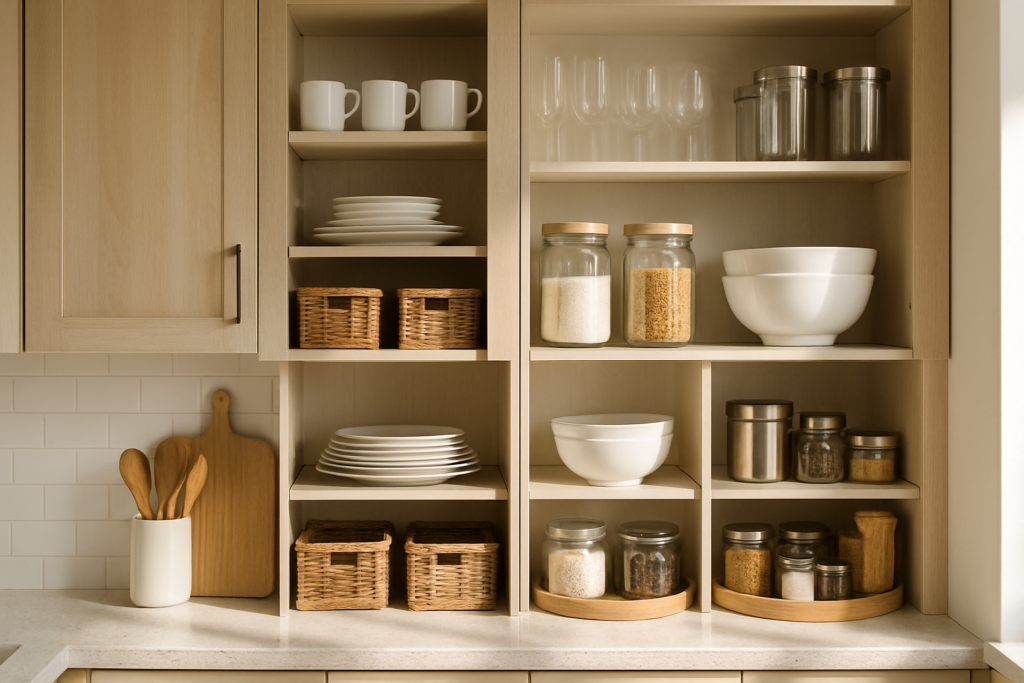
Opening your kitchen cabinets shouldn’t feel like playing Jenga with your dishes or digging through a chaotic mess to find a single spice jar. Yet for most of us, kitchen storage becomes an overwhelming jumble of mismatched containers, towering stacks of plates, and that one cabinet where everything goes to die.
Professional organizers approach kitchen cabinets with a systematic strategy that goes far beyond just shoving things onto shelves. They create zones, optimize vertical space, and choose storage solutions that actually work for how you cook and live. The difference isn’t just about having prettier cabinets (though that’s a nice bonus). It’s about creating a kitchen that functions so smoothly, you’ll wonder how you ever managed before.
Whether you’re working with a tiny apartment galley kitchen or a sprawling suburban setup, these professional techniques will transform your cabinets from storage nightmares into efficient, organized spaces that make cooking a pleasure instead of a treasure hunt.
Start With Strategic Zoning
Before you buy a single organizer or move one dish, you need to understand the golden rule of kitchen organization: group like items together in logical zones. Professional organizers don’t randomly assign cabinet space. They create specific zones based on how you actually use your kitchen.
Your coffee zone should include mugs, coffee makers, filters, and sweeteners all in one area. The cooking zone needs pots, pans, cooking utensils, and frequently used spices within arm’s reach of your stove. Baking supplies get their own dedicated space with measuring cups, mixing bowls, and baking sheets.
Walk through your typical cooking routine and notice how you move around the kitchen. You’ll quickly identify the natural zones. Most kitchens work best with four to six distinct zones: coffee/beverages, cooking, baking, food storage, dishes, and cleaning supplies.
Take measurements of each cabinet before you start reorganizing. You’ll need these dimensions when shopping for organizers, and it prevents the frustration of buying storage solutions that don’t fit. Write down the height, width, and depth of each shelf, including any obstacles like pipes or hinges that might affect placement.
Master Vertical Space Optimization
Most people waste enormous amounts of vertical space in their cabinets. Professional organizers maximize every inch by adding shelves, using stackable containers, and thinking in layers.
Expandable cabinet shelves double your storage capacity instantly. These adjustable platforms create additional levels within your existing cabinets, perfect for dishes, mugs, or pantry items. Look for ones with non-slip surfaces and sturdy construction that won’t wobble under weight.
SimpleHouseware Expandable Stackable Kitchen Cabinet and Counter Shelf Organizer
These expandable shelves are incredibly sturdy and fit most standard cabinets perfectly.
For upper cabinets, use the full height by installing additional shelving or choosing tall, narrow containers that reach toward the ceiling. Lower cabinets benefit from pull-out drawers that bring items stored in the back within easy reach.
Stack similar items consistently. Plates should be stacked by size and type, with everyday dishes at eye level and special occasion pieces higher up. Bowls nest inside each other, but don’t stack them more than 6-8 high or they become unstable and difficult to access.
Smart Solutions for Different Cabinet Types
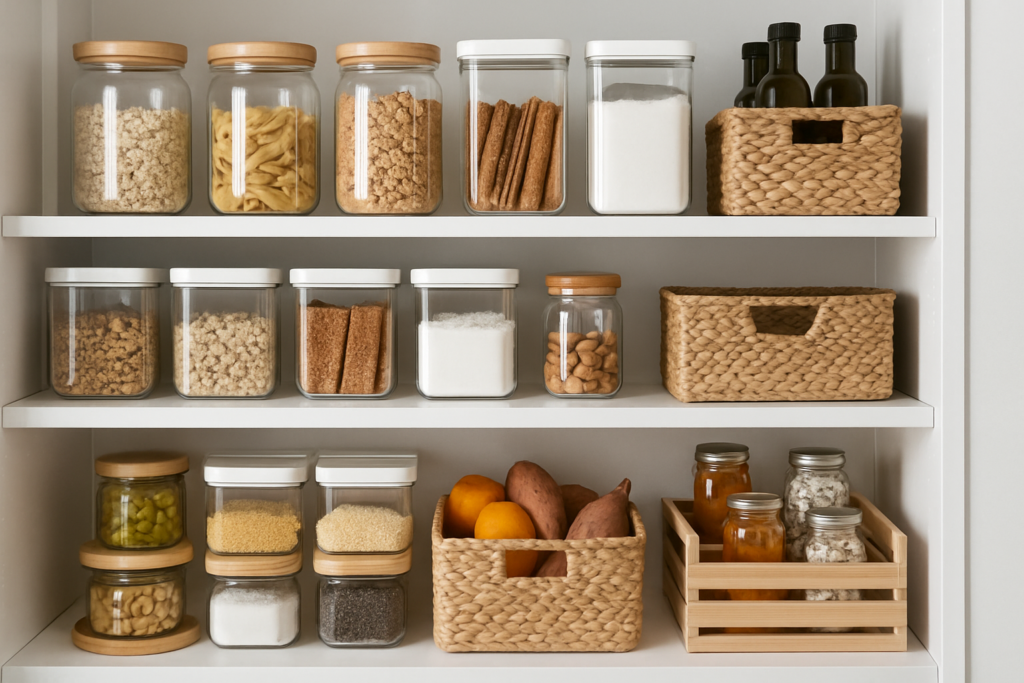
Upper cabinets store items you use less frequently, so focus on lightweight materials and logical grouping. Keep everyday dishes and glasses on the lowest shelves, with serving pieces and special occasion items higher up. Use clear containers for pantry items so you can see what you have at a glance.
Lower cabinets are workhorses for heavy items like pots, pans, and small appliances. Install pull-out shelves to eliminate the need to crawl on hands and knees to reach items in the back. These sliding shelves are particularly valuable in corner cabinets where items tend to get lost.
Corner cabinets present unique challenges, but lazy Susans and tiered organizers make these awkward spaces functional. Choose organizers with raised edges to prevent items from sliding off as the platform rotates.
Choose the Right Storage Solutions
Generic storage solutions rarely work as well as targeted organizers designed for specific items. Professional organizers invest in quality pieces that solve particular problems rather than trying to make one-size-fits-all containers work for everything.
For spice storage, door-mounted spice racks free up valuable shelf space while keeping seasonings visible and accessible. Tiered spice shelves work well in deep cabinets, allowing you to see labels at a glance.
YouCopia SpiceStack 30-Bottle Spice Organizer
This tiered spice organizer fits most standard spice bottles and makes every label visible.
Pot and pan organization benefits from vertical dividers that store cookware on edge like files in a filing cabinet. This approach uses less space than stacking and eliminates the need to lift heavy pans to reach the one at the bottom of a pile.
Food storage containers work best when they’re all from the same system. Mismatched containers waste space and make it difficult to find matching lids. Choose rectangular containers over round ones for better space efficiency, and invest in quality pieces that won’t crack or warp in the dishwasher.
Measurement Tips for Perfect Fit
Measure cabinet interiors with the doors fully open to account for hinge placement. Many organizers require clearance space that isn’t obvious until you try to close the door. Write down measurements and bring them when shopping, or better yet, shop online where you can easily compare dimensions.
Account for plumbing, electrical outlets, and cabinet hardware when planning organizer placement. That perfect pull-out drawer won’t work if it hits the garbage disposal motor. Measure not just the opening, but also the depth at different heights since cabinets aren’t always perfectly square.
For adjustable organizers, measure both the minimum and maximum dimensions of your space. This gives you flexibility to expand or contract the organizer as your storage needs change.
Tackle Common Organizational Challenges
Every kitchen has problem areas that seem impossible to organize. Professional organizers have specific strategies for the most common challenges.
Plastic containers and lids are notorious for creating chaos. Store containers nested inside each other with all lids in a separate, organized system. Lid organizers keep tops sorted by size and easily accessible. Consider switching to glass containers with lids that nest inside the bases when not in use.
SimpleHouseware Kitchen Cabinet Pantry Pan and Pot Lid Organizer Rack Holder
This adjustable rack works for both pot lids and food storage container lids.
Small appliances often become cabinet clutter because they’re heavy and awkward to access. Store frequently used appliances on lower shelves with easy access, and consider appliance garages with outlets for items like coffee makers and toasters. Less frequently used appliances can go on higher shelves or in the pantry.
Cleaning supplies need secure storage, especially if you have children. Use under-sink organizers with compartments sized for different bottle types. Install childproof locks if necessary, and keep frequently used items like dish soap easily accessible.
Maintenance and Long-Term Success
Organization systems fail when they’re too complicated for daily life. Choose solutions that are easy to maintain and make sense for how you actually cook and clean.
Label everything clearly, especially if multiple people use the kitchen. Clear labels help everyone maintain the system and make it easier to put things back in the right place. Use a label maker for a professional look, or simple masking tape works for temporary solutions.
Build in flexibility for changing needs. Adjustable shelves and modular organizers adapt as your cooking habits and family size change. Don’t organize so rigidly that there’s no room for new items or different ways of using the space.
Schedule regular maintenance sessions every few months to reset the organization. Even the best systems drift over time, and a quick reorganization session prevents small problems from becoming major chaos.
Frequently Asked Questions
How do I organize cabinets in a small kitchen?
Focus on vertical storage and multi-functional organizers in small kitchens. Use the inside of cabinet doors for spice racks and cleaning supplies. Choose nested storage containers and eliminate duplicate items. Every piece should earn its place by being used regularly.
What’s the best way to organize pots and pans?
Store pots and pans vertically using dividers, like files in a filing cabinet. This method saves space and eliminates the need to lift heavy cookware to reach items underneath. Keep lids in a separate organizer or store them vertically alongside their matching pots.
Should I line my cabinet shelves?
Shelf liners protect cabinet surfaces and make cleaning easier, but they’re not essential. Choose liners that stay in place and are easy to wipe clean. Avoid adhesive liners if you rent, as they can damage surfaces when removed. Non-adhesive shelf liners provide protection without permanent installation.
How often should I reorganize my kitchen cabinets?
Deep reorganization should happen once or twice per year, but maintenance should be ongoing. Spend five minutes after cooking putting items back in their designated spots. Monthly quick checks help catch problems before they become overwhelming messes.
This article contains affiliate links. We may earn a small commission at no extra cost to you.