
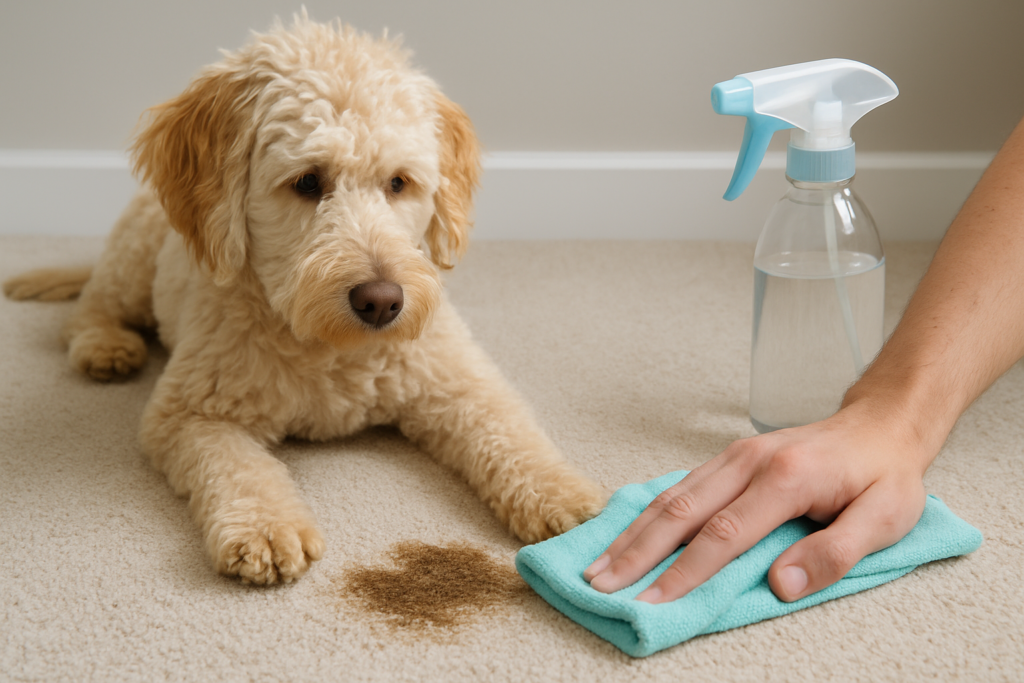
Every pet owner knows that sinking feeling when you discover a fresh stain on your carpet. Your furry friend had an accident, and now you’re facing the dreaded cleanup process. The smell hits you first, followed by the realization that this isn’t going to be a simple paper towel fix.
Pet stains are different from regular spills. They contain proteins and bacteria that can permanently damage carpet fibers and create lingering odors that seem impossible to eliminate. The key to success lies in acting quickly and using the right techniques for both fresh accidents and those stubborn set-in stains you might have missed.
This guide will walk you through proven methods to remove pet stains completely, eliminate odors at their source, and prevent future accidents from becoming permanent carpet damage. You’ll learn which products actually work and which ones waste your time and money.
Understanding Pet Stains and Why They’re Different
Pet urine contains uric acid crystals that bond to carpet fibers on a molecular level. These crystals are incredibly stable and can reactivate with moisture, which explains why old stains sometimes smell stronger on humid days. Regular household cleaners can’t break down these crystals, which is why that spot keeps coming back.
The longer a stain sits, the deeper it penetrates into the carpet backing and padding underneath. Fresh stains typically only affect the surface fibers, while old stains can soak through multiple layers and even reach the subfloor.
Temperature also plays a role. Heat actually sets protein-based stains permanently, so avoid hot water and steam cleaning until you’ve properly treated the area with the right cleaning solution.
Essential Supplies for Pet Stain Removal
Before tackling any pet stain, gather these essential supplies. Having everything ready makes the process faster and more effective.
Cleaning Products
- Enzyme cleaner – This is your most important tool. Nature’s Miracle and Anti Icky Poo are top performers
- White vinegar – Creates an acidic environment that neutralizes odors
- Baking soda – Absorbs moisture and odors naturally
- Hydrogen peroxide (3%) – Breaks down organic compounds and whitens
- Liquid dish soap – Dawn works best for breaking down oils
Tools and Materials
- Clean white cloths or paper towels
- Spray bottles for mixing solutions
- Rubber gloves
- Wet/dry vacuum if available
- Blacklight flashlight for finding old stains
How to Remove Fresh Pet Stains
Fresh stains are the easiest to remove completely. Speed is critical here, so don’t wait to start the cleanup process.
Step 1: Blot, Don’t Rub
Use clean paper towels or white cloths to blot up as much liquid as possible. Press down firmly and lift straight up. Avoid rubbing or scrubbing, which pushes the stain deeper into the carpet fibers.
Continue blotting with fresh towels until no more liquid transfers to the cloth. You might need 10-15 paper towels for a large accident.
Step 2: Apply Enzyme Cleaner
Spray enzyme cleaner generously over the entire stained area, extending about 2 inches beyond the visible stain. The solution needs to reach every spot where urine has penetrated.
Let the enzyme cleaner sit for the full time recommended on the bottle, usually 10-15 minutes. These products work by breaking down the proteins in urine, but they need time to do their job properly.
Step 3: Blot and Rinse
Blot the area again to remove the cleaning solution and dissolved stain particles. Spray lightly with clean water and blot once more to remove any cleaning residue.
Allow the carpet to air dry completely. Avoid walking on the area until it’s fully dry, which typically takes 4-6 hours depending on humidity and airflow.
Tackling Set-In Pet Stains
Old stains require more aggressive treatment since the uric acid crystals have had time to bond with carpet fibers. You’ll need to rehydrate the stain before the enzyme cleaner can work effectively.
Locating Hidden Stains
Use a UV blacklight flashlight in a dark room to find old stains that aren’t visible to the naked eye. Pet urine glows under blacklight, making it easy to identify problem areas.
Mark each stain with masking tape so you can find them when the lights are back on.
Deep Cleaning Method
Start by saturating the old stain with warm water to rehydrate the dried urine crystals. Let it sit for 5 minutes, then blot up the excess moisture.
Apply enzyme cleaner liberally to the area. For stubborn stains, you may need to work the cleaner into the carpet fibers gently with a soft brush. Cover the treated area with a damp cloth and let it sit for 30 minutes to an hour.
Remove the cloth and blot the area thoroughly. Rinse with clean water and blot again to remove all cleaning residue.
Home Remedy Solutions That Actually Work
While enzyme cleaners are the gold standard, several home remedies can be effective for fresh stains or as backup options.
Vinegar and Baking Soda Method
Mix equal parts white vinegar and water in a spray bottle. Spray the solution on the stain and let it sit for 5 minutes. Blot thoroughly, then sprinkle baking soda over the damp area.
Mix 1/2 cup hydrogen peroxide with 1 teaspoon liquid dish soap. Pour this mixture over the baking soda and work it in gently with your fingers or a soft brush.
Let the mixture bubble and foam for 10 minutes, then blot with clean cloths. Rinse with water and blot dry.
Hydrogen Peroxide Treatment
For light-colored carpets, hydrogen peroxide can be particularly effective. Mix 1 cup of 3% hydrogen peroxide with 1 teaspoon of liquid dish soap.
Test this solution in an inconspicuous area first, as hydrogen peroxide can lighten some carpet dyes. Apply the mixture to the stain, let it sit for 10 minutes, then blot and rinse thoroughly.
Eliminating Pet Odors Completely
Removing the visible stain is only half the battle. Pet odors can linger long after the carpet looks clean, and these smells can actually attract your pet back to the same spot for future accidents.
Why Odors Persist
Most household cleaners only mask odors temporarily. The uric acid crystals remain in the carpet, ready to release their smell when reactivated by moisture or heat.
Enzyme cleaners are the only products that actually break down these odor-causing compounds at the molecular level. This is why investing in a quality enzyme cleaner like Rocco & Roxie Professional Strength makes such a difference.
Advanced Odor Elimination Techniques
For persistent odors, try this two-step process. First, treat the area with enzyme cleaner as described above. Once dry, spray the area lightly with a 50/50 mixture of white vinegar and water.
After the vinegar solution dries, sprinkle baking soda over the area and let it sit overnight. Vacuum up the baking soda the next morning. This combination approach attacks odors from multiple angles.
For severe odor problems, you might need to treat the carpet padding or even the subfloor underneath. This typically requires professional help or replacing the affected padding.
Professional vs. DIY Cleaning
Most fresh pet stains can be handled effectively with DIY methods, but certain situations call for professional intervention.
Call professionals when you’re dealing with large stained areas (more than 3-4 spots), stains that have penetrated to the subfloor, or expensive carpets where you can’t risk damage from DIY treatments.
Professional cleaners have access to stronger enzyme solutions and equipment like truck-mounted extraction systems that can remove contamination from deep within carpet padding.
Prevention Strategies
The best stain removal strategy is preventing accidents in the first place. Focus on these key areas to reduce the likelihood of future carpet stains.
Training and Behavioral Solutions
Maintain consistent potty schedules for dogs and ensure litter boxes are cleaned daily for cats. Pets are more likely to have accidents when their normal routines are disrupted.
Address underlying medical issues that might cause increased accidents. Urinary tract infections, kidney problems, and age-related incontinence all require veterinary attention.
Carpet Protection
Consider applying a carpet protector like Scotchgard after cleaning. These products create a barrier that makes future cleanup easier and prevents stains from penetrating deeply.
Strategic placement of washable rugs in high-risk areas can also protect your carpet from accidents. Choose rugs with waterproof backing to prevent seepage.
When to Replace Carpet
Sometimes carpet damage is too extensive for cleaning to be effective. Multiple large stains, persistent odors after professional cleaning, or visible damage to carpet backing all indicate it’s time for replacement.
Before installing new carpet, treat the subfloor with an odor-blocking primer to prevent old smells from bleeding through. This extra step ensures your new carpet starts with a clean slate.
Product Recommendations
After testing dozens of products, these are the ones that consistently deliver results:
Best Overall: Anti Icky Poo Unscented works on the toughest stains and doesn’t leave artificial fragrances behind.
Best Budget Option: Nature’s Miracle Stain & Odor Remover provides solid performance at an affordable price point.
Best for Old Stains: Kids ‘N’ Pets Stain & Odor Remover excels at reactivating and removing set-in stains.
Common Mistakes to Avoid
Don’t use steam cleaners or hot water on untreated pet stains. Heat sets protein-based stains permanently, making them impossible to remove completely.
Avoid ammonia-based cleaners, which can actually attract pets back to the same spot. Urine contains ammonia naturally, so using ammonia-based products sends the wrong signal to your pet.
Never use colored towels or cloths for blotting. Dyes can transfer to light-colored carpets, creating additional staining problems.
Frequently Asked Questions
How long should I let enzyme cleaner sit on the stain?
Most enzyme cleaners need at least 10-15 minutes to work effectively on fresh stains. For old or set-in stains, extend this to 30 minutes or even an hour. The enzymes need time to break down the proteins in pet urine, so don’t rush this step.
Can I use enzyme cleaners on all carpet types?
Enzyme cleaners are safe for most synthetic carpets, but always test in an inconspicuous area first. Natural fiber carpets like wool or silk may require special cleaners. Check your carpet’s care label or contact the manufacturer if you’re unsure.
Why does the stain smell worse after cleaning?
This actually indicates the cleaning process is working. Enzyme cleaners reactivate old urine crystals as they break them down, which can temporarily intensify odors. The smell should disappear completely within 24-48 hours as the area dries and the enzymes finish their work.
How can I prevent my pet from returning to the same spot?
Thorough odor elimination is key. Even traces of urine smell can attract pets back to the same location. After cleaning, place aluminum foil or double-sided tape over the area temporarily, as most pets dislike these textures. You can also feed your pet in the previously soiled area, since animals typically won’t eliminate where they eat.
This article contains affiliate links. We may earn a small commission at no extra cost to you.