
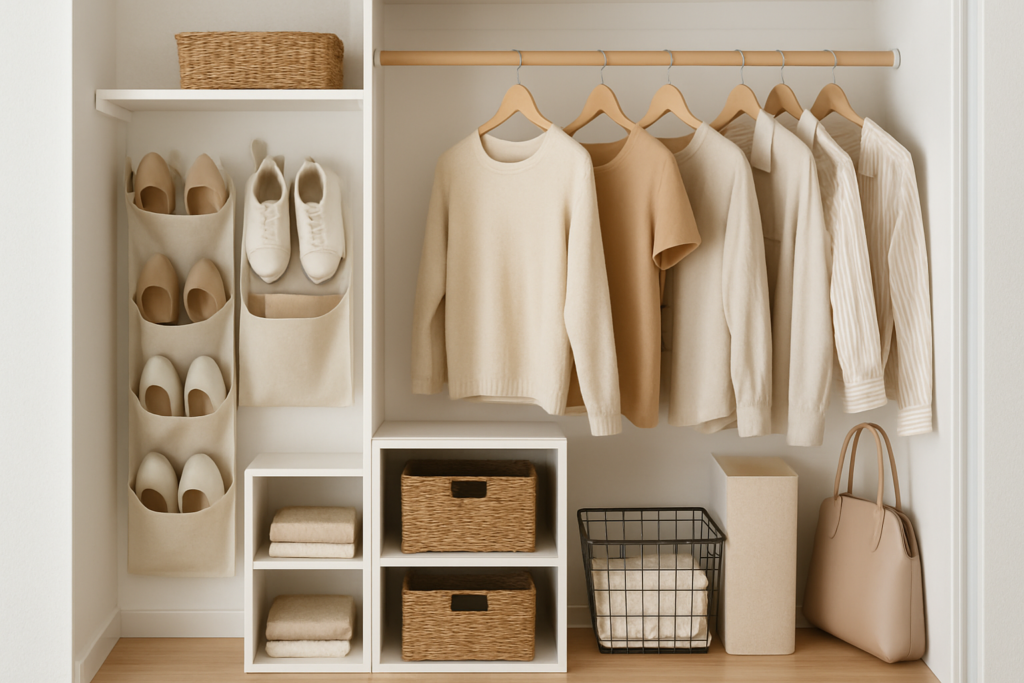
Living with a small closet doesn’t mean sacrificing your sense of organization or style. With the right approach and some clever solutions, you can transform even the tiniest wardrobe space into a functional storage powerhouse without breaking the bank.
The secret lies in maximizing every inch of available space, from floor to ceiling and everything in between. These ten budget-friendly organization ideas will help you create more room for your clothes, shoes, and accessories while spending less than competitively priced on each solution.
Whether you’re dealing with a cramped apartment closet or a shared space that’s bursting at the seams, these creative strategies will help you make the most of what you’ve got.
1. Double Your Hanging Space with Cascading Hangers
One of the easiest ways to instantly double your hanging capacity is by using cascading hangers or closet doubler rods. These simple metal bars hook onto your existing closet rod and create a second tier below.
The HOUSE DAY Space Saving Hangers are particularly effective because they can hold up to five garments vertically. They work best for shorter items like shirts, blouses, and folded pants.
For a more permanent solution, install an adjustable closet doubler rod that spans the width of your closet. This creates two distinct hanging levels and typically costs under competitively priced.
2. Transform Your Closet Door into Storage Central
Your closet door represents valuable real estate that’s often completely wasted. An over-the-door shoe organizer can hold far more than just footwear.
Use the clear pockets for underwear, socks, scarves, belts, or even small purses. The Simple Houseware 24-Pocket Over Door Organizer offers excellent visibility and access to your items.
You can also mount slim hooks on the inside of your door for robes, bags, or frequently worn jackets. Just make sure the door can still close properly with your additions.
3. Build Upward with Stackable Storage Cubes
Vertical space is your best friend in a small closet. Stackable fabric cubes or plastic drawers can create an instant dresser system on your closet floor or shelves.
The SONGMICS Fabric Storage Cubes are particularly versatile because you can configure them in different arrangements as your needs change. They’re perfect for t-shirts, workout clothes, or seasonal items.
Stack them three or four high along one side of your closet to create maximum vertical storage while keeping the other side free for hanging clothes.
4. Create Instant Shelving with Tension Rods
Tension rods aren’t just for shower curtains. These adjustable bars can create additional storage levels throughout your closet without any permanent installation.
Install a tension rod high up near the ceiling to hang out-of-season clothes or items you rarely use. You can also use them to create dividers within existing shelves or to hang cleaning supplies and accessories.
For heavier items, choose a heavy-duty tension rod that can support more weight. They typically cost between competitively priced-30 and can be repositioned whenever you need to reorganize.
5. Maximize Floor Space with Rolling Storage Carts
A narrow rolling cart can fit into tight spaces and provide multiple levels of storage for shoes, accessories, or folded clothes. The mobility factor means you can pull it out when you need access and push it back when you don’t.
Look for carts that are 6-8 inches wide to fit in the narrow spaces of most closets. The SPACEKEEPER 3-Tier Rolling Cart works well because it’s slim but tall, maximizing vertical storage.
These carts are also great for creating zones in your closet. Use one level for work accessories, another for gym gear, and a third for seasonal items.
6. DIY Shelf Dividers from Cardboard or Wire
Existing shelves often become chaotic piles of clothes because there’s no structure to keep categories separate. Simple shelf dividers can transform messy shelves into organized sections.
You can buy wire shelf dividers for competitively priced, or make your own using sturdy cardboard and fabric covering. Cut pieces that fit snugly from the front of your shelf to the back, creating separate compartments.
This works particularly well for organizing different types of sweaters, jeans, or workout clothes. Each section stays neat and contained, preventing the dreaded toppling effect when you remove one item.
7. Utilize Every Corner with Triangle Storage
Corner spaces in closets are notoriously difficult to use effectively, but corner shelves or hanging organizers can capture this lost space.
A triangular corner shelf unit fits perfectly into the angle where two walls meet and provides multiple levels for shoes, bags, or folded items. You can find these for under competitively priced, or build your own using corner brackets and boards.
Hanging corner organizers work similarly but suspend from your closet rod. They’re excellent for shoes or accessories and keep these items visible and accessible.
8. Think Outside the Box with Unconventional Organizers
Some of the best closet organization solutions come from repurposing items designed for other uses. A small bookshelf can become a shoe rack or sweater storage. Magazine holders work perfectly for clutch purses or folded t-shirts.
Drawer organizers designed for kitchens are ideal for jewelry, watches, or small accessories. A expandable drawer organizer tray can fit on any closet shelf and create perfect compartments for your smaller items.
Ice cube trays are surprisingly effective for organizing earrings, rings, or cufflinks. They keep everything separate and visible.
9. Create a Capsule System with Color-Coded Hangers
Organization isn’t just about fitting more stuff into your space. Sometimes it’s about being more intentional with what you keep. Color-coded hangers can help you create a capsule wardrobe system.
Use one color hanger for work clothes, another for casual wear, and a third for special occasions. This visual system makes it easier to see what you have and identify gaps or redundancies in your wardrobe.
Velvet hangers are particularly space-efficient because they’re thinner than plastic hangers and prevent clothes from sliding off. A set of 50 typically costs competitively priced.
10. Add Lighting to Make Everything Accessible
You can’t organize what you can’t see. Many small closets lack adequate lighting, making it difficult to find specific items or maintain your organization system.
Battery-operated LED strip lights or puck lights can illuminate dark corners and shelves without requiring any electrical work. Motion-sensor options automatically turn on when you open the closet door.
The Brilliant Evolution Wireless LED Puck Lights are particularly effective because they’re bright, long-lasting, and easy to install with adhesive backing.
Maintenance Tips for Long-Term Success
Creating an organized closet is only half the battle. Maintaining your system requires some ongoing attention and the right habits.
Implement a “one in, one out” policy to prevent accumulation. When you bring home a new shirt, remove one you no longer wear. This keeps your closet from exceeding its capacity.
Do a quick five-minute reset each week. Rehang items that have fallen, return things to their designated spots, and remove anything that doesn’t belong in the closet.
Schedule seasonal reviews to rotate items and reassess your organization system. What worked in winter might need adjustment for your spring wardrobe.
Frequently Asked Questions
What’s the best way to organize a closet with no shelves?
Focus on maximizing your hanging space and floor area. Use cascading hangers or a closet doubler rod to create multiple hanging levels. Add stackable storage cubes or a rolling cart on the floor, and install over-the-door organizers for smaller items. Tension rods can create temporary shelf space without permanent installation.
How do I keep my small closet from looking cluttered?
Stick to a consistent color scheme for your storage solutions and hangers. Keep similar items grouped together and use clear containers when possible so you can see what’s inside. Avoid overstuffing any one area, and maintain some visual breathing room between different sections.
Should I fold or hang clothes in a small closet?
Hang items that wrinkle easily like dress shirts, blouses, dresses, and anything made from delicate fabrics. Fold bulky items like sweaters, jeans, and casual t-shirts to save hanging space. Use the vertical stacking method for folded items so you can see everything at a glance.
How often should I reorganize my small closet?
Do a major reorganization twice a year when transitioning between seasons. This allows you to rotate seasonal items and reassess what you actually wear. Perform weekly mini-sessions to maintain your system and monthly reviews to make small adjustments as needed.
This article contains affiliate links. We may earn a small commission at no extra cost to you.